
"The Sword of Allah"."Khalid bin Waleed"
The General Who Never Lost a Battle". The Military Genius of Khalid bin Waleed". The Desert Lion Who Conquered Empires"


"Khalid bin Waleed: The General Who Never Lost a Battle"
In the dusty, sun-scorched battlefields of 7th-century Arabia, one name struck fear into the hearts of seasoned warriors and empires alike—Khalid bin Waleed. Known as Saifullah—the Sword of Allah—he was a man who seemed carved from steel and destined by fate to etch his legacy into the pages of history with the blade of his sword and the brilliance of his tactics. A warrior unmatched in courage, a leader forged by conviction, and a tactician whose genius rivaled the great generals of Rome and Persia, Khalid bin Waleed’s life was a fusion of fearlessness, faith, and an unbroken record of victories. He was the general who never lost a single battle, earning his title not through inheritance or status, but through sheer will, unmatched strategy, and an unshakable commitment to a higher cause.
Born into the noble Quraysh tribe of Mecca around 592 CE, Khalid’s early life was marked by privilege, strength, and loyalty to the old ways of the Arabs. He was a fierce opponent of Islam in its earliest days and even played a critical role against the Muslims in the Battle of Uhud, where his cavalry charge turned the tide. But destiny had other plans. After careful reflection and deep inner conflict, Khalid converted to Islam in 629 CE, a transformation that would forever alter the course of Islamic military history.
His conversion wasn’t just spiritual—it was revolutionary. Within a year of embracing Islam, Khalid began leading Muslim armies with such skill and ruthlessness that even the Prophet Muhammad (PBUH) referred to him as “the sword drawn by Allah against the enemies of Islam.” His nickname, Saifullah, wasn't just a title; it was a prophecy fulfilled on the battlefields of Mu'tah, Yamamah, Yarmouk, and beyond.
The Battle of Mu’tah, Khalid’s first as commander, is a testament to his brilliance. Outnumbered more than 3 to 1 by the Byzantine forces, Khalid's leadership not only saved the Muslim army from certain annihilation but earned him widespread respect. He reorganized retreat into an art form—not of surrender, but of calculated survival and future triumphs. The ability to turn a disaster into a disciplined withdrawal showed his tactical mind early on.
Khalid's genius reached its peak in the Battle of Yarmouk against the Byzantine Empire in 636 CE. Facing a vastly superior force, Khalid used the terrain, psychological warfare, and intricate battle formations to completely shatter the Roman ranks. This victory marked the end of Byzantine rule in Syria and solidified Khalid’s name among the greatest generals in history.
But Khalid wasn’t just a battlefield tactician—he was a master of psychological and guerrilla warfare. His campaigns against the Persian Empire, including his victories in Iraq, showcased his ability to adapt, improvise, and outthink enemies with larger, better-equipped armies. His use of speed, surprise, and misdirection left opponents bewildered and demoralized before a single sword was drawn.
What made Khalid truly unique was not just his record—undefeated in over a hundred battles—but his humility and devotion. Despite his fame, he remained obedient to leadership. When Caliph Umar ibn al-Khattab relieved him from command during the height of his success, Khalid stepped down without protest. He fought not for glory or recognition, but for the cause he believed in. This act of submission to a higher order made him even greater in the eyes of many, showing that true power lies in restraint and purpose.
Khalid bin Waleed died in 642 CE—not on the battlefield, but in his bed, lamenting that “I fought in so many battles, and yet here I am, dying as a camel dies. May the eyes of cowards never sleep.” Even in death, he was a warrior to the core. His body bore the marks of dozens of battles, each scar a chapter in a life lived for mission, faith, and valor.
Today, the legacy of Khalid bin Waleed endures not only in Islamic history but in the broader chronicles of global military strategy. Scholars, soldiers, and historians study his campaigns for their precision and brilliance. Streets, schools, and military institutions bear his name. He is remembered not just as a commander, but as a symbol of unwavering strength, adaptability, and humility.
In an era dominated by egos and empires, Khalid bin Waleed remains a timeless icon of what it means to lead with courage and conviction. A man who began his journey opposing Islam, only to become its fiercest defender. The desert lion who conquered empires. The military genius who never knew defeat. And above all—the Sword of Allah.
About the Creator
Abid khan
"Writer, dreamer, and lifelong learner. Sharing stories, insights, and ideas to spark connection."
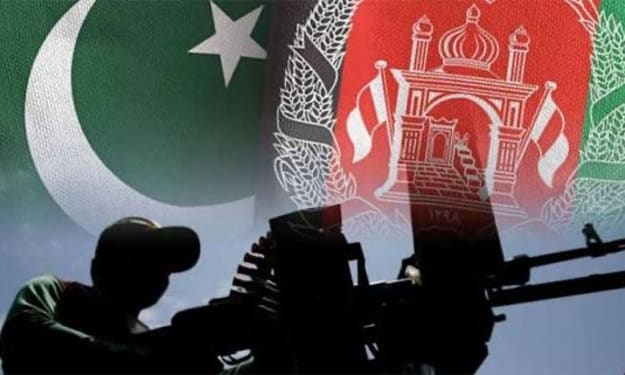
War Between Pakistan And Afghanistan
Tension Escalates Sharply at the Pakistan-Afghanistan Border What’s happening now? Tensions between Pakistan and Afghanistan have suddenly escalated into heavy fighting along their shared border, known as the Durand Line. Both sides are accusing each other of attacks, and military clashes have intensified in recent days. 
By shaoor afridi2 days ago in Serve
Israel Attacking On Iran
Israel has carried out major air and missile strikes on Iranian targets. Explosions were reported in Tehran and other areas. Israeli leaders say they attacked to stop Iran’s military and missile capabilities before Iran could launch its own large attack.
By shaoor afridiabout 5 hours ago in Serve



Comments
There are no comments for this story
Be the first to respond and start the conversation.