
The aircraft which landed after 64 Days
The Longest Flight in History: A Story of Two Men, One Plane, and an Impossible Mission

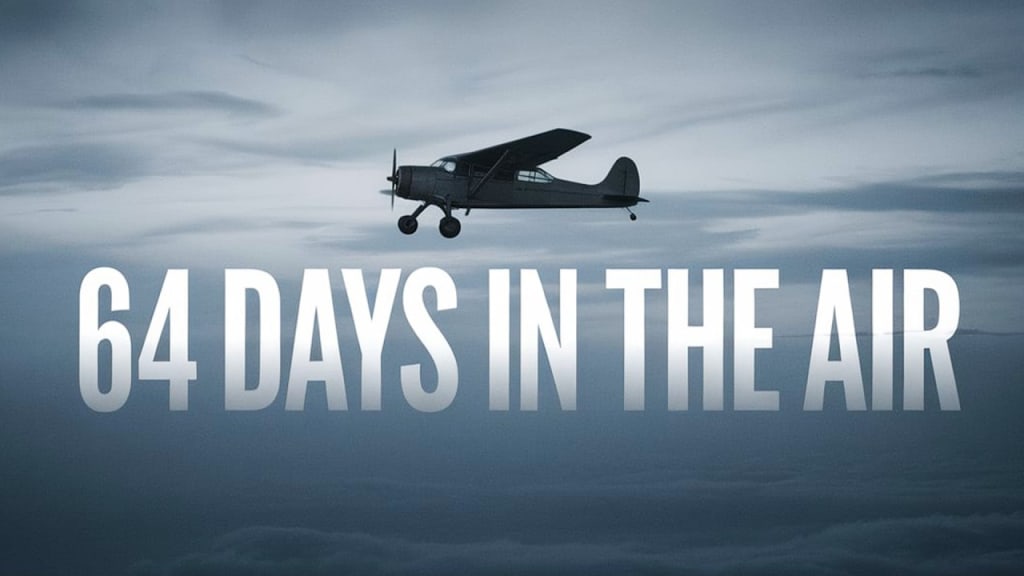
A small airplane.
Two determined men.
And one insane mission that seemed not just life-threatening… but completely impossible by today’s standards.
It all started with the strange dream of a Las Vegas hotel owner — to keep an airplane flying in the sky…
Not for hours.
Not for days.
But for months, without ever touching the ground.
This isn’t just a story about fuel.
It’s about sleep deprivation, freezing winters, and maintaining a delicate balance between life and death.
But the real question is:
Did these two pilots actually manage to break what seemed like an impossible record?
Or did their plane vanish forever into the blue sky?
The Forgotten Feat from the Pages of History
Our story begins in 1956, when a man named Waldo “Warren” Bailey opened a small hotel in Las Vegas called the Hacienda.

It wasn’t like the other flashy casinos or luxury resorts — it was simpler and cheaper, attracting working-class families and rural folks.
But because the profits were low, Bailey was always brainstorming creative ways to make his hotel famous.
Then one day, his old friend Bob Timm, a former World War II army pilot, gave him an idea:

“What if we broke a world record?”
Specifically — what if they flew a plane nonstop for months?
Bailey was intrigued.
Sure, it sounded crazy, but if it worked, it could put Hacienda on the map.
The Flight Time Race
To understand this, let’s rewind a bit.
When airplanes were first invented, their flight durations were recorded in seconds.

Pilots and engineers were obsessed with how long a plane could stay airborne.
Eventually, it all came down to one thing: fuel.
The bigger the fuel tank, the longer the flight.
In 1923, the U.S. Army solved this problem by refueling one plane from another in mid-air.
Endurance flights became a global craze.

The first official record? A plane refueled 9 times mid-air and flew for 37 hours straight.
By 1929, the record had already been broken five times.
But by the time Bob Timm made his proposal, the trend had faded.
Why?
Because now, it wasn’t just about machines — it was about testing the physical and mental limits of human beings.
The record to beat?
A 1949 flight by two Navy pilots who flew a Cessna 172 for 46 days straight.
The Mission Begins
Bailey loved the idea — perfect publicity for Hacienda.
And he asked Bob Timm himself to pilot the mission.
Timm agreed.
He bought a Cessna 172 from McCarran Field Airport and hired a mechanic to modify it.
Modifications included:
- Removing the co-pilot seat to make room for a foam sleeping pad.
- Removing rear seats to create an 8-square-foot storage area.
- Installing a tiny sink in the corner for sponge baths.
- Adding a massive 95-gallon belly fuel tank under the plane, with a motorized winch to pull fuel hoses up from trucks.
- Replacing the co-pilot’s door with a foldable one to allow easier access during refueling.
They also painted "Hacienda" in giant letters on the plane’s sides — free flying billboard!

The Test Flights — And Trouble
In the summer of 1958, test flights began. But things went wrong, fast.
Timm’s first co-pilot didn’t get along with him.
They fought constantly.
Test flights failed — engine issues, bad chemistry, and arguments.
In fact, three test missions failed, with engine exhaust valve problems causing overheating.
And while they were struggling, two other pilots — Jim Heth and Bill Burkhart — broke the existing world record by flying a Cessna 172 for 50 days over Dallas.
This raised the bar even higher.

The Real Flight: Takeoff Day
Finally, by December 4, 1958, Timm and his new co-pilot John Cook were ready.
Officials from the Fédération Aéronautique Internationale (FAI) were present to monitor the flight and prevent fraud.
Before taking off, they returned to the runway, allowing a chase car to paint the tires white.
If they secretly landed somewhere, the paint would scrape off, invalidating the record.

Fueling in the Sky
12 hours in, it was time to refuel.
They flew low over a pre-planned stretch of road where a truck waited.
As the truck sped along at 100 km/h, the plane descended to just 20 feet above it.
Cook threw down the winch cable, workers attached the fuel hose, and they reeled it back up to the plane.
The belly tank was filled — all while flying.
This risky maneuver had to be repeated over 100 times to break the record.
Surviving in the Sky
For days, they flew in circles above Las Vegas, then shifted to the empty deserts of California.
Flying high saved fuel but meant freezing temperatures — the plane’s insulation had been modified and was no longer effective.
So they flew low, dodging mountains and clouds at night.
They ate food pulled up during refueling runs — prepared by Hacienda's chefs.
Water, oil, and supplies were also winched up.
Toilets?
They used a folding camp toilet with plastic bags — later dumped over uninhabited desert areas (revealed by Cook’s wife years later).
They exercised, read books, and became good friends.

Close Calls and Breaking Points
But tension grew.
Noise from the engine made sleep difficult.
Once, Timm fell asleep at the controls, just minutes before Cook’s shift.
He slept for over an hour, and the plane — on autopilot — drifted dangerously close to a canyon.
If he hadn’t woken up in time, they’d have crashed.
On Day 39, disaster struck: the generator failed.
No radio. No heater. No fuel pump.
They winched up a tiny wind turbine to power radios.
But fuel now had to be pumped manually, and refueling at night became dangerous.
They tied flashlights to the winch cable, and placed a searchlight 300 feet ahead to guide refueling trucks.

Record Broken — and Then Some
By January 23, 1959, they finally broke the 50-day record.
Bailey began publishing the flight path in newspapers — the whole country started paying attention.
At one point, he even sent a plane full of photographers to fly alongside and snap iconic shots — including Cook pretending to clean the windshield mid-flight.
But despite hitting their goal, Timm and Cook kept going.
They spent 14 more days in the sky.

Final Landing: February 7, 1959
After 64 days, 22 hours, 19 minutes, and 5 seconds in the air — a record that would never be broken — they finally landed.
Crowds had gathered.
The media was there.
Timm’s wife and kids, journalists, officials, and Hacienda staff were all waiting.
Timm and Cook were so exhausted, they had to be helped out of the plane.
The white paint on the tires was intact — proof they had never landed.
The Legacy
In 2015, the FAI retired all manned endurance flight records due to safety concerns.
This means — Timm and Cook’s world record will never be broken.
And the original plane?
That same Cessna 172, named The Hacienda, still hangs in McCarran International Airport, Terminal 1 baggage claim — telling its story to anyone who stops to look up.

Final Thoughts
This forgotten feat of endurance is one of the greatest aviation records in human history.
A mission powered by sheer will, stubbornness, and the dream of putting one small hotel on the map.
If you enjoyed this story, don’t forget to like, share, and leave a comment below.
Jam TV will be back with another incredible story from history.
About the Creator
Keep reading
More stories from Jehanzeb Khan and writers in Serve and other communities.
How One Woman Fixed WW2’s Biggest Problem!
The Fighter Plane That Nearly Failed Britain in WWII During World War II, Britain had a fighter aircraft that became a national symbol — the Supermarine Spitfire. Known for its speed and agility, it was a favorite among pilots and a source of hope for the British people.
By Jehanzeb Khan7 months ago in Serve
War Between Pakistan And Afghanistan
Tension Escalates Sharply at the Pakistan-Afghanistan Border What’s happening now? Tensions between Pakistan and Afghanistan have suddenly escalated into heavy fighting along their shared border, known as the Durand Line. Both sides are accusing each other of attacks, and military clashes have intensified in recent days. 
By shaoor afridi2 days ago in Serve
Israel Attacking On Iran
Israel has carried out major air and missile strikes on Iranian targets. Explosions were reported in Tehran and other areas. Israeli leaders say they attacked to stop Iran’s military and missile capabilities before Iran could launch its own large attack.
By shaoor afridiabout 7 hours ago in Serve




Comments
There are no comments for this story
Be the first to respond and start the conversation.