
Idi Amin Dada of Uganda The President and the Cannibal: The Story of a Military Coup
Idi Amin and the Reign of Terror

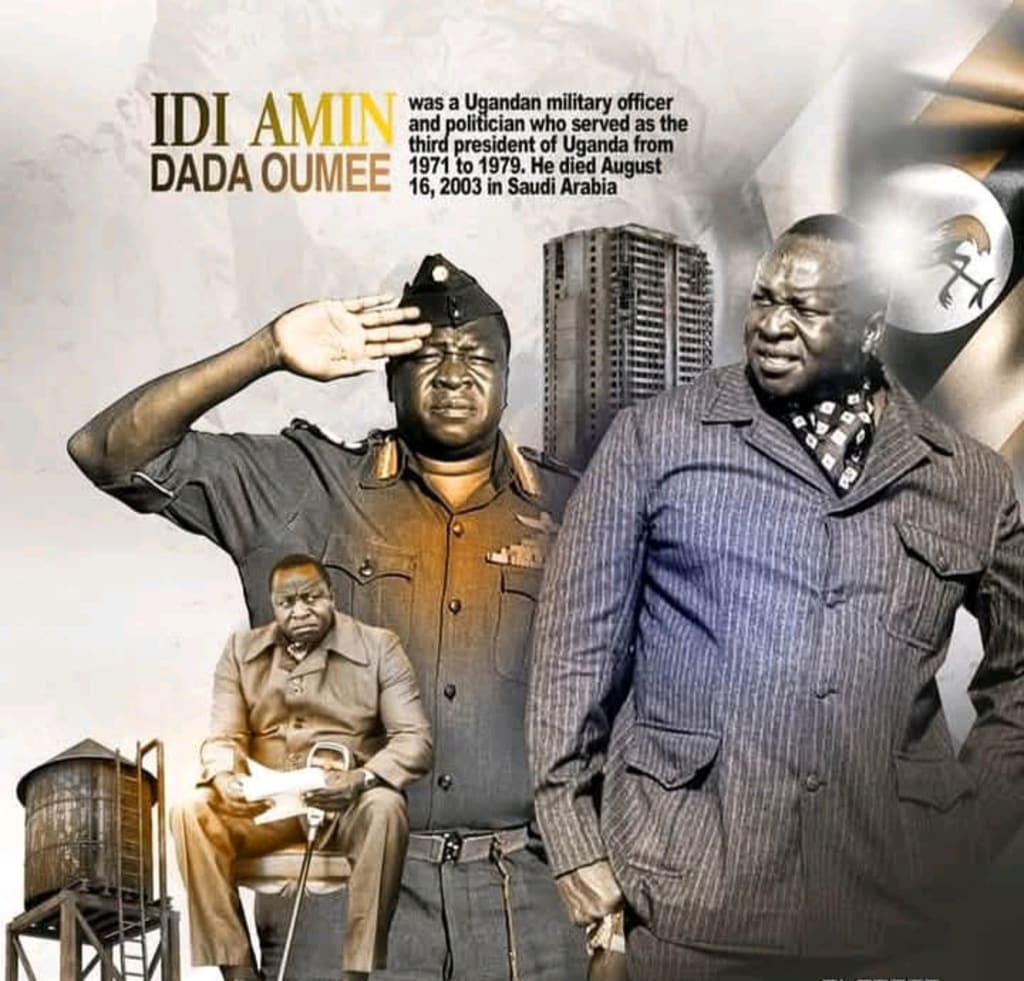
On January 25, 1971, Idi Amin orchestrated a military coup and took control of Uganda. He established one of the most oppressive totalitarian regimes in Africa. A dictator and cannibal, he called himself "King of Scotland" and considered Adolf Hitler his teacher and idol.
• Military Promotion
With virtually no formal education and a series of occupations, Idi Amin, an illiterate biscuit seller, joined the British Army in 1946, where he served as an assistant cook in a rifle division. Amin later served as a private in Kenya and Somalia. His courage and exceptional cruelty in fighting rebels in those countries earned him promotion: in 1961, a year before his country gained independence, Amin was among the first two Ugandans to be promoted to lieutenant in the British Army.
After Uganda gained independence in 1962, Idi Amin, having become a captain (and a year later a major) in the Ugandan army, became close to Milton Obote, the country's first prime minister. Contradictions between Obote and the president of Uganda (and also the king of the Buganda tribe), Edward Mutesa II, regarding the status of the Buganda ethnic group and the royal domain, led to Obote and Idi Amin, who held the position of deputy army commander at the time, being accused of corruption and smuggling gold from the Congo.
As a result of a coup d'état carried out by Milton Obote with the full support of Idi Amin and using the army, Amin became commander-in-chief of the Ugandan armed forces in 1966 (and in 1968 he was promoted to major general). Relations between the two former comrades soon deteriorated, due in particular to Amin's support for the uprising in South Sudan and an unsuccessful assassination attempt on the life of the new Ugandan president, Obote.
• Reduction in Military Ranks and Assumption of Authority
In the autumn of 1970, President Obote assumed the functions of commander-in-chief of the armed forces, thus demoting Idi Amin. Knowing that his former comrade-in-arms was about to arrest him for embezzlement, Amin staged another coup and seized power on January 25, 1971, while Obote was in Singapore for a Commonwealth summit. On Radio Uganda, the deposed president was accused of corruption and excessive patronage of the Lango region.
Idi Amin's first steps as president of Uganda were designed to endear him to both the country's population and the international community: Amin declared that he was "a soldier, not a politician," and promised to hand over power to civilians once the situation had normalized and elections had been held. He also disbanded the secret police and began releasing political prisoners from jail. The remains of Uganda's inaugural president, Mutesa, who was ousted with Amin's direct participation, were repatriated from Britain and ceremoniously interred once again.
In 1975, Idi Amin gave himself the rank of Field Marshal in peacetime, and in 1976 he declared himself President for Life of Uganda. Initially, Amin was looking for support from Great Britain, Israel and South Africa. Counting on support from the West, he was warmly received in Great Britain. It is noteworthy that the British Foreign Office could not find a more suitable description for the new sole ruler of Uganda than “a good footballer.”
• Tyranny and Cannibalism
Notwithstanding the propaganda surrounding "reforms", the truth is that Idi Amin was orchestrating widespread terror. In secret, he organized death squads, the first victims of which were 70 officers who opposed Amin during the coup. By May 1971, the dictator had dealt with almost the entire senior army command staff, killing more than 10,000 people. During his years in power, Amin killed, according to various estimates, from 300 to 500 thousand Ugandan citizens during state repressions and personally killed at least 2,000 people.
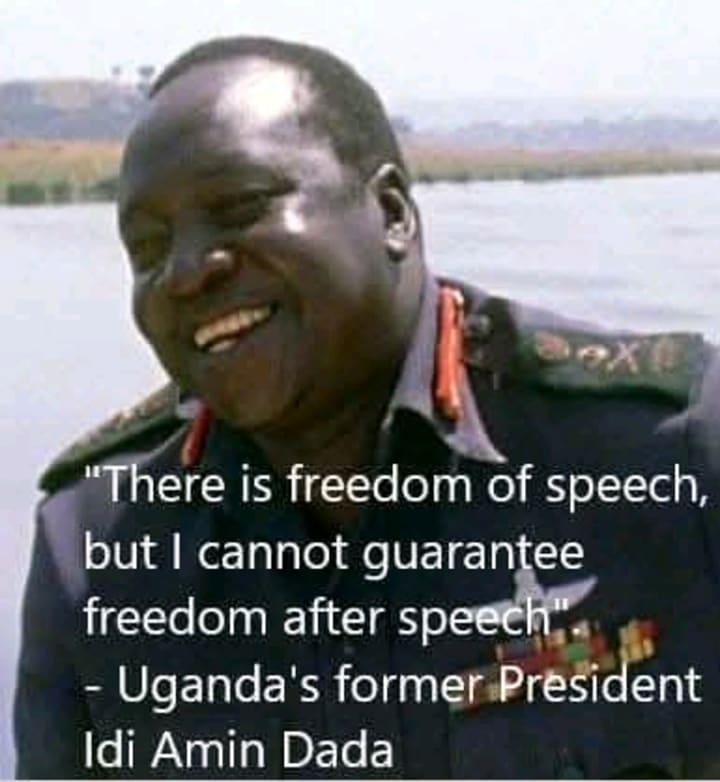
According to Decree No. 5, issued by Idi Amin, the military had the right to detain anyone suspected of "disturbing the peace." The next decree allowed the Bureau of State Investigation to kill anyone at will. In this way, Idi Amin filled the budget - the relatives of the deceased were allowed to get the body back only for money.
Soon, the head of the Ugandan army chief of staff, Suleiman Hussein, appeared at the gates of the presidential residence. Then it migrated to Amin's refrigerator. At times, he would remove it and engage in discussions with it.
Idi Amin would feed the remains of his adversaries to crocodiles. He himself also tried human flesh. "It is very salty, even saltier than leopard meat," he said. "In war, when there is nothing to eat and one of your comrades is wounded, you can kill him and eat him to survive."
In 1974, polygamist Amin divorced his first three wives. The body of one, Kay Adroa, was later found dismembered in the trunk of a car. Another, Maliyamu Putesi, was jailed for allegedly trafficking. After her release, she fled the country.
• His Attack on Tanzania and His Overthrow
In October 1978, Idi Amin launched military operations against neighboring Tanzania, which had provided political asylum to Obote, whom he had overthrown.
It was this decision that predetermined the defeat of Amin's regime - having attacked a country friendly to the socialist bloc, Uganda finally lost its foreign policy support.
Soon the Tanzanian army, reinforced by emigrants expelled from Uganda under Amin and parts of the Ugandan army dissatisfied with the dictatorship (who proclaimed themselves the "Uganda National Liberation Army"), launched a counteroffensive, drove Amin's troops out of Tanzania and entered Uganda.
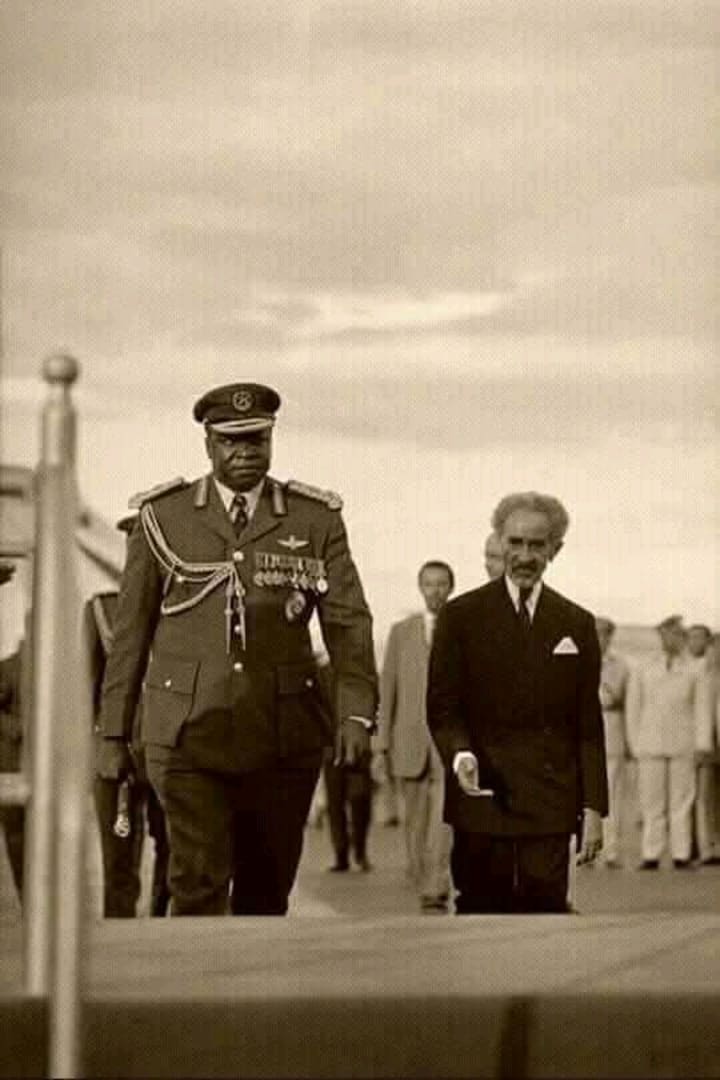
On April 11, 1979, Idi Amin fled Kampala.
After that, the former dictator, who was threatened with a military tribunal, spent some time in Libya until December 1979, when he moved to Saudi Arabia and opened a bank account in Jeddah.
Idi Amin died in Saudi Arabia on August 16, 2003, at the age of 75.
About the Creator
Keep reading
More stories from Uchenna Cosmas Nwokafor and writers in Serve and other communities.
Talking About Ghana: Society's Religious and Filial Customs
Ghanaians had their own social organization and set of beliefs, customs and behaviors before they interacted with the outside world. Generally, Ghanaian social customs have their own distinct characteristics in many respects, such as religion, family, festivals, etc.
By Uchenna Cosmas Nwokafor 8 months ago in History
Stolen Bike, Not Valor
Koa was riding his new electric bike through the city park not too far from the US Embassy where he served in an Asian country. The ride was a part of his daily evening workout. He didn't really like the idea of an electric bike because he thought it was lazy. Besides, Koa had another good mountain bike he'd bought here used and it gave him a much better workout. But this one was his girlfriend's gift for his 29th birthday that she had taken the trouble to ship to him across the ocean. Koa felt obliged to ride it out at least occasionally, but promised himself not to use the battery. He even took it off the bike, to avoid the temptation.
By Lana V Lynx29 days ago in Serve
Bodyguard or Executive Protection Agent: Key Differences
Individuals playing a significant role in corporations, government offices and other vital bodies often require protection. Wherever they go, they need specialised security services to ensure that they are safe and threat-free. The security industry is no more limited to just physical security; they provide security professionals who are highly trained to ensure their client’s safety and well-being. As the demand for security personnel is increasing, more people are seeking clarity on the topic – bodyguard or executive protection agent – which one is better? So here is a comparison between executive security services and bodyguard services.
By Knight Securityabout 14 hours ago in Serve



Comments (1)
Idi Amin's rise and fall is a wild story. His actions had a huge impact on Uganda.