
German Soldiers’ Perspective on American Warfare in World War II
"A Clash of Tactics: How German Soldiers Viewed American Warfare in World War II"


German Soldiers’ Perspective on American Warfare in World War II
During World War II the German soldiers who fought against the Allies had varying opinions about their adversaries. While some respected the Americans for their resilience and firepower others found their tactics frustrating if not outright infuriating. A key reason for this frustration was the fundamental difference in how the two sides approached combat. American forces relied heavily on artillery and airpower before engaging in direct combat a strategy that many German soldiers perceived as unfair or dishonorable.

Tactical Differences Between German and American Forces
The German military was traditionally trained for face to face engagements, emphasizing aggressive maneuvers swift offensives and direct confrontations. The Blitzkrieg strategy which had brought them significant success early in the war relied on rapid advances coordination between tanks and infantry and decisive battles. German soldiers were accustomed to battlefield conditions where mobility and strategic initiative played a crucial role. In contrast American forces adopted a more methodical and calculated approach. They would first weaken enemy positions with extensive aerial bombardments and heavy artillery shelling. Only after the enemy had been shaken by these relentless attacks would the infantry and armored units advance to engage. This strategy aimed at minimizing American casualties and maximizing firepower was different from what German troops had encountered in their early campaigns against European nations.

Frustration and Perceived ‘Unfairness’
Many German soldiers found this American style of warfare frustrating. To them it seemed as though the Americans were avoiding direct combat instead relying on overwhelming firepower to weaken the enemy before ever setting foot on the battlefield. This contrasted sharply with the traditional German military ethos which valued direct engagement and personal bravery. Some Germans saw the American tactics as a form of ‘cheating’ an impersonal and mechanical way of waging war. The idea of softening up an enemy before engaging them in battle clashed with the deeply ingrained German military traditions that emphasized strength and decisive action. The Wehrmacht had been conditioned to fight battles with bold offensives and aggressive tactics so the slow, methodical nature of American operations felt alien to them.

The Psychological Impact on German Troops
The effectiveness of American artillery and air superiority also had a profound psychological impact on German soldiers. The sheer volume of firepower they faced often left them demoralized and unable to mount effective counterattacks. Many German soldiers reported feelings of helplessness when they found themselves under prolonged bombardment knowing that any attempt to move or regroup would likely result in further devastation. Moreover the reliance on superior logistics and firepower rather than head on assaults reinforced the perception that the Americans were fighting a war of attrition rather than one of battlefield skill. German officers in particular struggled to adapt to this reality, as their own training and doctrine were built around aggressive offensive actions rather than defensive endurance.

Respect for American Strength
Despite their frustration many German soldiers came to respect the Americans for their military efficiency and resourcefulness. While they may have initially dismissed their enemies as inexperienced or lacking tactical finesse it became clear over time that the American approach to warfare was highly effective. One of the biggest advantages the Americans had was their industrial might. German forces often found themselves outgunned and out supplied facing an enemy that could bring in fresh reinforcements and equipment at a pace they could not match. American units were also adaptable learning from their encounters and refining their tactics as the war progressed. By the time of the Battle of the Bulge in late 1944 many German soldiers had come to grudgingly acknowledge that the Americans were formidable opponents not just because of their firepower but also due to their ability to sustain prolonged campaigns. The clash between German and American fighting styles in World War II was not just a matter of military doctrine but also one of deeply ingrained perspectives on warfare. German soldiers accustomed to fast paced and direct engagements often found the American approach frustrating and at odds with their own traditions. However the effectiveness of American tactics particularly their reliance on artillery, airpower and logistics ultimately played a crucial role in securing victory in the European theater. While German troops may have viewed these methods as impersonal or ‘unfair,’ they were forced to acknowledge that the sheer power and efficiency of American warfare were undeniable.

SEO KEYWORD:
German soldiers in World War II, American warfare tactics WWII, German vs American military strategy, World War II combat tactics, US Army strategy in WWII, German soldier perspective on Americans, WWII artillery and airstrikes, Blitzkrieg vs American warfare, How Americans fought in World War II, German military opinions on US troops.
About the Creator
Adnan Rasheed
Author & Creator | Writing News , Science Fiction, and Worldwide Update| Digital Product Designer | Sharing life-changing strategies for success.
Keep reading
More stories from Adnan Rasheed and writers in Serve and other communities.
A new U.S. Air Force analysis recommends continuing the development of NGAD, as well as terminating the NGAS stealth tanker program which was supposed to support the next gen fighter in contested airspace.
The United States Air Force (USAF) has recently concluded a comprehensive analysis of two major developmental programs: the Next-Generation Air Dominance (NGAD) fighter and the Next-Generation Air Refueling System (NGAS) stealth tanker. After months of internal discussions and strategic reviews, the Air Force has decided to continue the development of the NGAD while recommending the termination of the NGAS program. This decision underscores a shifting perspective on how aerial dominance and refueling strategies will evolve in contested environments, particularly in the face of growing technological advancements and budgetary constraints.
By Adnan Rasheed12 months ago in Serve
War Between Pakistan And Afghanistan
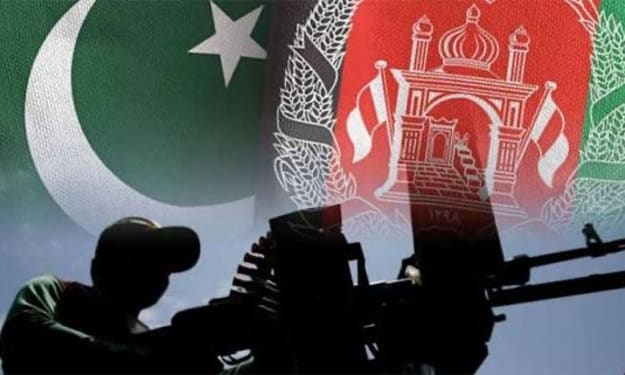
Tension Escalates Sharply at the Pakistan-Afghanistan Border What’s happening now? Tensions between Pakistan and Afghanistan have suddenly escalated into heavy fighting along their shared border, known as the Durand Line. Both sides are accusing each other of attacks, and military clashes have intensified in recent days. 
By shaoor afridi2 days ago in Serve
Israel Attacking On Iran
Israel has carried out major air and missile strikes on Iranian targets. Explosions were reported in Tehran and other areas. Israeli leaders say they attacked to stop Iran’s military and missile capabilities before Iran could launch its own large attack.
By shaoor afridiabout 5 hours ago in Serve
It's 2026. Songs Turning 10 This Year
In 2016, we saw the rise of short form videos and what would lead to the birth of TikTok. We cannot forget the Snapchat filters no matter how cringe worthy some of them might have been. It was also the year in which the hit series Stranger Things debuted.
By Jasmine Aguilar6 days ago in Beat



Comments
There are no comments for this story
Be the first to respond and start the conversation.