
A new U.S. Air Force analysis recommends continuing the development of NGAD, as well as terminating the NGAS stealth tanker program which was supposed to support the next gen fighter in contested airspace.
NGAD STEALTH TANKER PROGRAM


The United States Air Force (USAF) has recently concluded a comprehensive analysis of two major developmental programs: the Next-Generation Air Dominance (NGAD) fighter and the Next-Generation Air Refueling System (NGAS) stealth tanker. After months of internal discussions and strategic reviews, the Air Force has decided to continue the development of the NGAD while recommending the termination of the NGAS program. This decision underscores a shifting perspective on how aerial dominance and refueling strategies will evolve in contested environments, particularly in the face of growing technological advancements and budgetary constraints.
The NGAD program, a highly classified initiative aimed at developing a sixth-generation fighter, has been a subject of intense scrutiny due to its significant costs and complex technological requirements. The aircraft, designed to replace or supplement existing stealth fighters such as the F-22 Raptor, represents the future of air combat with its advanced stealth capabilities, enhanced range, and ability to operate in highly contested airspace. The program has undergone extensive evaluations, with the Air Force carefully weighing its strategic necessity against the financial burden it imposes.
One of the major considerations in continuing the NGAD program has been its potential impact on the future of air superiority. As adversaries develop more sophisticated air defense systems and long-range strike capabilities, the ability to operate undetected in hostile airspace has become more crucial than ever. The NGAD is expected to incorporate advanced technologies, including artificial intelligence, sensor fusion, and unmanned teaming capabilities, which will significantly enhance its effectiveness in future combat scenarios. These features are not just improvements over previous generations of aircraft but represent a paradigm shift in how aerial warfare will be conducted in the coming decades.
On the other hand, the NGAS stealth tanker program, initially conceived to support next-generation fighters in contested environments, has been deemed unnecessary in light of the NGAD’s capabilities. The rationale behind developing a stealth tanker was to ensure that aerial refueling operations could be conducted safely within heavily defended enemy airspace, reducing the vulnerability of traditional refueling aircraft like the KC-135 and KC-46. However, the Air Force’s latest analysis suggests that a long-range NGAD would diminish the need for stealth tankers, as it would be capable of operating effectively without frequent in-air refueling.
The decision to prioritize the NGAD over the NGAS also aligns with the Air Force’s broader strategic vision. Large, conventional tankers such as the KC-46 Pegasus are expected to continue playing a critical role in air refueling operations, but their survivability will be enhanced through a combination of dispersal tactics, increased operational flexibility, and improved coordination with other assets. By focusing on survivable aerial refueling strategies, the Air Force aims to complicate the enemy’s ability to track and engage these vital support aircraft at long ranges.
The economic implications of this decision cannot be overlooked. Both the NGAD and NGAS programs require substantial financial investment, and pursuing both simultaneously would have placed significant strain on the defense budget. By opting to continue the NGAD while discontinuing the NGAS, the Air Force is making a calculated trade-off that balances technological advancement with fiscal responsibility. This decision reflects a pragmatic approach to resource allocation, ensuring that the most critical capabilities receive the necessary funding and development priority.
Moreover, the cancellation of the NGAS program highlights the evolving nature of aerial combat strategy. In the past, the emphasis was placed on ensuring that refueling assets could support fighter jets deep within enemy territory. However, with the advent of longer-range fighters and unmanned systems, the need for stealth tankers has become less pressing. Instead, the focus is shifting towards distributed operations, where refueling assets are strategically positioned to maximize efficiency while minimizing risk.
Another factor influencing this decision is the rapid development of adversary capabilities. Countries like China and Russia are investing heavily in long-range missile systems and advanced radar networks designed to detect and neutralize aerial threats at extended distances. In such an environment, stealth remains a crucial advantage, but the overall strategy must adapt to counter emerging threats. By prioritizing the NGAD, the Air Force is ensuring that it maintains a technological edge in air superiority while simultaneously developing innovative tactics to protect its refueling assets.
The NGAD program itself is expected to bring several groundbreaking advancements to aerial combat. One of its key features is the integration of unmanned combat drones, or "loyal wingmen," which will accompany the main fighter to provide additional firepower, reconnaissance, and electronic warfare capabilities. These drones will enhance the operational effectiveness of the NGAD while reducing the risk to human pilots. Additionally, the aircraft is likely to feature enhanced stealth coatings, advanced propulsion systems, and next-generation weapons that will enable it to engage enemy targets with unprecedented precision and efficiency.
Another important aspect of the NGAD’s design is its modularity and adaptability. Unlike previous fighter jets that were built with specific missions in mind, the NGAD is being developed with a flexible architecture that allows for rapid upgrades and modifications. This approach ensures that the aircraft remains relevant in an ever-changing combat environment, capable of integrating new technologies as they become available.
While the cancellation of the NGAS may seem like a setback for stealth-based refueling operations, it is ultimately a strategic decision that aligns with the broader vision of modern air warfare. The Air Force recognizes that maintaining aerial dominance requires a combination of cutting-edge technology, strategic resource allocation, and adaptive tactics. By investing in the NGAD and leveraging conventional refueling assets in innovative ways, the Air Force is positioning itself to maintain a decisive advantage in future conflicts.
It is also worth noting that while the NGAS program has been shelved for now, the concept of stealth refueling is not entirely off the table. Future advancements in autonomous aerial refueling, drone-based tanker systems, and other emerging technologies could reshape the landscape of aerial logistics. The Air Force may revisit the idea of stealth tankers in a different form, incorporating lessons learned from current and past programs to develop a more cost-effective and operationally viable solution.
In conclusion, the Air Force’s decision to continue the NGAD program while terminating the NGAS stealth tanker initiative marks a significant shift in strategic priorities. This move reflects a careful balancing act between technological advancement, operational effectiveness, and budgetary constraints. The NGAD represents the future of air dominance, offering unparalleled capabilities that will shape the next generation of aerial warfare. Meanwhile, the Air Force’s approach to refueling operations will evolve to ensure survivability and efficiency without the need for stealth tankers. As the nature of modern warfare continues to evolve, the Air Force’s ability to adapt and innovate will be key to maintaining its superiority in the skies.
About the Creator
Adnan Rasheed
Author & Creator | Writing News , Science Fiction, and Worldwide Update| Digital Product Designer | Sharing life-changing strategies for success.
Keep reading
More stories from Adnan Rasheed and writers in Serve and other communities.
Pakistan marks anniversary of shooting down Indian fighter jets.
Pakistan marks anniversary of shooting down Indian fighter jets. On February 27, 2019 Pakistan marked a significant moment in its military history commemorating what it describes as a successful defense operation against Indian aggression. This event known as Operation Swift Retort is remembered as the day when the Pakistan Air Force (PAF) responded to India’s airstrikes in Balakot by engaging and shooting down two Indian fighter jets escalating tensions between the two nuclear armed neighbors. As Pakistan observes the anniversary of this event it highlights the nation’s military preparedness and resolve to defend its sovereignty. The events of February 2019 were set in motion a day earlier when Indian warplanes crossed into Pakistani airspace and dropped bombs in Balakot claiming to have targeted a terrorist training camp. India’s actions came in response to the Pulwama attack which had occurred on February 14, 2019 in which over 40 Indian paramilitary personnel were killed in a suicide bombing. India held Pakistan responsible for harboring the militant group responsible for the attack an allegation Pakistan strongly denied. The airstrikes by the Indian Air Force (IAF) marked the first aerial intrusion into Pakistani territory since the 1971 war significantly raising tensions between the two nations.
By Adnan Rasheed12 months ago in Serve
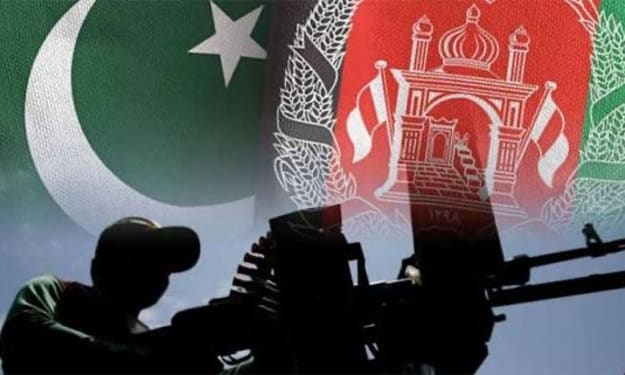
Non Stop War Between Pakistan And Afghanistan
The situation between Pakistan and Afghanistan has suddenly gotten much worse. In late February 2026, Pakistan said it is now in what it calls an “open war” with Afghanistan. Pakistan’s military carried out airstrikes on several major Afghan cities, including the capital Kabul and places like Kandahar and Paktia. This has caused fighting to grow significantly between the two neighbors. �
By shaoor afridiabout 12 hours ago in Serve
War Between Pakistan And Afghanistan
Tension Escalates Sharply at the Pakistan-Afghanistan Border What’s happening now? Tensions between Pakistan and Afghanistan have suddenly escalated into heavy fighting along their shared border, known as the Durand Line. Both sides are accusing each other of attacks, and military clashes have intensified in recent days. 
By shaoor afridia day ago in Serve



Comments
There are no comments for this story
Be the first to respond and start the conversation.