
B-2 Spirit: The Silent Giant of the Sky
A Deep Dive into the Stealth, Power, and Mystery Behind America’s Most Secretive Bomber Jet

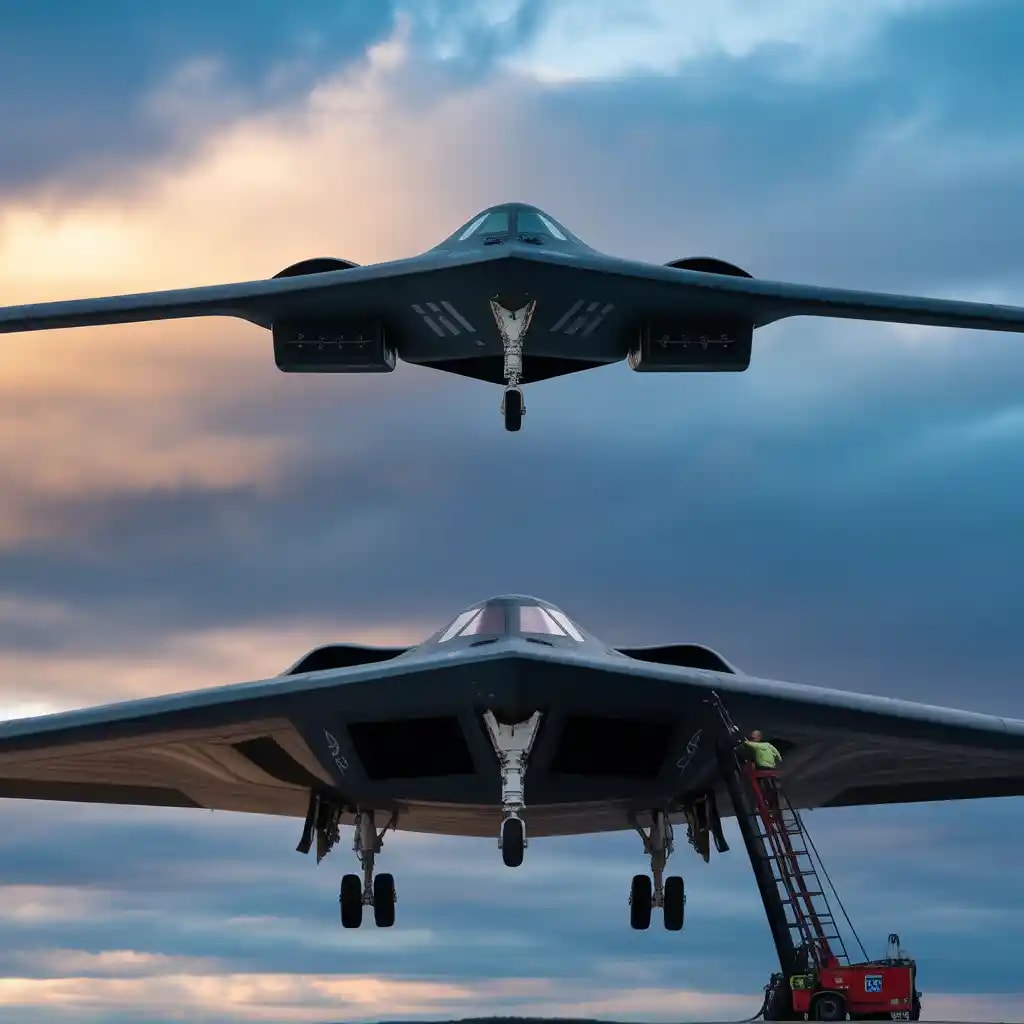
When we think of military power and stealth in modern warfare, few aircraft command the same awe and fear as the B-2 Spirit bomber jet, commonly referred to as the B-2 Stealth Bomber. This flying wing-shaped aircraft has often been described as a “ghost” in the sky – nearly invisible to radar and capable of delivering deadly precision from thousands of miles away. But what exactly makes the B-2 so special, and why does it still remain one of the most expensive and strategically valuable assets in the U.S. Air Force’s arsenal?
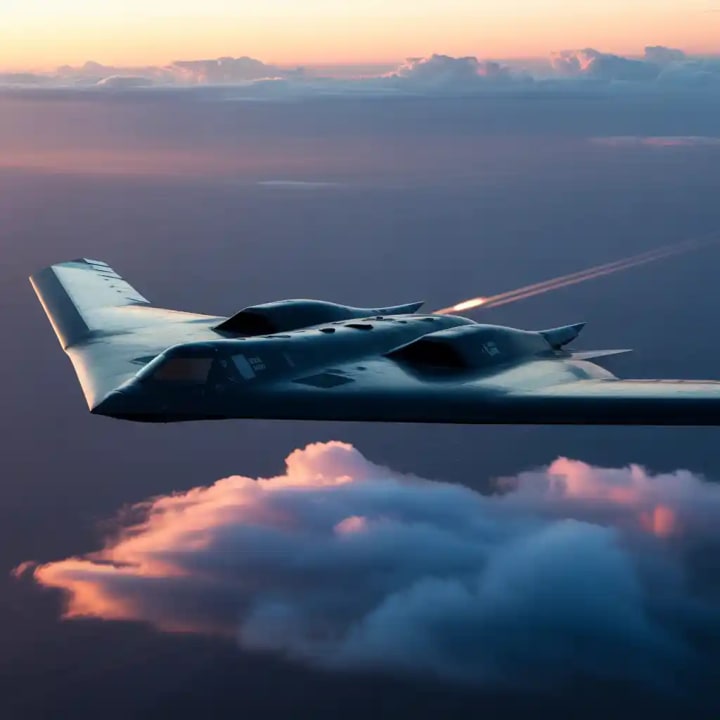
The Origins of the B-2
The B-2 bomber was developed during the Cold War when the United States sought to maintain strategic superiority over the Soviet Union. Originally conceived under the Advanced Technology Bomber (ATB) project in the late 1970s, the aircraft was built by Northrop Grumman with the goal of evading radar and striking deep into enemy territory.
After years of top-secret development, the B-2 made its public debut in 1988. It was introduced into active service in 1997 and remains one of the most technologically advanced aircraft ever built.
Stealth Above All
The most famous feature of the B-2 is its stealth capability. Unlike traditional bombers that rely on speed or altitude to avoid threats, the B-2 is designed to be almost invisible to enemy radar systems. This is achieved through:
Radar-absorbing materials that coat the surface.
Curved, smooth design without sharp angles, which minimizes radar reflections.
Internal weapons bays to prevent external loads from disrupting its stealth.
Special cooling systems to reduce heat signature.
All of this makes the B-2 nearly undetectable to radar, infrared, acoustic, and visual detection systems.
Design and Appearance
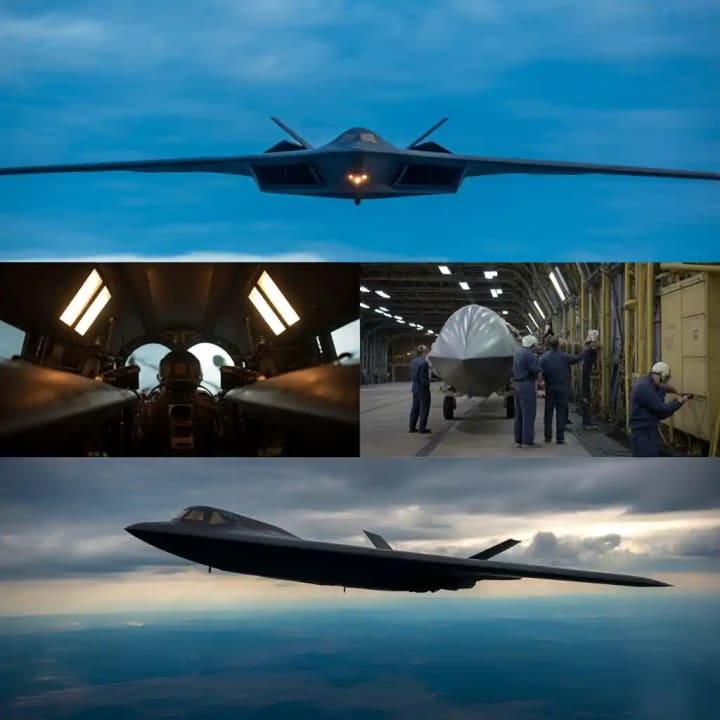
The B-2's most striking feature is its unique shape. It uses a flying wing design, meaning it has no tail or fuselage. The wingspan is a massive 172 feet (52.4 meters), and it stretches 69 feet (21 meters) long.
Its bat-like shape isn't just for looks — it's a critical part of the stealth design. This unusual structure minimizes the aircraft’s radar cross-section, allowing it to “slip through” enemy radar nets.
Despite weighing over 150,000 pounds, the B-2 flies with grace, often described as eerily silent and smooth compared to other bombers.
Power and Performance
The B-2 is powered by four General Electric F118-GE-100 engines, each producing 17,300 pounds of thrust. It can reach a maximum speed of 628 mph (Mach 0.95) and cruise at 50,000 feet altitude.
It has an unrefueled range of 6,900 miles and can fly more than 11,000 miles with mid-air refueling. This makes it capable of launching missions from the United States and reaching any point in the world without needing a base near enemy territory.
Lethal Payload
The B-2 can carry up to 40,000 pounds of ordnance, both conventional and nuclear weapons. Its weapons load can include:
16 B61 or B83 nuclear bombs
80 500-pound JDAM precision bombs
GBU-57A/B Massive Ordnance Penetrator (for bunker-busting)
One of its biggest strengths is the precision strike capability — the ability to hit high-value, heavily defended targets with minimal risk of detection or interception.
Missions and Combat History
Despite its stealth, the B-2 has been actively used in real combat scenarios. Notable missions include:
Kosovo War (1999): First combat use during NATO bombing of Yugoslavia.
Afghanistan (2001): Used in the early stages of Operation Enduring Freedom.
Iraq War (2003): Delivered precision strikes on strategic targets in Baghdad.
Libya (2011): Participated in Operation Odyssey Dawn.
These missions showcased the B-2’s global reach and its ability to perform devastating attacks with pinpoint accuracy, even in the most heavily defended airspaces.
The Price of Power
The B-2 is one of the most expensive aircraft in history. Each unit costs over $2 billion, and the entire program is estimated to have cost more than $44 billion. Only 21 units were built, and 20 remain in active service today.
The high cost is due to the complexity of its stealth systems, maintenance, and advanced avionics. It requires a climate-controlled hangar to preserve its radar-absorbent coating and specialized maintenance crews trained in stealth technology.
The Future of Stealth Bombers
While the B-2 is still considered highly advanced, its successor, the B-21 Raider, is in development and expected to enter service in the late 2020s. The B-21 will build upon the lessons learned from the B-2 while incorporating newer materials, automation, and cyber-defense systems.
Even so, the B-2 is expected to remain in service until at least 2032, a testament to its revolutionary design and battlefield effectiveness.
Conclusion: A Flying Phantom
The B-2 Spirit is not just a bomber — it’s a symbol of invisible dominance, technological achievement, and strategic deterrence. Its ability to deliver powerful payloads undetected into enemy territory continues to shape global military strategy.
To this day, the sight (or rather, the absence) of a B-2 in the skies reminds the world of the unmatched might of stealth — a whisper in the wind that can change the course of a war.
About the Creator
Atif jamal
I write heart-touching stories and thought-provoking articles inspired by nature, emotions, and everyday life
Keep reading
More stories from Atif jamal and writers in Serve and other communities.
12 Days of Fire: The Iran-Israel Conflict That Shook the Middle East
📌 Disclaimer: > This article is a fictional analysis and does not reflect any confirmed or actual events. It is written purely for informational and educational purposes, based on hypothetical scenarios. The content does not support, promote, or endorse any form of violence, conflict, or political stance. All views are presented in a neutral and respectful manner.
By Atif jamal 7 months ago in Serve
Stolen Bike, Not Valor
Koa was riding his new electric bike through the city park not too far from the US Embassy where he served in an Asian country. The ride was a part of his daily evening workout. He didn't really like the idea of an electric bike because he thought it was lazy. Besides, Koa had another good mountain bike he'd bought here used and it gave him a much better workout. But this one was his girlfriend's gift for his 29th birthday that she had taken the trouble to ship to him across the ocean. Koa felt obliged to ride it out at least occasionally, but promised himself not to use the battery. He even took it off the bike, to avoid the temptation.
By Lana V Lynx27 days ago in Serve




Comments
There are no comments for this story
Be the first to respond and start the conversation.