
12 Days of Fire: The Iran-Israel Conflict That Shook the Middle East
A powerful hypothetical look into how a short but intense war between two regional rivals could reshape the future of the Middle East — militarily, politically, and emotionally.

📌 Disclaimer:
> This article is a fictional analysis and does not reflect any confirmed or actual events. It is written purely for informational and educational purposes, based on hypothetical scenarios. The content does not support, promote, or endorse any form of violence, conflict, or political stance. All views are presented in a neutral and respectful manner.
Day 1: The Spark Ignites
The conflict began with a sudden and unexpected missile strike. Iran, citing Israeli operations against its assets in Syria and assassinations of key scientists, launched a wave of missiles targeting Israeli military bases. Israel responded immediately with airstrikes deep inside Iran, focusing on nuclear and missile facilities.
Both nations claimed the right to self-defense, and international reactions were mixed. The United Nations called for immediate de-escalation, but the war had already begun.
Day 2–3: Skies on Fire
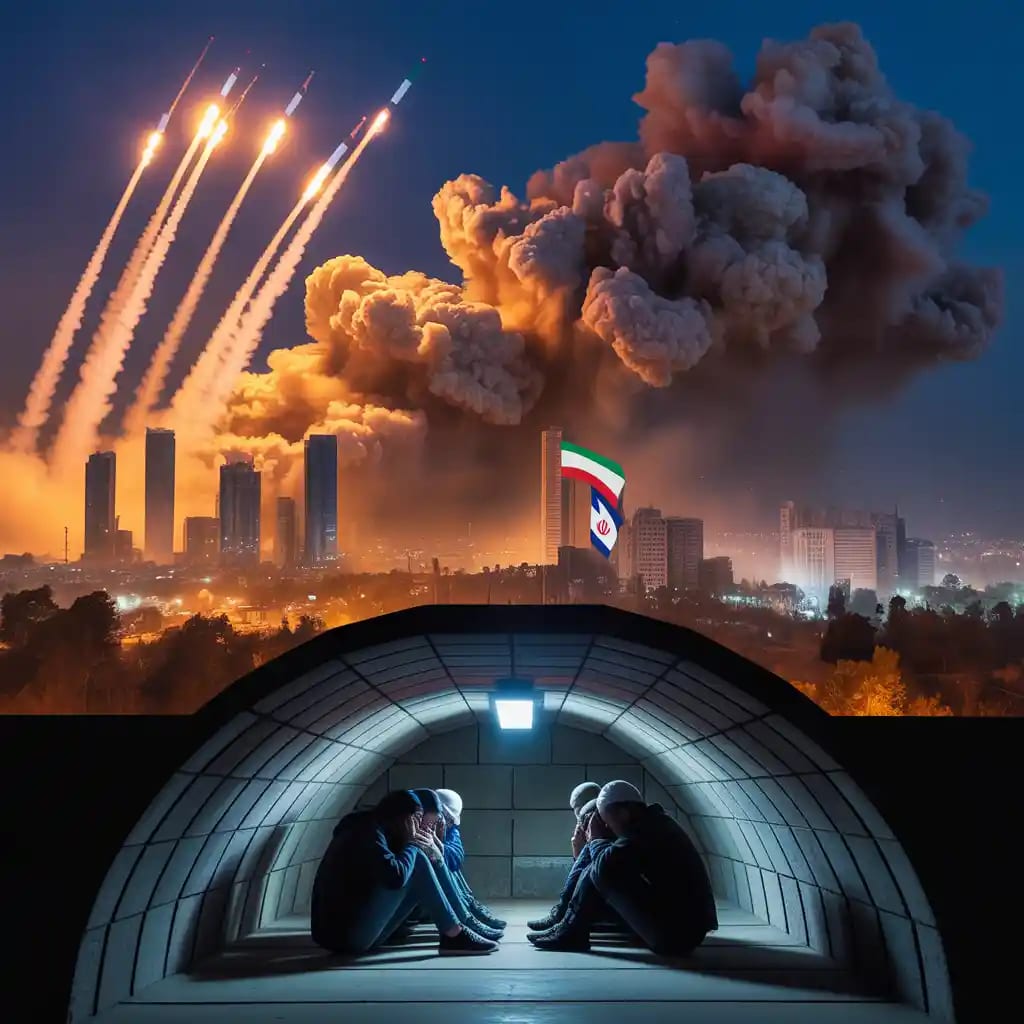
Israel’s Iron Dome and Arrow defense systems intercepted dozens of missiles, but some slipped through, hitting Tel Aviv and Haifa. Meanwhile, Israel unleashed F-35 stealth jets and long-range drones into Iranian airspace. Explosions lit up the skies over Tehran and Esfahan.
Iran responded with attacks through its regional proxies — Hezbollah in Lebanon, militias in Syria and Iraq, and rocket fire from Gaza. Israeli cities faced an overwhelming barrage, and air raid sirens became a chilling soundtrack of daily life.
Day 4–5: Proxy Flames
As Israel continued bombing Iranian infrastructure, Iran activated Hezbollah in the north. Thousands of rockets rained down on northern Israel, forcing over half a million civilians into shelters. In retaliation, the Israeli Defense Forces (IDF) launched Operation Iron Viper, targeting Hezbollah command centers in Lebanon with devastating precision.
Iraq and Syria also saw limited strikes, as Iranian-backed groups tried to open more fronts. The region stood on edge, fearing the war might spread beyond Iran and Israel.
Day 6–7: The Cyber Front
The war took a new turn as both nations intensified cyberattacks. Iranian hackers shut down parts of Israel’s banking and energy systems, while Israeli cyber units breached several Iranian government websites and caused blackouts in key cities.
Social media became a battleground. Misinformation and propaganda flooded platforms, with both sides trying to control the narrative and international sympathy.
Day 8: Civilian Cost Mounts
By now, hundreds were dead and thousands injured on both sides. Hospitals were overwhelmed. Iranian airstrikes on southern Israel caused major casualties, while Israeli precision bombs leveled Iranian missile depots in the outskirts of Qom and Mashhad.
Humanitarian groups pleaded for a ceasefire. Refugees poured out of southern Lebanon and border towns in western Iran.
Day 9–10: Naval Clash in the Gulf
On Day 9, the conflict extended to the Persian Gulf, with Iranian fast boats and drones harassing Israeli-linked commercial ships. In response, Israel — with U.S. intelligence support — struck Iranian naval installations and oil terminals.
World oil prices surged. The Strait of Hormuz, one of the world’s most vital shipping lanes, was partially blocked. Countries like China and India demanded de-escalation, fearing a global economic fallout
Day 11: International Pressure Builds
The United States, Russia, China, and the European Union jointly demanded an immediate ceasefire. Secret diplomacy began behind closed doors. The war had already lasted longer than expected and risked spiraling into a regional catastrophe.
Both Israel and Iran had achieved limited objectives but faced growing economic damage and political pressure. Protests erupted in Tehran and Jerusalem, as citizens demanded an end to the bloodshed.
Day 12: Ceasefire Declared
On the twelfth day, a temporary ceasefire was announced, brokered by Turkey and Qatar with U.N. involvement. Both countries claimed victory, but the cost was enormous:
Over 2,000 dead, mostly civilians.
Billions in infrastructure damage.
Economic sanctions intensified on Iran.
Israel faced global criticism for its military responses, while Iran's proxies were weakened across the region.
Aftermath: A Tense Peace
Though the shooting stopped, the war’s political and psychological scars remain. Iran accelerated its underground nuclear program. Israel expanded military drills and signed new defense pacts with Arab neighbors like the UAE and Bahrain.
The region now lives under a fragile balance, knowing that the next spark could ignite something even worse.
Conclusion: Lessons from 12 Days of War
The 12-day war between Iran and Israel revealed more than just military strength. It exposed the danger of proxy conflicts, the power of cyber warfare, and the human toll of political brinkmanship.
The world watched as two ancient civilizations, both with proud histories, stood on the edge of destruction. While the guns may be silent for now, the silence is uneasy — a pause, not peace.
About the Creator
Atif jamal
I write heart-touching stories and thought-provoking articles inspired by nature, emotions, and everyday life
Keep reading
More stories from Atif jamal and writers in Serve and other communities.
B-2 Spirit: The Silent Giant of the Sky
When we think of military power and stealth in modern warfare, few aircraft command the same awe and fear as the B-2 Spirit bomber jet, commonly referred to as the B-2 Stealth Bomber. This flying wing-shaped aircraft has often been described as a “ghost” in the sky – nearly invisible to radar and capable of delivering deadly precision from thousands of miles away. But what exactly makes the B-2 so special, and why does it still remain one of the most expensive and strategically valuable assets in the U.S. Air Force’s arsenal?
By Atif jamal 9 months ago in Serve


Comments
There are no comments for this story
Be the first to respond and start the conversation.