
A Life Between Giants: My Story as an Afghan Fighter
From Soviet tanks to American drones — what it meant to fight, survive, and be forgotten in my own homeland.

1. A War Before I Could Read
I was six when the Soviets rolled into Afghanistan in 1979. I didn’t know what communism was, nor did I care. What I understood was the thunder of tanks that shook our village, the flames that devoured our school, and the day my older brother left with a rifle and never came back.
I learned to shoot before I could write my name properly. My father, who had fought the British decades before, buried his farming tools and handed me a Kalashnikov. “This is your life now,” he said. “You don’t ask why. You defend.”
We called ourselves Mujahideen — those who struggle in the way of God. The Americans called us "freedom fighters." We didn’t care for titles. We just knew our mountains, and we knew they didn’t belong to Moscow.
2. Fighting the Red Bear
The Soviet soldiers were like metal ghosts. They didn’t understand our language or our land. They burned crops, raided homes, and bombed schools. But we were stubborn. We didn’t have tanks, but we had belief, terrain, and patience.
I remember a moment in the winter of 1984 — my unit ambushed a convoy near Khost. We had old rifles and a single RPG. We lost two men, but downed a tank. That night we slept in the snow, stomachs empty, but hearts full.
Later, American weapons started arriving. Stinger missiles. Ammunition. Money. It helped. But the fight was always ours. We lost brothers, sons, entire villages. America didn’t lose its children here — we did.
3. The War Ends, But Peace Doesn’t Come
When the Soviets left in 1989, we celebrated in silence. We had won, but not without cost. My father was dead. My village was rubble. And instead of peace, we fell into civil war — Mujahideen factions turned on each other. The Americans? They were gone. No thank you. No rebuilding. Just silence.
By 1996, the Taliban emerged. At first, they brought order. Streets were safer. Corrupt commanders were punished. But soon, the beards got longer, the music stopped, and women disappeared from public life.
They didn’t ask me to fight — I was tired. But I watched as my people, once fierce defenders of freedom, now bowed under a new rule of fear. It wasn’t what we fought for. But we were too exhausted to resist again.
4. September 11 and the Return of Giants
I was in Jalalabad when the towers fell in New York. I remember the American voice on the radio: “Either you are with us, or you are with the terrorists.” I understood that line better than most. It meant more bombs. More boots. Another foreign army on Afghan soil.
By 2002, the Americans were back. But this time, they came with dollars and dreams — of democracy, rights, schools. I welcomed it. I worked as a security guard for an NGO. My daughter went to school. I even learned a bit of English.
But beneath the surface, resentment brewed. American soldiers walked with arrogance. Contractors lived in luxury while our hospitals lacked medicine. Corruption exploded. Warlords returned — some now on U.S. payroll. We felt used again. Not helped.
5. Another Fight Begins
By 2005, the Taliban were back in my province. They had changed. They used cell phones, drove motorbikes, and filmed their attacks. Many were my former comrades — now enemies. Some joined out of ideology. Others for money. Some because they simply hated the Americans.
I stayed neutral — as long as I could. But in 2011, a drone strike killed my cousin. He was not a fighter. He sold oranges. The Americans said they had "credible intelligence." We buried him in silence.
That day, I picked up my rifle again.
6. The Fight Against the U.S. — Not for the Taliban, But for Dignity
Let me be clear: I was never a Taliban. I did not believe in their version of Islam. I wanted girls in school. I wanted elections. But when your village is bombed and no one apologizes, when your people are seen as collateral damage — you no longer care who rules.
We fought American soldiers the way we fought the Soviets. Hit-and-run. IEDs. Disguises. It wasn’t glorious. It wasn’t heroic. But to us, it was resistance. Not to democracy — but to occupation.
I lost two sons in these years. One to a night raid. One to an airstrike. The Americans said they were "militants." They were not. They were children. Do you understand now why we fight?
7. The Withdrawal — A Bitter Victory
In 2021, when the Americans left, I did not cheer. I just sat in my field and wept.
It was not victory. It was abandonment, again.
Girls were pulled out of school. NGOs shut down. The Taliban returned stronger than ever. America left a broken country — again. And those of us who fought, who survived, were left with our ghosts.
8. To the American Reader
You may see us as backwards, violent, irrational. I understand. You only saw us on the news — as shadows, insurgents, threats.
But let me tell you: we are also fathers, brothers, poets, farmers. We bleed. We grieve. We pray for peace — just like you.
I don’t hate America. I still remember the kind American nurse who helped my wife deliver our third child in a Kabul clinic. I remember the soldier who shared his rations with my son. But these moments were drowned in a sea of raids, bombs, and broken promises.
9. What We Really Wanted
We never asked for much: dignity, autonomy, a say in our future. Not puppet governments. Not occupiers. Not dollars tied to conditions we didn’t understand.
If you want to help Afghanistan now, listen. Don’t impose. Don’t bomb. Don’t forget us — again.
10. I Am Tired, but Not Broken
I am 53 now. I’ve buried more than I’ve celebrated. My beard is grey. My rifle lies under my bed, but I pray I never need it again.
My daughter, now 19, dreams of becoming a teacher. I fear for her. But I also hope. Hope that one day, she will live in a country that is free — truly free. Not just from invaders, but from fear, extremism, and ignorance.
Final Words
This is not a story about good vs. evil. It is a story about people crushed between giants. About how one Afghan fighter tried to survive when history gave him no choice.
If you’ve read this far, thank you. Maybe now, when you hear the word “Afghan,” you’ll think of me — not a terrorist, not a statistic — but a man who only ever wanted to protect his home.
About the Creator
Keep reading
More stories from Inzamam Ul Haq and writers in Serve and other communities.
Where the Dust Never Settles: A Waziristani’s Reflection on a Century of Foreign Wars
I was born in Waziristan, a rugged, beautiful region tucked between the jagged folds of the mountains on Pakistan’s northwest frontier. It’s a place where poetry lives in the same breath as war, and the sound of drone engines is as familiar as the call to prayer. To outsiders, Waziristan is often seen only in headlines—tribal, lawless, extremist. But those words barely scratch the surface of a place shaped not by its people’s will alone, but by a legacy of foreign wars that have passed through like storms, leaving behind scars and silence.
By Inzamam Ul Haq7 months ago in Serve
War Between Pakistan And Afghanistan
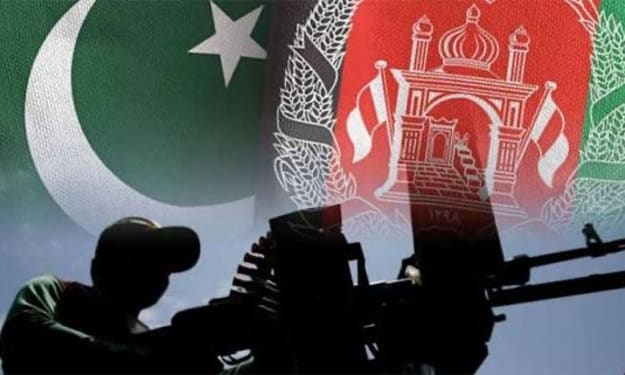
Tension Escalates Sharply at the Pakistan-Afghanistan Border What’s happening now? Tensions between Pakistan and Afghanistan have suddenly escalated into heavy fighting along their shared border, known as the Durand Line. Both sides are accusing each other of attacks, and military clashes have intensified in recent days. 
By shaoor afridia day ago in Serve
Non Stop War Between Pakistan And Afghanistan
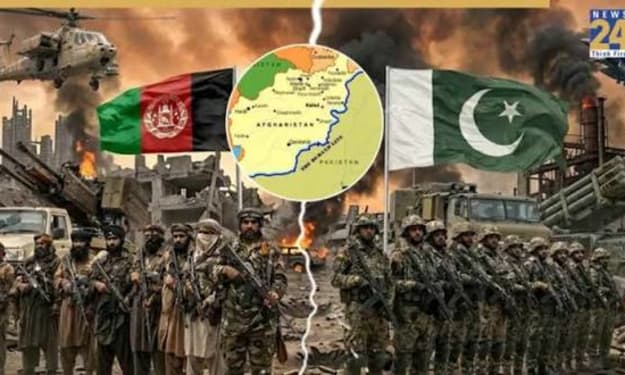
The situation between Pakistan and Afghanistan has suddenly gotten much worse. In late February 2026, Pakistan said it is now in what it calls an “open war” with Afghanistan. Pakistan’s military carried out airstrikes on several major Afghan cities, including the capital Kabul and places like Kandahar and Paktia. This has caused fighting to grow significantly between the two neighbors. �
By shaoor afridiabout 14 hours ago in Serve

Comments
There are no comments for this story
Be the first to respond and start the conversation.