
Writing with ADHD
A tale of executive dysfunction.


It has taken me an unbelievably long time to start writing this. Eight months in fact! Most of my readers by now are probably thinking I’ve slipped off into the abyss. Some may not even think of me anymore. Even now, as I write this sentence, I wonder how long the burst of motivation I’m feeling is going to last; I wonder if I’ll ever finish it.
A lot has happened in my life since I started the blog Outrageous Optimism. I started writing as a creative outlet over one of the first UK lockdowns during the early phases of Coronavirus. As I continued, I came to terms with my past, anxiety and depression, my present and the things that led to me realising that what I actually had was PTSD. Writing, alongside real-life therapy, helped. It gave me a chance to map out what I felt I couldn’t always communicate out loud. I also knew how much relief I experienced when I saw someone else writing about things I was struggling with, to know that I wasn’t alone, that there was someone out there who could offer some insight into my own situations. I understood with 100% certainty that this is what I hoped above all else to be able to do for other people. When I started to realise that I may also have ADHD, I felt blindsided.
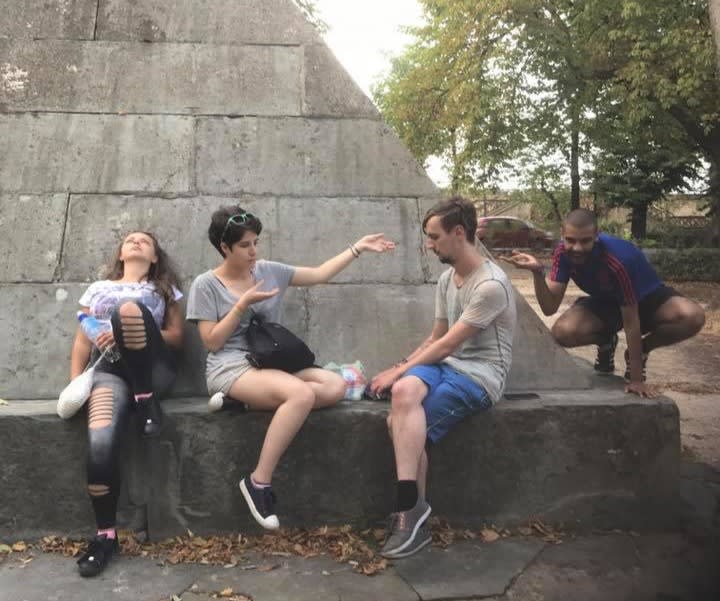
It took me a while to be able to admit to myself that ADHD was something I might have. I remember, distinctly, hearing my sister describe what she thought was ADHD within herself and thinking, that’s just how everyone is. Over the year that followed, I began to get a little more suspicious. I struggled with executive function. I always knew exactly what I wanted to do and how to do it – if I were doing it for someone else, I was incredibly efficient – I just couldn't bring myself to do the thing for me. I was prone to making impulsive decisions, something I was already fighting hard against. I have, in the past, and continue to find it hard to answer messages, or even to remember that the messages exist. I would zone out in the middle of conversations, my mind was always racing with a million different things, and I would go through bouts of hyper-focusing on a particular thing only to lose interest in it much too soon after. I most definitely had a lower dopamine count and found it easier to chase quick highs than have the patience to forge longevity and a more sustainable sense of contentment.

More than this, I didn’t know what to do with all of that information. My feelings were conflicting and I didn’t feel as though I fully understood what I was dealing with myself yet. How could I be expected to give any kind of sound advice when my head was a bumbling mess? Weirdly, I also felt a sense of imposter syndrome. I now seemed to have too many diagnoses; I didn’t think that it was believable that I could also have ADHD. I had neglected to realise that anxiety and depression were something that very commonly came naturally with ADHD due to our lower-than-usual ability to produce dopamine. But it isn't just anxiety and depression that a lack of dopamine can cause.
Dopamine is a neurotransmitter that helps control the brain's reward and pleasure centers. Dopamine also helps regulate movement and emotional responses, and it enables us not only to see rewards, but to take action to move toward them. (Psychology Today)
It turns out that dopamine has a hand in emotional regulation, motivation, attention and learning. It fuels goal-directed behaviour and allows you to see hurdles as challenges to overcome rather than threats which could crush you. Aka, all of the behaviours that have been most valued in society for decades. Not having enough of the stuff that motivates you to behave in the ways described above can bring about a lot of stigma and shame. This is both placed upon you by neurotypicals who are lucky enough to never have had to experience the downsides of ADHD, and then echoed back to you by your very own self.

Having PTSD as well as ADHD is not easy, but knowing why I was the way I was, took away a lot of the personal shame. It stopped my life being an endless quest to seek out more dopamine and allowed me to find ways to manage the symptoms of a disorder I have through no fault of my own. It doesn’t mean that I’m never frustrated with these symptoms, but it has pushed me to be kinder to myself in the long run – something which can be incredibly powerful, because, when you’re already lacking in dopamine, what you definitely don’t need, is to invite a state of mind which causes you to take yet another hit to your general wellbeing. And actually, most of us with ADHD have a great amount of resilience, creativity, spontaneity, and energy. We have good conversational skills (when we're not oversharing) and can achieve great things when we hyperfocus.
In the first paragraph of this article, I asked myself how long my burst of motivation would last, how far I would get before I gave up. The answer is now. I am sitting in the spare room (because I got bored of my last environment and needed a change) wondering how I’m going to wrap this all up. But I will not give up because, damn it, I’ve already come this far. Ironically, I think the above feeling perfectly encapsulates my relationship with my ADHD. Although it takes me a while to put pen to paper, to contextualise what I’m trying to say and not go off onto tangents, the simple fact that I’m trying gives me a strange sense of motivation to continue.

I know that this won’t be helpful to everyone, we all have different variations of ADHD. I also know that the knowledge that you’re trying won’t work all the time. Sometimes it’s hard to put the effort into something even if you care a lot about it. I don’t have all of the answers. But, my friends, the massive burst of dopamine that you get when you’ve completed the project, if nothing else, is worth the effort. And I mean long-term feelings of achievement, the good stuff. If you need to power your motivation up with short-term rewards in order to give yourself the energy to do the larger tasks then do it, and don’t feel bad about it. Just try not to get lost in a life of fleeting pleasures that’ll always leave you wanting for more.
So, if you find something that you care about, try to put in the effort, even though it’s hard. Motivation won’t find you; you have to find motivation. And I feel like the biggest hypocrite right now, knowing that I probably won’t write again for another three months, but things that you love always have a way of finding their way back to you.

We’re all on our own timelines, with our own hurdles and setbacks. We’ll all be going through different highs and lows at our own pace and we won’t be able to be 100% switched on at all times. There is nothing wrong with that. The trick is knowing that you are always valid, deserving of respect and worth a hell of a lot no matter where you are within yourself or how much work you are producing for the world at any given time. Take your time, breathe, and revel in all of the joy that life has to offer. You won’t regret it.

I hope you enjoyed reading this article as much as I enjoyed writing it! If you did, feel free to like and subscribe.
In this article, we discussed different types of disorders that can develop hand in hand with ADHD. If you would like to learn more about PTSD, you can so here:
If you would like to continue the conversation, you can find me over on @OptimismWrites. Or you can comment below!
About the Creator
Outrageous Optimism
Writing on a variety of subjects that are positive, progressive and pass the time.
We're here for a good time AND a long time!
Official Twitter: @OptimismWrites
Author Twitter: @gabriellebenna
Reader insights
Outstanding
Excellent work. Looking forward to reading more!
Top insights
Easy to read and follow
Well-structured & engaging content
Eye opening
Niche topic & fresh perspectives
Heartfelt and relatable
The story invoked strong personal emotions
On-point and relevant
Writing reflected the title & theme
Keep reading
More stories from Outrageous Optimism and writers in Psyche and other communities.
Magic
Note from the Author: I want to let you know that this is an unusual story, and it has been written purely from whatever is in my unconscious mind, because before I start writing, I get into a flow state that reaches my unconsciousness. I also write in my subconscious mind, which is like a mid-flow state between the conscious and unconscious mind.
By Denise Larkin7 days ago in Fiction



Comments
There are no comments for this story
Be the first to respond and start the conversation.