
Why Your Focus Breaks (And How to Win the Tension Game)
Attention isn’t fragile. It’s a tug-of-war between what holds you in and what pulls you out.

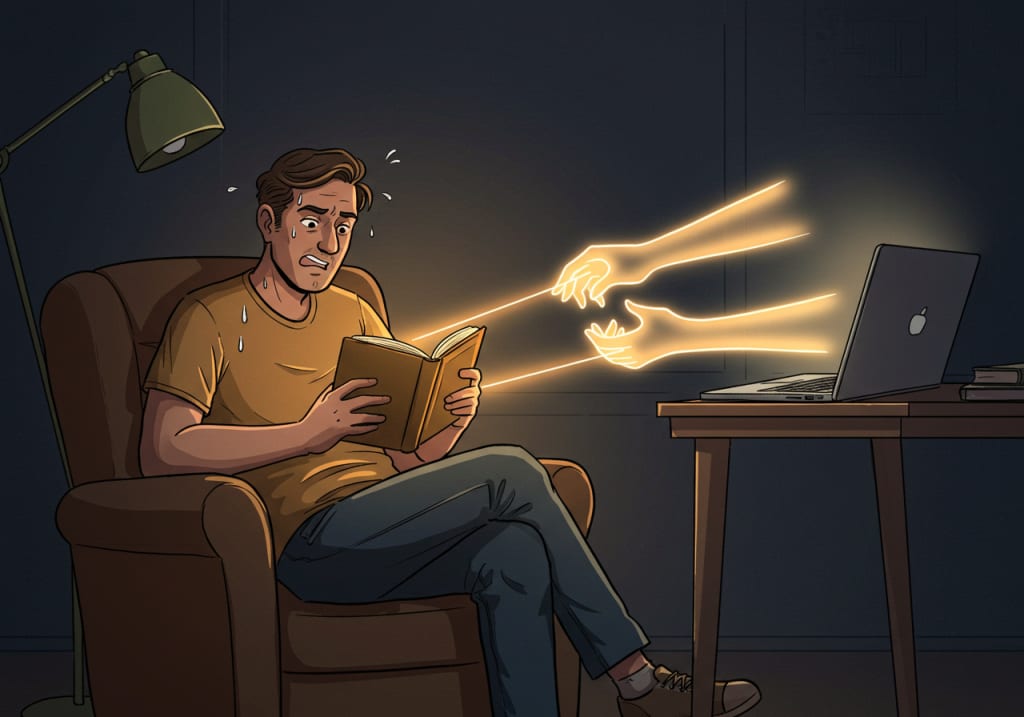
Most people think focus breaks because we're lazy, weak-willed, or easily distracted. But here's the thing: focus doesn't just "snap" out of nowhere. It's not random. It's not moral weakness.
Focus is the outcome of a hidden tension game between two opposing forces in your mind. Once you learn to see it this way, you stop blaming yourself and start playing smarter.
Let's break it down.
The Two Forces of Focus
Anchory: What Holds You In
Think of Anchory as the glue that keeps you tethered to what you're doing. It's the mental force that stabilizes your attention.
Anchory shows up when:
- You're engrossed in a movie and don't notice time passing.
- You're mid-conversation and someone calls your name, but you don't hear.
- You're "locked in" writing, coding, painting, or gaming.
Strong Anchory feels like flow. You don't have to keep convincing yourself to stay; your brain naturally holds the line.
Anchory is built from things like:
- Immersion: How deeply your mind can sink into the task.
- Relevance: How much the task connects to your goals or identity.
- Rhythm: How predictable the flow of work is.
The more of these ingredients you have, the stronger your Anchory.
Grain: What Pulls You Out
Now for the other side of the tug-of-war. Grain is friction. It's the mental resistance that quietly builds until it pulls you away.
Grain is what makes your mind wander to your phone, your fridge, or suddenly Googling "do penguins have knees?"
It shows up as:
- Friction: Too many clicks, steps, or obstacles before progress shows.
- Discomfort: Fatigue, boredom, stress, or emotional noise.
- Interruption: Random thoughts and unfinished to-dos knocking on your door.
When Grain builds, it tugs your attention away. Sometimes gently. Sometimes, like a trapdoor.
Why Focus Breaks
Focus breaks when Grain outweighs Anchory.
Not because you're weak. Not because you're "bad at focusing." But because the tension tips.
Picture this: you're working on a report. Anchory is trying to hold you in; maybe the deadline matters, maybe you've set a timer. But the Grain starts building: your neck is stiff, the doc has formatting glitches, your inbox pings. At some point, Grain wins the tug-of-war, and snap, you're scrolling TikTok before you even realize it.
How to Strengthen Anchory
If Anchory is the glue, how do you make it stickier? Here are practical ways to fortify it:
- Shrink the scope. Instead of "write the report," switch to "draft the first two sentences." Narrower focus strengthens Anchory by reducing overwhelm.
- Use visible tethers. Keep a timer running, a sticky note with the current task, or a progress bar you update. External anchors reinforce internal Anchory.
- Add ritual. Start with a consistent cue: a cup of tea, a same playlist, or a pre-focus checklist. Rituals condition your brain to drop in.
- Raise personal stakes. Remind yourself why this task matters. Even a quick Post-it that says "This chapter gets me closer to graduation" helps.
How to Lower Grain
Grain is like grit in the gears. Your job isn't to eliminate it (impossible) but to reduce it enough that Anchory holds longer.
Here are moves that work:
- Remove friction. Pre-stage tools before you start: open the doc, load the dataset, and clear your desk. Every extra step is added Grain.
- Manage your body. Stretch, hydrate, eat. Half of "mental Grain" is just physical needs ignored until they yank you out.
- Close open loops. Unfinished tasks gnaw at Anchory. Do a quick "capture pass," jot them on paper so your brain stops rehearsing them.
- Adjust difficulty. If it's too easy, you drift. Too hard, you stall. Tweak the task until it feels just-right challenging.
Anchory vs. Grain in Real Life
Scenario 1: Gaming late into the night.
Anchory is maxed, engagement, relevance, rhythm. Grain (fatigue) eventually builds, but Anchory dominates until you crash.
Scenario 2: Studying for an exam.
Anchory exists (the stakes are real), but Grain is high (dense material, discomfort, fatigue). Unless you trim the Grain, Anchory can't hold.
Scenario 3: Scrolling social media.
Anchory is engineered, endless feed, variable rewards. Grain is kept artificially low. That's why it's so hard to pull away.
The Shift in Perspective
When you understand focus as a tension game, you stop asking, "Why am I so bad at focusing?" and start asking, "Which side is winning right now, Anchory or Grain?"
That single question reframes everything. It takes the shame out and puts strategy in.
Putting It Into Practice
Here's a simple 3-step check-in you can run anytime focus wobbles:
- Name the pull. What's the Grain? Is it friction, fatigue, or an open loop?
- Name the tether. What Anchory is currently holding you? A deadline? A timer? A sense of purpose?
- Tip the balance. Strengthen Anchory (shrink scope, tether externally) or reduce Grain (fix friction, clear loops).
If you do this mid-task, you can often rescue your focus without starting over.
Closing Thought
Focus doesn't break randomly. It breaks when Grain wins the game against Anchory.
Your attention isn't a fragile thing to babysit; it's a dynamic tug-of-war you can learn to read and influence.
So the next time you catch yourself drifting, don't spiral into guilt. Just ask: What's pulling me out, and what's holding me in?
Then, make your move.
- Nikesh xx
About the Creator
Keep reading
More stories from Nikesh Lagun and writers in Psyche and other communities.
Do You have a Support Network?
Life is harder when you’re on your own. Human beings are social creatures, and we usually feel better when we have support from a strong social network around us. For most people, it’s our families that hold us together like glue.
By Elizabeth Woodsabout 9 hours ago in Psyche
Miss Persephone's Manual to a Seemingly Ordinary Life
Miss Persephone was found at the dining table, her blue eyes swollen, her tears arriving and retreating like the tides of the ocean. Earlier that day, her family had visited her in the retirement home where she had lived for eight years. It was her eightieth birthday.
By Imola Tótha day ago in Fiction


Comments
There are no comments for this story
Be the first to respond and start the conversation.