
Why Your Brain Loves Chaos: The Hidden Psychology of Mental Overload
Discover why your mind craves stimulation, even when it leads to anxiety, overthinking, and burnout—unpacking the brain’s secret addiction to chaos and how to break free.


Introduction: The Beautiful Mess Inside Your Head
Have you ever felt like your brain refuses to calm down—jumping from thought to thought, daydreaming in loops, or overanalyzing the simplest decisions? You’re not alone. Mental overload isn’t just a symptom of modern life—it’s becoming a defining part of it.
But what if the chaos in your mind isn’t a flaw… but a feature?
Recent research in neuroscience and psychology suggests that our brains are wired to chase stimulation, even at the cost of peace. From doom scrolling to multitasking to replaying awkward conversations at 2 a.m., our minds are locked in a loop that feels like noise—but feeds on it like fuel.
In this article, we dive deep into the psychological roots of mental chaos, explore why your brain might secretly love overstimulation, and how to regain clarity without turning off your curiosity.
🧩 Section 1: The Brain’s Addiction to Stimulation
At its core, your brain is a pattern-seeking, reward-driven machine. It constantly craves novelty, input, and resolution. In fact, the neurotransmitter dopamine—often called the “pleasure chemical”—isn’t really about pleasure at all.
It’s about anticipation.
It fires up when you’re scrolling, clicking, watching, and wondering what comes next. Chaos? That’s just another word for constant novelty.
🧠 Key Psychological Insights:
- Information Overload Feels Rewarding
The brain processes over 70,000 thoughts per day—many repetitive or intrusive—but your mind latches onto new ones because they feel like progress.
- Multitasking Feeds the Illusion of Control
Switching between tasks gives a false sense of productivity. It’s chaotic, but it feels efficient.
- Anxious Thinking Can Feel “Productive”
Worrying gives the brain a sense of preparation, even if no real solution comes. It becomes a coping mechanism disguised as control.
🔄 Section 2: Chaos as Comfort – When Disorder Becomes Familiar
Here's the paradox: we say we want peace, clarity, and focus. Yet we surround ourselves with digital noise, emotional loops, and mental clutter.
Why?
Because chaos can feel familiar—especially if your brain learned early on that unpredictability equals normal.
📘 Psychological Backing:
Childhood environments filled with tension or unpredictability can lead to adults who feel uncomfortable in silence.
People with ADHD or anxiety may feel calm when things are “busy” because that’s when their brains feel most alive.
Even those without formal diagnoses can develop a mental baseline of overactivity, making boredom feel painful.
> In short, the brain doesn’t always crave peace—it craves what it knows. And if it knows chaos? That’s what it will recreate.
🔄 Section 3: The Mental Cost of Constant Noise
While mental stimulation can be useful, too much chaos leads to breakdown.
Chronic overstimulation contributes to:
Burnout
Decision fatigue
Sleep issues
Low-grade anxiety and irritability
Disconnection from the present moment
And let’s not forget the rise of doomscrolling, where we consume endless negative information to soothe anxiety—ironically increasing it in the process.
👁️ Reader Reflection:
Take a moment—when was the last time you were fully present without a screen, thought spiral, or distraction?
🔧 Section 4: Rewiring the Brain — From Chaos to Clarity
You don’t need to escape your thoughts—you need to retrain how you relate to them. Here’s how:
✅ 1. Micro-Mindfulness
Start with just 60 seconds a day of focused awareness. Breathe. Feel your body. Notice what’s not chaotic. Let your brain experience stillness in safe doses.
✅ 2. Information Fasting
Try a dopamine detox—a few hours or a full day without screens, news, or noise. Let boredom teach your brain to stop chasing stimulation and start observing reality.
✅ 3. Label the Chaos
When thoughts spiral, name the pattern:
> “This is my brain trying to stay in control.”
Labeling defuses the power of mental noise.
✅ 4. Set a Mental Curfew
Stop feeding your brain chaos before bed. Create a winding-down ritual: read fiction, journal, or stretch in silence.
💬 Section 5: What We Really Want Isn’t Silence—It’s Signal
Mental clarity doesn’t mean eliminating thoughts. It means focusing on thoughts that matter.
Your brain is not broken. It’s just overloaded by a world that profits off your attention. The challenge isn't fixing your mind—it's giving it what it truly needs:
Safety
Purpose
Focus
Meaningful stimulation (not just noise)
When you start giving your brain signal instead of chaos, the calm you're craving begins to emerge—not by force, but by design.
🧠 Conclusion: Making Peace With a Busy Mind
If you feel like your brain is constantly on fire, know this:
You’re not lazy. You’re not broken. You’re not too sensitive.
You’re just human—living in an overstimulated age with an ancient brain.
But by understanding why your mind craves chaos, you can begin to choose clarity—not by shutting out the world, but by tuning into what matters most.
It’s not about emptying your mind.
It’s about organizing the symphony.
About the Creator
Keep reading
More stories from Dorking Waves and writers in Psyche and other communities.
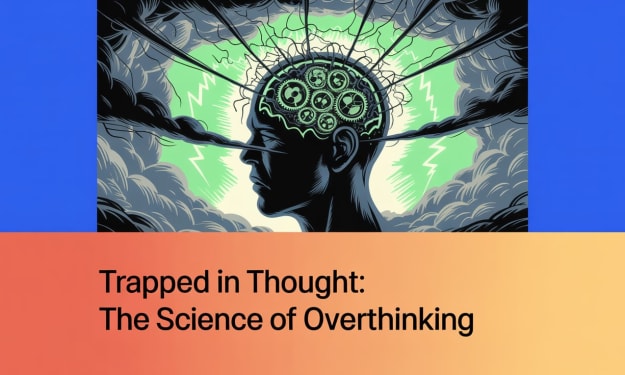
The Science of Overthinking: Why You Can’t Turn Off Your Brain
Have you ever found yourself trapped in a cycle of endless thoughts—replaying a conversation, worrying about the future, or second-guessing every decision you make? It’s 2 a.m., your body is tired, but your mind is wide awake, bouncing from one anxious thought to another. That, in a nutshell, is overthinking.
By Dorking Waves7 months ago in Psyche
How to Succeed at the Benson Directory®
Congratulations and welcome to the Benson Directory® employee #22391! As our newest call handler, you will have the privilege of speaking with dozens of unique and interesting people on a daily basis as well as the opportunity to earn bonuses for high performance. Contained within this handbook you will find a set of ease to follow instructions designed to help you settle in to your new role and begin paving the way to success.
By S. A. Crawford2 days ago in Fiction



Comments
There are no comments for this story
Be the first to respond and start the conversation.