
Why Your Anxiety Gets Worse at Night & What Helps
Understanding nighttime anxiety, why your thoughts feel heavier before bed, and the calming habits that actually make nights easier.

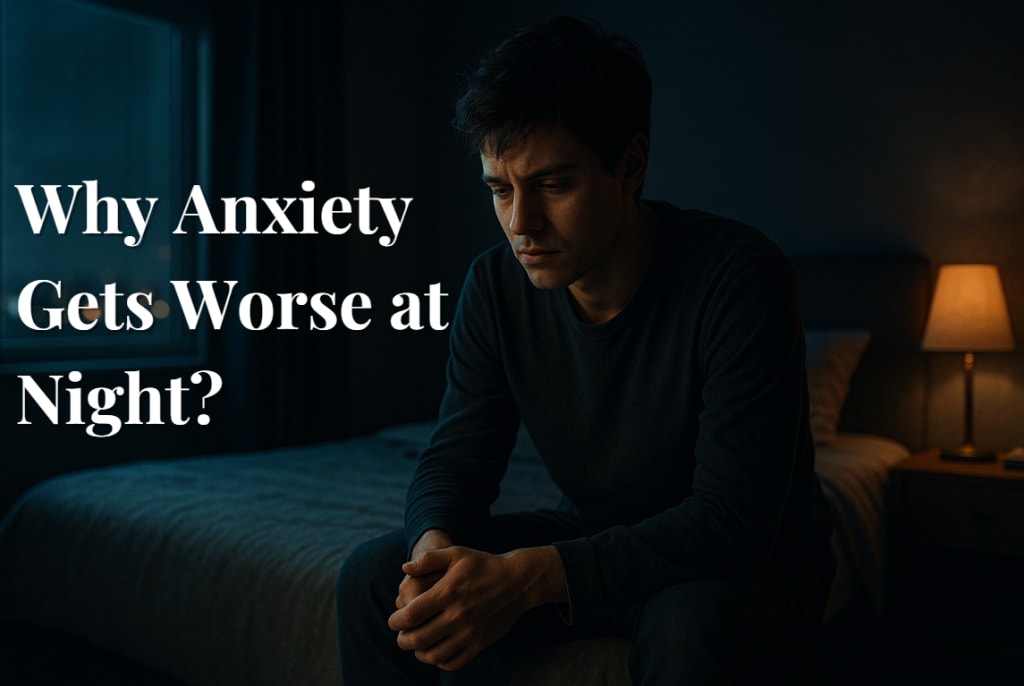
If you’ve ever felt perfectly fine during the day but somehow become overwhelmed the moment everything gets quiet at night, you’re not alone. Many people experience this uncomfortable shift — where worries feel louder, the mind refuses to slow down, and small things suddenly seem much bigger than they are.
Nighttime anxiety is more common than most people realize. When the world goes quiet, the brain often does the opposite. And while it can feel frustrating or exhausting, it’s something you can understand and learn to manage with the right habits.
Let’s break down why anxiety often feels stronger at night and what actually helps calm your mind so you can rest more peacefully.
Why Anxiety Feels Worse at Night
1. Your Brain Finally Has “Space” to Think
During the day, you’re busy — talking, studying, working, scrolling, moving from one thing to another. Your mind is occupied.
At night, when you finally slow down, your brain starts unpacking everything you didn’t process earlier.
This can make normal worries feel heavier simply because there are fewer distractions.
2. Overthinking Shows Up When It’s Quiet
Silence makes thoughts feel louder.
When there are no noises, conversations, or activities competing for your attention, your brain naturally turns inward. This can cause:
- What-if thinking
- Racing thoughts
- Worrying about tomorrow
- Rethinking things that happened during the day
None of this means something is wrong with you — it’s a normal mental pattern that becomes more noticeable at night.
3. The Body Is Tired, and That Makes Stress Feel Stronger
Even if you're not aware of it, your body has been working all day.
When you're tired, the brain becomes more sensitive to stress signals. Fatigue exaggerates emotions, making worries feel bigger than they are.
4. Artificial Light and Late-Night Screens Confuse Your Brain
Scrolling in bed or staying on your phone late at night keeps your brain awake. Blue light disrupts your sleep rhythms and can increase mental tension.
Many people think their anxiety suddenly spikes, but it’s often overstimulation mixed with exhaustion.
5. Nighttime Is When Unrealistic Thoughts Sneak In
During the day, things feel more logical. At night, when you’re tired and the world is dark, worries become dramatic.
Things that feel terrifying at 1:00 AM often feel much smaller by morning. This shift happens because the tired brain exaggerates risks and uncertainties.
What Actually Helps Nighttime Anxiety
You don’t have to “fight” your thoughts. The trick is learning calming habits that help your body and mind settle. Here are proven, realistic, beginner-friendly ways to feel better at night.
1. Create a 15-Minute Wind-Down Routine
Your brain needs a signal that it’s time to shift into “rest mode.”
Try things like:
- Dimming the lights
- Light stretching
- Listening to soft music
- Reading something simple
- Journaling a few thoughts
Even a short routine helps your body relax.
2. Try the “Download Your Brain” Method
Sometimes your mind is busy because it's trying to remember or process things.
Grab a notebook and write down:
- What’s worrying you
- A quick to-do list
- Anything you’re scared you might forget
Once it's on paper, your brain feels less responsible for holding everything.
3. Slow Breathing Helps More Than You Think
Deep, slow breathing shifts your body out of stress mode.
A simple method is:
Inhale 4 seconds → Hold 2 seconds → Exhale 6 seconds
The long exhale tells your nervous system: “We’re safe.”
4. Replace Scrolling With Something That Calms You
Even if you don’t want to quit screens completely, switching to something gentler helps.
Instead of TikTok or stressful topics, try:
- Calming music
- Relaxing videos
- Soft podcasts
- Mindfulness or sleep apps
Your brain will start unwinding instead of revving up.
5. Keep Your Room Sleep-Friendly
Small changes make a big difference:
- Cooler temperature
- Dim lights
- Clean space
- Comfortable pillows or blankets
A calm environment sends a signal of safety and rest.
6. Don’t Pressure Yourself to “Fall Asleep Quickly”
Trying too hard to sleep makes anxiety worse.
Instead, think of nighttime as relaxation time — if sleep comes, great. If not, you’re still resting your body.
Removing sleep pressure often helps sleep happen naturally.
7. Add a Comfort Activity Before Bed
This can be anything that grounds you, like:
- A warm shower
- Soft music
- Light stretching
- A short walk
- Aromatherapy
- Gentle reading
Your brain forms associations between these habits and feeling relaxed.
Why Understanding Nighttime Anxiety Helps
When you know what’s happening inside your mind and body, nighttime anxiety stops feeling like a mystery. You realize:
- You're not “broken”
- Your thoughts are not dangerous
- Nothing is wrong just because nighttime feels harder
- You can train your mind to settle with simple, repeatable habits
Nighttime anxiety doesn't define you. It’s simply a reaction to quietness, tiredness, and an active mind — something you can learn to navigate.
Final Thoughts
Nighttime doesn’t have to feel like a battle between you and your thoughts.
When you understand why anxiety spikes at night and build small routines that support your mind, nights become calmer, softer, and much easier to handle.
You deserve peaceful evenings. And with the right strategies, you can create them.
About the Creator
Keep reading
More stories from Liam Osuos and writers in Psyche and other communities.
Why Your Brain Sabotages Success (And How to Rewire It)
Success isn’t just about talent, hard work, or luck; it’s also about how your brain is wired. Many of us struggle with procrastination, self-doubt, or fear of failure, even when we desperately want to achieve our goals. Why? Because our brains are wired for survival, not success.
By Liam Osuos12 months ago in Psyche
Top tipple tricks
Been thinking a lot about drinking, lately. Not least because of a recent episode of over-indulgence and the inevitable after effects. Some readers may recall the earlier articles I wrote about beating the booze. Here I set out an experiment in techniques for cutting down on my alcohol intake. The experiment was successful, the techniques worked, and I have armed myself with an arsenal of weapons in the war against the demon drink. I have yet to fire the first round however. It's all a question of timing (perhaps procrastination).
By Raymond G. Taylor3 days ago in Psyche
How to Choose the Best PHP Program Near You in North Carolina
Finding the right level of care is an important step when seeking help for mental health or substance use challenges. While some individuals benefit from traditional outpatient therapy, others may need more structured support without committing to full residential treatment. This is where Partial Hospitalization Programs (PHP) can play an important role in recovery.
By Jordan Blakeabout 5 hours ago in Psyche




Comments
There are no comments for this story
Be the first to respond and start the conversation.