
WHY WE ARE SAD
A journey into the unseen battles, hidden wounds, and the human longing for light in dark times.


We all carry a weight.
Some of us know its exact shape and origin — a heartbreak, a loss, a betrayal, a moment when the world stopped making sense. Others just feel it without knowing where it came from, like a shadow that’s always been there.
Sadness is one of the most human emotions we experience, yet we rarely give it the space it deserves. We push it away, plaster smiles over it, drown it in work, social media, or distractions. And yet, it remains — quietly waiting, asking to be understood.
The Invisible Battles
When we think of sadness, we often picture someone crying in a dark room. But sadness is often invisible. It’s the colleague who makes jokes at lunch but goes home to silence. It’s the friend who replies “I’m fine” before you’ve even finished asking how they are. It’s the neighbor who waves from the porch but hasn’t had a real conversation in weeks.
One of the reasons sadness lingers is that we live in a world that prizes productivity and perfection. We’re told to “stay positive,” “move on,” “look at the bright side.” While optimism has its place, these phrases can feel like a dismissal. They suggest that sadness is a weakness to be fixed quickly, rather than an emotion to be understood.
Roots of the Quiet Ache
Why are people sad? The answer is never simple, because sadness is often a combination of many things:
Loss and Grief: Losing a loved one, whether through death, distance, or the slow fading of a relationship, can leave a lasting emptiness.
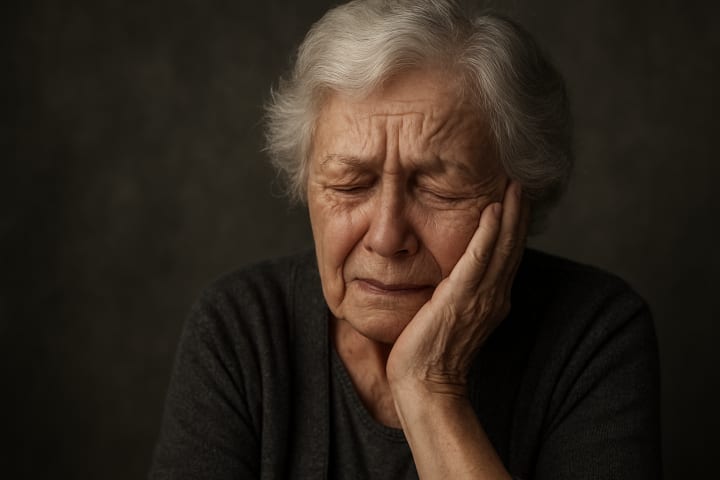
Loneliness: You can be surrounded by people and still feel utterly alone when you don’t feel truly seen or understood.
Unmet Expectations: Life rarely unfolds exactly as we planned. Dreams can stall, relationships can disappoint, and the future can feel uncertain.
Unresolved Pain from the Past: Childhood wounds, betrayals, or traumas we thought we “got over” can resurface unexpectedly.
The Pressure to Be Happy: Ironically, the cultural obsession with happiness can deepen sadness. When we believe we should be happy but aren’t, we feel even more broken.

The Silence Around Sadness
One of the most isolating things about sadness is how rarely it’s spoken about honestly. Social media showcases the highlight reel of our lives — vacations, celebrations, achievements — but rarely the tears, the sleepless nights, the arguments that leave us feeling hollow. This gap between what we show and what we feel can make our sadness heavier. We start to think, “Everyone else seems fine. What’s wrong with me?”
The truth is, nothing is “wrong” with you for feeling sad. Sadness is not a flaw; it’s part of the emotional spectrum that makes us human. Without it, joy would have no contrast.
The Moments That Trigger It
Sometimes sadness comes suddenly — like when a song takes you back to a time you can’t return to, or when you stumble upon an old photograph and remember the person you used to be. Other times it builds slowly, day after day, as small disappointments, unmet needs, and quiet loneliness accumulate.
These moments don’t always come with a clear solution. And maybe that’s the point: sadness is not a problem to “solve” instantly, but an experience to move through.
The Quiet Courage of Feeling
There’s an unspoken courage in allowing yourself to truly feel sadness instead of burying it. When you sit with it — when you ask, “Why am I feeling this way?” — you might discover truths about yourself you’ve been avoiding. You might realize you’re in a job that drains you, a relationship that no longer fits, or a city that doesn’t feel like home.
Feeling sadness can be a guide, pointing you toward what matters most. It’s uncomfortable, but it’s also deeply human.

Finding Light Without Rushing It
There’s no timeline for sadness. For some, it lifts like fog after a few days; for others, it lingers like a slow, grey winter. The key is not to rush it away or pretend it isn’t there, but to keep small lights alive while you move through it:
Talking to someone who will listen without judgment.
Spending time in nature, letting the world remind you of its quiet beauty.
Engaging in something creative, even if it’s just doodling or journaling.
Allowing yourself rest without guilt.
These are not cures, but gentle acts of care — reminders that even in sadness, there can be moments of peace.
The Shared Truth
Perhaps the most important thing to remember is this: sadness is universal. The details differ, but no one escapes it entirely. We all have chapters of our lives that feel heavy. Knowing that others have walked through similar darkness — and found ways to see the sun again — can make the journey less lonely.
In the end, sadness is not an enemy to defeat but a teacher to learn from. It shows us our deepest values, our capacity for empathy, and our need for connection. It reminds us that we are alive, that we care enough to hurt, and that healing, however slow, is possible.
And maybe, just maybe, that’s the quiet beauty hidden inside the ache: it’s proof that we are still reaching for something better.
About the Creator
osam khan
"I’m a passionate storyteller who loves exploring every topic
Reader insights
Outstanding
Excellent work. Looking forward to reading more!
Top insight
Heartfelt and relatable
The story invoked strong personal emotions
Broken Pieces
It's been almost three months. I tried to fall for you slowly, easily, so I could protect my heart. Those attempts failed. You are so kind, considerate, and empathetic. I felt that when you looked at me, you saw me all the way to my soul. The physical attraction was immediate and intense. Two lost and broken souls just trying to find their way home. The first time I looked into your sky-blue eyes, I saw sadness, I saw exhaustion, and the vast emptiness that comes from just giving up. However, in each other, we found hope. I could see that spark of hope in your eyes. That you wanted this to be real just as much as I did, something to hold onto, something true, something that could last a lifetime and not just until things got too hard. We moved in together pretty quickly due to life and circumstances. Honestly, we needed each other to hold on to at night. I know now that your life has been riddled with demons, pain, depression, anxiety, ptsd and so many triggers from your past. You have never been given the right mental tools to move through your pain and torment. So, you have just remained silent and swallowed your pain. No one should have to hold that much pain alone. It has been a task trying to help you, but also hold space for my own well-being, but I want you to know that you are worth it to me. You are not too broken and will never be too broken. I want to show you that I can hold space for both your mental health and my own. We both have so much going on in our minds, and we both try to hold each other up as best we can. When your demons come out to play, I try to slay them or at least make them shut the fuck up, and you do the same for me. We can hold each other, cry, scream at the world, go break shit together, or just sit in silence. I'm trying to learn what you need in your moments of mental health crisis, and I can tell you're trying to learn what I need as well. Have you ever heard of the term "hot mess"? That describes us perfectly. But we are perfectly imperfect. I am your Juliet, and you are my Romeo, as cheesy as that sounds. I swear we're going to be okay. I swear we're going to get healthy together. I've already done some work myself, but we are a team now, and we have to work together. I'm not leaving you. Where you go, I go, together forever. Mental health is a cruel mistress that holds no prisioners. You are such a beautiful soul that has come into my life, and you've helped me in so many ways. You help add structure in my life, you help with my daughter, you're my friend I can talk through my day and emotions with, my partner I can figure out life with, my lover, when I can't breathe because of a panic attack, you hold me and talk me through it. I wouldn't go back to being alone. I want you, all of you, even the broken pieces, because you take me and my broken pieces. Life is full of broken pieces, but what makes it better is to find that special someone who will hold both you and your broken pieces and still say I love you no matter what.
By Lindsey Altom8 days ago in Psyche


Comments (1)
I don't read it but I like it