
Why do your photographs appear unflattering?
The Mirror vs. The Lens: Unraveling the Photogenic Paradox
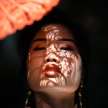

When you gaze into the mirror, many people perceive themselves as fairly attractive, with all angles appearing perfect. However, when photographs are taken, they often find themselves looking considerably less flattering.
To explain this phenomenon, some psychologists have conducted research and have concluded that you actually appear 30% less attractive in photos than in the mirror. So, what's the reason behind this?
The Frozen Face Effect
The central concept in psychology suggests that the phenomenon of not being photogenic can be explained by the "Frozen Face Effect."
This effect was initially proposed by Professor Robert Post and his team at the University of California, USA. Through their research, they discovered that a moving face is much more appealing than a static one.
When we look in the mirror or at a camera, we unconsciously adjust our angles and posture. Our facial expressions change subtly in response to these continuous adjustments. For example, expressions like smiling, raising an eyebrow, furrowing the brow, squinting, or even small random movements can make you appear more confident and beautiful. Additionally, using the right camera angle, lighting, and accentuating your facial features can make you look more outstanding in photos.
Skilled photographers strive to capture a person's true essence by adjusting the camera's focal length and using different lighting conditions. However, not everyone possesses the mastery of photography. Consequently, someone who is not photogenic might not appear as beautiful as in the mirror but surely won't look as unflattering as in photographs. The actual appearance of such individuals lies somewhere between the mirror and the photo.
Prominent psychologist Albert Mehrabian from UCLA introduced a communication formula known as the 7%-38%-55% rule. This rule states that 55% of communication is non-verbal, related to body language and facial expressions; 38% is vocal, including tone of voice, pitch, and expressiveness; and only 7% is verbal. This formula conveys an essential message: to truly attract others, the best way is through real-life communication. It's challenging to convey charisma, allure, or appeal through static images.
The Halo Effect
After more than ten years of research, American psychologist Edward Thorndike believed that the Halo Effect is widespread. It suggests that an overall impression of an individual can affect judgments about specific traits. Therefore, people often deceive their brains and become more confident in their appearance based on their general impression.
There's a certain distinction between how you see yourself in the mirror and in photos, at different times and under different conditions. The lighting conditions when most people take photos are not optimal, leading to unsatisfactory results. But when we look in the mirror, the subconscious "vanity" in our brains automatically illuminates.
People who possess self-love tend to unconsciously believe that they look beautiful from multiple angles and under different conditions. The brain tends to unify with the "better" self rather than the "true" self.
The Left Cheek Bias
The "Left Cheek Bias" was initially proposed by scientist Sam Kean, who believed that the part of the brain controlling emotions is on the left side of the face. Therefore, the left side of the face appears more expressive.
This phenomenon indicates that nobody has an absolutely symmetrical face. During the process of taking photos, when people snap selfies, they typically unconsciously turn their right side inward, exposing their left side. The angle of the face subtly straightens the nose, creating an illusion about appearance. As a result, many people become addicted to this perspective.
Recent statistics on the prevalence of selfies further support this conclusion: when taking selfies, people usually prioritize showcasing their left cheek.
To truly understand your authentic appearance, you should maintain a certain distance from the mirror and rely on natural light. Only through this approach can we genuinely express our most authentic self.
About the Creator
Julygwynet
Inhale life, exhale narratives, poetry, prose, and fleeting and harmonious moments. A perfectionist who enjoys crafting and repurposing words. I write for the simple pleasure of forming patterns and words into images on a blank page.
Keep reading
More stories from Julygwynet and writers in Psyche and other communities.
I am ready to walk with you on the path filled with thorns and challenges.
I am a girl who was born and reared in the countryside, far from the rush and bustle of city life. The ambition of going to school was a distant and difficult aspiration for many young children where I grew up. I consider myself extraordinarily fortunate, however, because my parents poured their hearts into nourishing me, allowing me to spread my wings and chase my ambitions.
By Julygwynet2 years ago in Psyche
Why Dreams Unlock Your Hidden Self
Have you ever woken up from a dream that sticks with you through the day? A fall that shook you awake, a conversation with someone you are sure you know from somewhere, a door that you couldn't open but had to know what was behind it? These dreams aren't just figures of your imagination, but rather pointers to parts of yourself you don't always see during your busy day. From fears that held you back to hidden strengths that deep down you wish for, these dreams are an insight into your deeper self.
By Dave's Your Uncle!6 days ago in Psyche



Comments
There are no comments for this story
Be the first to respond and start the conversation.