
When the Walls Shattered
Finding Light in the Broken Places


The Metamorphosis of the Mind
It began with a hairline fracture—a slender thread of imperfection in the barricade I’d constructed to keep the world at arm’s length. At first, I mistook it for nothing. Life’s cacophony drowned out such subtleties: the relentless ping of notifications, the metallic tang of stress lingering on my tongue, the way time compressed itself into obligations. But fractures have a way of asserting themselves. By millimeters, the crevice expanded until one unremarkable Tuesday morning, it ruptured entirely. What spilled through wasn’t chaos, but truth—sharp-edged and unapologetic.
I remember the linoleum tiles most vividly. Their checkerboard pattern swam beneath me as I gripped the kitchen counter, knuckles bleaching white. The room—my sanctuary of coffee rituals and burnt toast—contorted into something foreign. Walls that had witnessed a thousand hurried breakfasts now pressed inward, their sunflower-yellow paint suddenly garish. My lungs constricted as if filled with wet concrete. When my knees struck the floor, the impact resonated through bone.
Paradox defined those suspended moments: a mind whirling like storm-tossed leaves while limbs lay leaden. I became both prisoner and witness to the tempest within. Memories surfaced without chronology—my third-grade teacher’s disappointed sigh when I misspelled “believe,” the cold hospital chair where I’d awaited test results, the way my laughter had curdled during an argument I couldn’t walk away from. Each recollection carried weight, pulling me deeper into the undertow.
Then—stillness.
Not the quiet of resolution, but the dense hush between lightning and thunder. A haze settled, turning thoughts into specters that brushed my skin with clammy fingers. They murmured in familiar voices: the hiss of self-recrimination from a forgotten journal entry, the hollow echo of “I’m fine” repeated to mirrors and friends alike. For years, I’d mistaken survival for strength, but here, in this visceral unraveling, pretense dissolved.
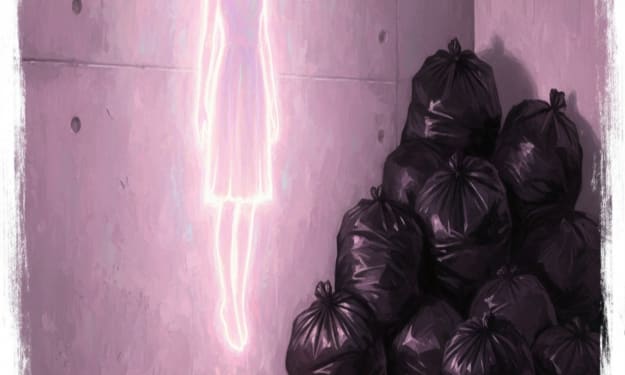
The first flicker went unnoticed. A faint luminescence, no brighter than a candle seen through frosted glass. Yet when I focused—when I stopped willing myself to disappear—it intensified. This radiance didn’t originate from the flickering fluorescent bulb above or the autumn sunlight filtering through dusty blinds. It came from somewhere behind my ribs, a glowworm persistence I’d smothered beneath practicality and haste.
Curiosity, long dormant, stirred.
What followed defied logic. I traversed corridors of memory as tangible as the fridge humming beside me. Here lay the oak tree from my childhood backyard, its gnarled branches imprinted with initials I’d carved during a July heatwave. There stood my teenage bedroom wallpaper—peeling at the corners, plastered with concert tickets and Polaroids of friends whose names now escaped me. I observed these fragments not as a critic, but an archivist rediscovering misplaced artifacts.
The specters transformed. What once seemed menacing now revealed softer contours: the fear of inadequacy that drove late-night studying, the loneliness masquerading as independence, the love letters never sent. I touched a photograph of my nine-year-old self straddling a bicycle, scraped knees and triumphant grin preserved in fading ink. She didn’t know about mortgages or panic attacks or the art of folding happiness into socially acceptable shapes. She simply lived.
A realization crystallized: the fracture wasn’t structural failure, but ventilation.
Rising felt less like defiance than alignment. My palms flattened against the floor tiles, their coolness a grounding counterpoint to the fevered pulse at my temples. The kitchen’s dimensions stabilized, not as a shrinking cage, but a chrysalis. Sunlight caught the edge of a coffee mug I’d left abandoned—a half-moon stain marking where chamomile had evaporated. I traced its outline, struck by the poetry of impermanence.
This watershed didn’t erase decades of patterned thought. It illuminated a path.
---
In the aftermath, mundanity became revelatory. Mornings began with observing how dawn painted the bedroom wall in peach gradients, a ritual more centering than any productivity hack. I noticed how steam curled from teacups in hypnotic spirals, how the neighbor’s wind chimes harmonized with distant traffic. The world hadn’t changed; my receptors had recalibrated.
Old habits withered. I stopped ironing sheets and started sleeping diagonally across the mattress. The gym membership expired, replaced by twilight walks where I cataloged sidewalk cracks blooming into floral patterns. When raindrops streaked the bus window, I didn’t will them into metaphors—I let them exist as water and light.
Words returned, but differently. No longer tools for crafting perfect narratives, they became brushes for painting truth in its raw hues. Journals filled with half-sentences and grocery lists interspersed with epiphanies: *The ache isn’t a flaw—it’s a homing signal. Let stillness be an act of courage. Forgiveness tastes like rain.*
Relationships shifted. I called my sister and admitted I’d forgotten her birthday because I’d been envious of her contentment. A colleague received an apology for stolen credit on a project; his bewildered “thanks” made me laugh for the first time in months. Not every bridge could be rebuilt, but I stopped burning ones I hadn’t crossed.
Self-care lost its Instagram sheen. I learned to distinguish hunger from habit, fatigue from avoidance. Some days, nourishment meant roasted vegetables and salmon. Others, it was buttered toast eaten straight from the skillet. Rest became non-negotiable—not something earned through exhaustion, but a baseline right.
Aspirations morphed. The five-year plan disintegrated, replaced by a question: *What makes my pulse quicken with purpose?* Answers surprised me. Volunteering at the community garden. Learning to distinguish birdcalls. Writing haiku on postcards mailed to no one. The grand ambitions of my twenties felt like costumes; now, authenticity trumped achievement.
Of course, regression visited. There were nights when the specters returned, their whispers amplified by silence. A missed deadline would spiral into existential doubt. Social interactions replaying on mental loops. But the light—that stubborn ember—persisted. I developed rituals: pressing my forehead to cool window glass, humming childhood lullabies, sketching constellations on fogged mirrors.
Healing, I discovered, isn’t linear. It’s fractal—patterns repeating at varying scales, each iteration carving deeper grooves into old wounds.
---
The most profound shift occurred in my relationship with time. Previously, it had been currency—something to hoard, trade, lament. Now, I sensed its fluidity. Minutes expanded during morning stretches, contracted during creative flow. The past ceased to be a gallery of failures; it was compost, enriching present growth. The future? Less a precipice than a horizon—always advancing, infinitely approachable.
One October evening, I found myself on a park bench watching geese arc across a gunmetal sky. Their formation wavered, adjusted, held. A child’s laughter carried from the playground, mingling with the rustle of maple leaves. In that ordinary moment, I grasped the extraordinary truth:
Metamorphosis isn’t about replacing what’s broken. It’s integration—the marriage of scar tissue and new skin, memory and possibility.
---
Today, the cracks remain. Some have sealed into silvery traces; others gape, reminding me growth demands vulnerability. I no longer fear their presence. Through them, I glimpse the girl who believed in backyard adventures, the woman who forgot how to play, the human learning to hold both truths gently.
The kitchen still stands, unchanged yet utterly transformed. Sometimes I press my palm to the wall where it all began, feeling the steady pulse of pipes within plaster. There’s poetry in how structures can harbor both rupture and resilience.
I write this not as someone who’s reached a destination, but as a traveler mapping the terrain. There are valleys ahead, certainly. Peaks too distant to envision. But the compass now points inward, and the path, though mine alone, intersects with countless others navigating their own transformations.
Perhaps that’s the greatest revelation: We aren’t meant to emerge perfected, but alive—alive to the glorious, messy, unfinishable work of becoming.
About the Creator
PhilipM-I
Transform your life by merging ancient wisdom + modern science.
Entrepreneurs + seekers: dissolve spiritual blocks, heal emotions, ignite relationships, solve daily challenges. Manifest miracles daily.



Comments
There are no comments for this story
Be the first to respond and start the conversation.