
Moved by the desire to discover what lies beyond the limit of existence, man dissatisfied with his own limited and limiting condition seeks God. Despite what is commonly thought, the famous Nietzschean affirmation on the death of God does not close itself in the linguistic definition: it is not a lack without creation, it is not the absolute nihil privatum, in the sense of an object devoid of a concept. God and the system of signs he bears are reformulated in the guise of a will (Wille zur Macht) of power that leads to its roots.
But be careful, because the nihilistic contestation of the idea of God is a revolt of thought against the theistic common sense of the Christian matrix. Against, that is, the idealization of an entity to which reflected properties of our existence in the world are attributed. Thinkers like Feuerbach, Marx, Freud, atheist nihilists, each in their own way eradicate the common concept of God through a nihilistic procedure. Some arrive at conclusions aimed at re-edifying the way of understanding the Beyond, or God, others from the negation they create nothing.
The eternal is no longer beyond. The perfect, immutable and indivenient, that which is not subject to the transformations of time and space, God par excellence, ceases to be the terminus a quo or substance of the world. Platonic logic is overturned, such that there is an imperishable being from which everything derives, and man's movement is transcendent because the limit of his yearning is directed to the absolute by God incarnate; it is firm and unshakeable certainty because it is not subject to the physical laws of mutability in which everything changes and nothing remains. In much of Greek philosophy, that which is subject to time and change, such as Nature and therefore man, is continually persuaded as finite.
The Finite is transformed, and the transformation carries a load of finitude, therefore illusion, decay. In a word, death. The act - as well as being - will never have absolute efficiency as long as it remains a slave to becoming. The man endowed with wisdom, to give fulfillment to his being, and free himself from the reins of time that would annihilate him, through metaphysics, aspires to reunite with the One. The Eternally Persuaded, the Origin and the End: God.
Nihilism undermines the presuppositions of Metaphysics. Becoming acquires value and is the only bearer of the true measure of being that denies itself and by self-denying gives life to its freedom. The movement of thought is no longer ascending. One does not start from truth or substantia (as in classical metaphysics) called -A to be aimed at through the ontological dialectic, from a position of inferiority where everything becomes and nothing is -B. In this system, the perfect being, accomplished in A, is the only bearer of truth and therefore real existence.
Nihilism not only gives value to the mutable, but attributes the measure of truth to becoming itself. Being the only form with which reality manifests itself, and denying the existence of a perfect and immutable spirit to yearn for, it overturns the presuppositions of metaphysics, entrusting the affirmative value with which reality acquires meaning to become alone.
The being is thus forced into the grip of the eternal.
But it is an eternal becoming.

Becoming presupposes a unity. According to metaphysical logic, if the internal universe in which entities gravitate is in the making, then there must necessarily exist at least one in-becoming entity. Aristotle expressed the problem, as if there were no underlying substance to becoming, we would not be able to distinguish entities and their events. In fact, for identification a common substrate is necessary for the denominator which is what allows us to unify them - therefore group them - and be able to distinguish them between X and Y. From here derives the famous Aristotelian principle of non-contradiction. Assuming that what is can not be, the famous philosopher alluded to a state of being that acquires form X and not Y, such that in turn Y is a distinct being from X. However, both events are not useful and necessary; there is a common substratum, independent of whether or not they are in the real. There is something that unhinges from the spatio-temporal principles we use to give shape to reality. And this becoming polymorphism given by identification and therefore by choice (which nihilism refutes because it reduces the value of the One to zero), it can only exist because there is a substantia, different from single entities and beyond becoming, which allows becoming itself to manifest itself: the One.
Logic and Rationality. If there is no unity, as with nihilism thought, there is no meaning or purpose in man. Being in the world is thus reduced to a frenetic chase but, quoting Nietzsche's passages, with becoming it reaches nothing. The measure of his longing is reduced to nothing, and the nihilist man who denies everything and creates nothing, should deny even nothing.
The impulse of man is thus absolutized and blocked in the contingency of negation and even the infinite openings it creates, from the refutation of the principle of non-contradiction, are of no use to him because even those reduced to nothing.
And an individual who does not believe in identification, denying the value of the multiplicity supposed by unity, does not distinguish between good and evil. The consequent capacity for discernment - which the nihilist man resets - is based on logic and rationality.
Not only has metaphysics collapsed - and with it the logic on which rational thought sets itself up - but rationality itself.
The creator of himself and of the world, the Persuaded, having become aware of the coincidence between totality and nothingness, creates an unfinished product, without outlines,
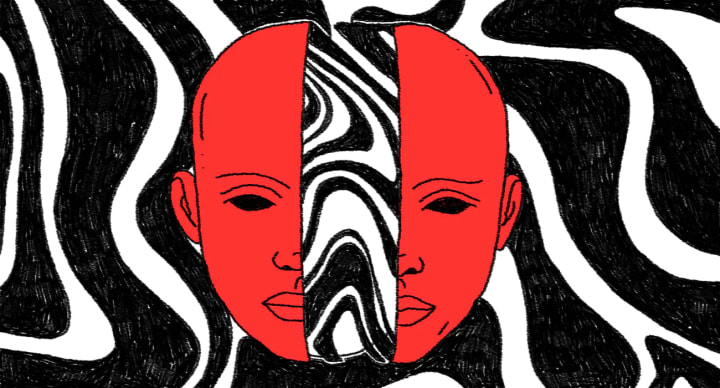
elusive, placed outside any attempt at measurement and classification.
Confined within a becoming that renders everything in vain and nothing complete, we arrive at being in its multiple manifestations in the set of possibilities of being there, irreparably moving away from permanence or perfect immanence, the one in which being is complete in itself, subtracted from the repeated transformations of the imperishable flow.
I wonder, is a way to the impossible possible?
About the Creator
Ludovica Iorio
I'm an expert in writing, linguistics, humanities, and scientific research. I graduated from the University of Rome Tor Vergata in Science of Cultural Heritage 110/110 CUM LAUDE and published an experimental thesis in Philosophy.
Keep reading
More stories from Ludovica Iorio and writers in Psyche and other communities.


Comments
There are no comments for this story
Be the first to respond and start the conversation.