
Title: The Psychology of Belonging
In a world that celebrates independence, the quiet human hunger for connection, identity, and belonging shapes everything from our politics to our mental health.

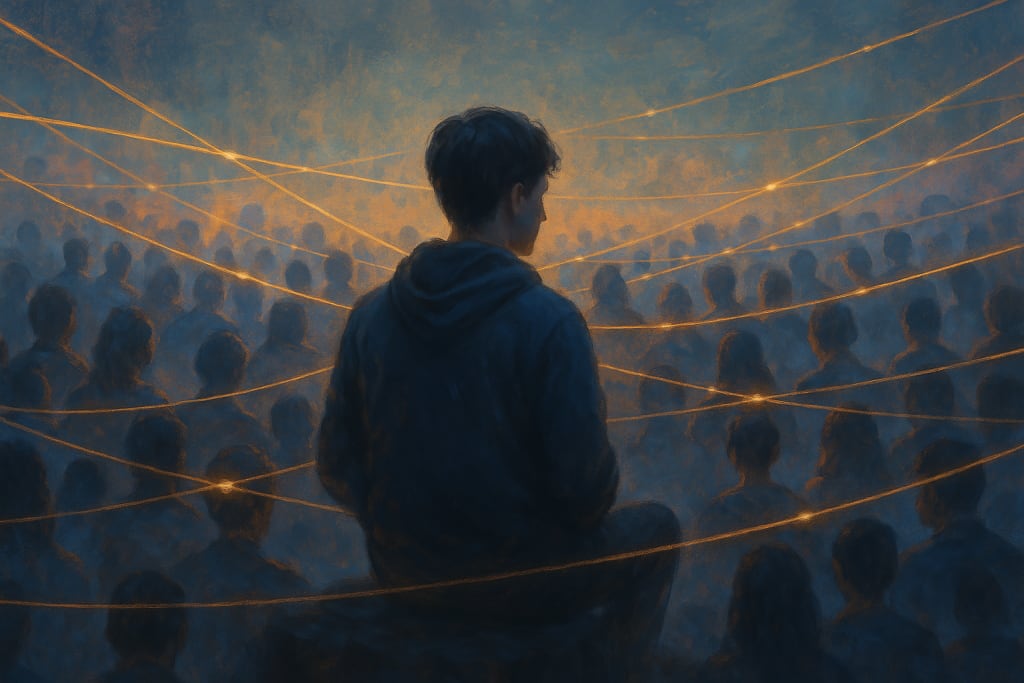
We live in an era that glorifies the individual. "Be yourself," they say. "You don't need anyone." We champion the self-made entrepreneur, the solitary genius, the fiercely independent thinker. And yet, beneath the glossy Instagram quotes and TED talks about self-reliance, a quieter truth persists—humans desperately need to belong. Not just to survive, but to feel whole.
This essay dives deep into the psychology of belonging—why we seek it, what happens when we don’t find it, and how our craving for connection shapes our societies in surprising, sometimes dangerous ways.
The Evolutionary Roots of Belonging
From an evolutionary standpoint, belonging wasn’t optional. Early humans depended on social bonds for survival. Being cast out from the tribe didn’t just mean loneliness—it meant death. Our ancestors who were wired to stick together were more likely to survive and pass on their genes. Over millennia, this need became ingrained in our neurobiology.
Modern neuroscience confirms this: the same regions of the brain that process physical pain also respond to social rejection. When you feel excluded, your brain literally interprets it as pain. It’s not “all in your head”—it’s all over your head.
Maslow’s Pyramid and the Invisible Middle
In Maslow’s hierarchy of needs, “love and belonging” sits in the middle, sandwiched between safety and esteem. But many people misunderstand this. They see belonging as a luxury, something you pursue after you’ve secured food, shelter, and safety.
In truth, belonging is often the bridge between basic survival and personal growth. A person with food and shelter but no human connection can spiral into anxiety, depression, and despair. On the other hand, someone with strong social ties can endure incredible hardship—wars, poverty, even exile—without losing hope.
The Many Forms of Belonging
Belonging takes many forms: family, friendship, fandoms, faith, nationality, even virtual communities. Some are chosen; others are inherited. Some feel empowering; others become oppressive. And in today’s fragmented world, the lines blur.
A teenager might find more emotional support from their online gaming clan than from their parents. An immigrant might feel more Turkish in Germany than they ever felt in Istanbul. A sports fan may feel a stronger identity around a team than their actual profession.
In this landscape, belonging becomes not just about where we fit—but about who gets to define the shape of the puzzle.
When Belonging Turns Toxic
Not all forms of belonging are healthy. The same psychological forces that create loving communities can also breed extremism, tribalism, and hate. Gangs, cults, and extremist political movements all prey on the human need for connection.
Often, they don’t recruit by ideology—they recruit by intimacy. They say, “You matter here. You’re one of us.” And in a world where so many feel invisible, that message is intoxicating.
Think of conspiracy theorists who finally feel “in the know,” or nationalists who reclaim pride through exclusion. Belonging can heal—but it can also wound.
Belonging in the Digital Age
The internet exploded our sense of belonging. Suddenly, we’re no longer confined to geography. You can be part of a book club in Argentina, a protest group in Berlin, a fandom in South Korea—all without leaving your room.
But this digital fluidity comes with a cost: the illusion of connection. We collect followers, not friends. We post selfies, not soul-talks. We join Discord servers and subreddits that mimic intimacy, but often leave us emptier than before.
Ironically, in trying to connect with everyone, we risk connecting with no one deeply.
Belonging and Mental Health
The psychological effects of not belonging are immense. Studies link loneliness and social exclusion to depression, anxiety, increased risk of heart disease, weakened immune response, and even early death. One famous meta-study found that loneliness has the same health risks as smoking 15 cigarettes a day.
And it’s not just about being alone—it’s about feeling alone. You can be in a crowded room and still feel like you don’t belong. You can be married and still feel like no one sees you.
The opposite is also true: even a few genuine bonds can act as a shield against life’s worst storms.
Reclaiming Belonging in a Fragmented World
So how do we reclaim a sense of belonging in a time of hyper-individualism, global dislocation, and digital distraction?
Prioritize Depth over Breadth. Focus on a few deep relationships rather than a hundred shallow ones.
Seek Shared Purpose. Communities rooted in shared values or goals tend to be more resilient and fulfilling.
Practice Vulnerability. You can’t truly belong unless you’re willing to be seen as you really are—flaws and all.
Create Rituals. Whether it’s weekly dinners, annual traditions, or book clubs, rituals anchor people to each other.
Welcome the Outsider. Ironically, one of the best ways to feel belonging is to help someone else find it.
The Quiet Revolution of Belonging
In a culture obsessed with self-optimization, maybe the most radical act is to need others—and admit it. Not in a needy, dependent way, but in a deeply human one.
Belonging isn’t weakness. It’s not a detour from self-realization—it’s the path. It reminds us that we are not just brains in jars, not just avatars online, not just walking resumes. We are creatures of connection. And that’s not something to fix—it’s something to honor.
About the Creator
Ahmet Kıvanç Demirkıran
As a technology and innovation enthusiast, I aim to bring fresh perspectives to my readers, drawing from my experience.
Keep reading
More stories from Ahmet Kıvanç Demirkıran and writers in Psyche and other communities.
The Man Who Remembered Everything
It started with a nosebleed. Just a thin trickle, ordinary in every way, except for the fact that it followed three days of unusually vivid dreams. Dreams where I spoke languages I’d never studied. Remembered faces I’d never seen. Recited poetry I’d never read.
By Ahmet Kıvanç Demirkıran10 months ago in Psyche




Comments (2)
Nic3 on3 ♦️♦️♦️
I have read your story very nice fab your,s best selection thease i have best like Belonging isn’t weakness. It’s not a detour from self-realization—it’s the path. It reminds us that we are not just brains in jars, not just avatars online, not just walking resumes. We are creatures of connection. And that’s not something to fix—it’s something to honor.