
The Story of Sara, a Seven-Year-Old Girl in a Loud Home
Noise outside, fear inside

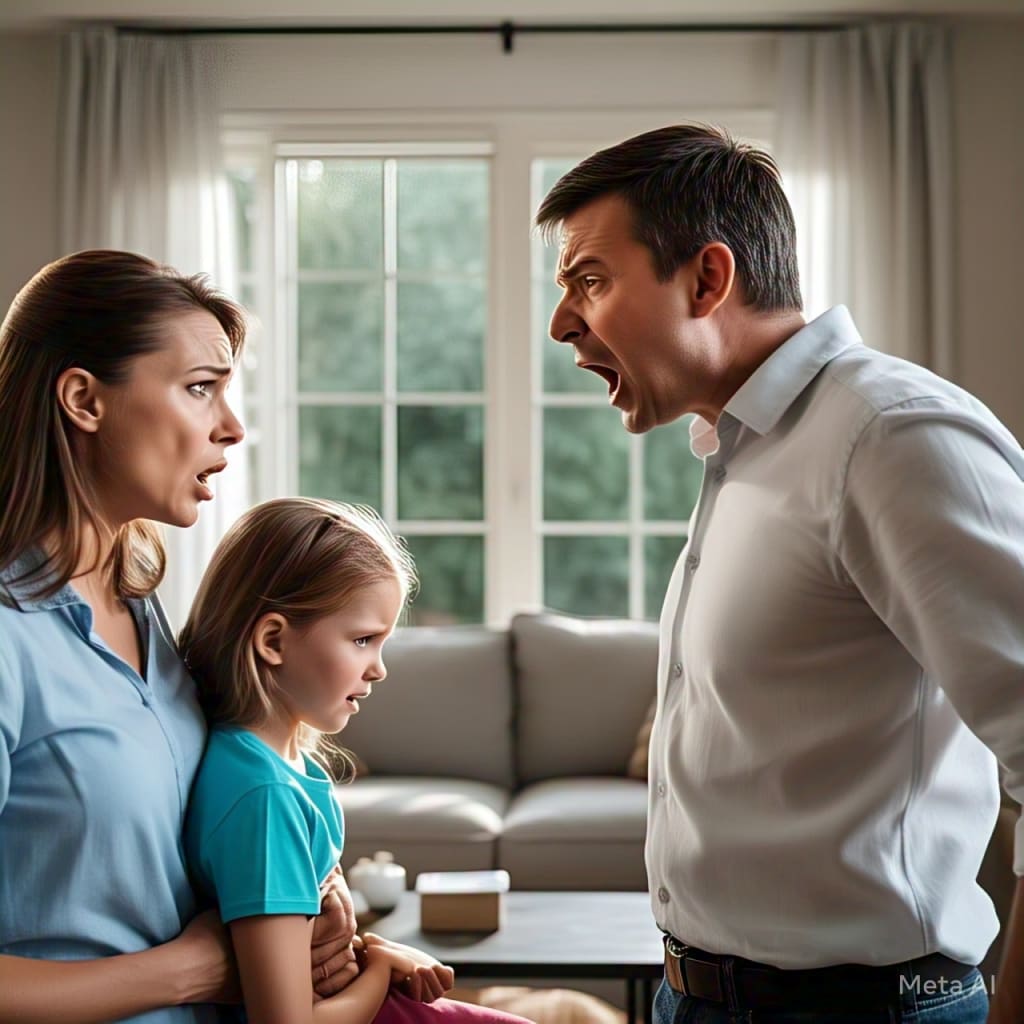
Sara was only seven, but her eyes had seen more fear than joy. She lived in a small house with yellow curtains, a creaky wooden floor, and walls that often shook not earthquakes, but from shouting.
Her father was a loud man. His voice thundered through the house like a storm. Even when he wasn’t angry, he talked like he was. Her mother shouted too ostly when she was tired, mostly when she was ignored.
Sara would sit in her tiny room, her teddy bear clutched to her chest, and listen to the noise.
“Why are you always late?” her father would yell.
“I do everything in this house!” her mother would scream back.
Plates never flew. No one hit anyone. But the words were sharp. Loud. Fast. Hot.
To an adult, maybe it was just a “normal argument.” But to Sara, it felt like the walls were closing in.
She didn’t understand the words completely, but she understood the feeling: fear.
Her heart would beat fast. Her stomach would twist. She would stop playing with her toys. She would cover her ears, even when the arguments were about things she didn’t know like ike bills or groceries or phone calls.
Every time the shouting began, Sara would ask herself, “Am I safe?”
At school, her teacher noticed something. Sara was quiet. She never raised her hand. She jumped at loud noises. When someone accidentally knocked over a chair, Sara flinched.
She was kind and smart but always looked worried. She didn’t laugh easily. She didn’t make friends quickly.
One day, her teacher, Miss Laila, sat beside her during lunch.
“Are you okay, Sara?” she asked gently.
Sara nodded. She always nodded. Saying “yes” was easier than explaining the storm at home.
Miss Laila smiled and gave her a drawing book. “Sometimes, when I feel too many feelings, I draw them. Want to try?”
Sara nodded again.
That night, the yelling was loud again. Sara didn’t cry. She took out the drawing book and drew a big, dark cloud over a small house. Inside the house was a girl with a teddy bear. She didn’t draw a smile.
For the next few days, Sara drew more clouds. More thunder. More silence.
Miss Laila looked at the drawings and understood. She didn’t ask questions. She just gave her more colors.
Slowly, Sara began adding small things to her pictures sun far away, a bird flying, a friend holding hands.
Then one day, her drawing had no cloud.
Just a house. And a smiling girl sitting in the garden.
Miss Laila didn’t say anything, but she smiled. Sara smiled back a small, real smile.
At home, the shouting didn’t stop, not completely. But something changed.
Sara began writing small notes and leaving them on the table.
One read: “When you shout, I feel scared.”
Another said: “I want to play without being afraid.”
At first, no one said anything.
Then, one day, her father knelt beside her and said, “I’m sorry, sweetheart. I didn’t know you felt this way.”
Sara blinked.
He continued, “I’ll try to talk softer. I promise.”
Her mother hugged her that night. “We don’t want to scare you. Thank you for telling us.”
The shouting didn’t disappear overnight. But it became less.
The storm lost its power.
And Sara?
She began to feel safe.
She began to laugh more. She ran with her friends. She colored with joy.
She learned something many adults forget: Children don’t always understand arguments but they always feel the noise.
And sometimes, all they want to ask is: “Am I safe?”
Disclaimer:
This story is a work of fiction inspired by real emotional experiences that many children may face. It aims to raise awareness about the psychological impact of loud and stressful home environments on a child’s development. Any resemblance to actual persons or events is purely coincidental. This story was written with the help of AI and may contain unintentional errors. It is not intended to diagnose or replace professional advice.
About the Creator
Taj Muhammad
"I write thought-provoking stories rooted in student psychology, Islamic Sufism, and real-life motivation—blending logic, emotion, and spiritual depth to spark inner reflection and purposeful living."
Keep reading
More stories from Taj Muhammad and writers in Psyche and other communities.
Ludacris and Nelly draw backlash over bookings at MAGA-coded music festival
Ludacris and Nelly headlining a mostly right-wing event is good for them. It’s also great for the genre of hip hop. The two rap veterans have showcased their talents on other stages. Why can’t they perform for mostly MAGA folks and grab that bag?
By Skyler Saunders5 days ago in Beat



Comments
There are no comments for this story
Be the first to respond and start the conversation.