
The Sound of My Name in Other People’s Mouths
Reflect on identity, memory, belonging, or alienation through poetic description.

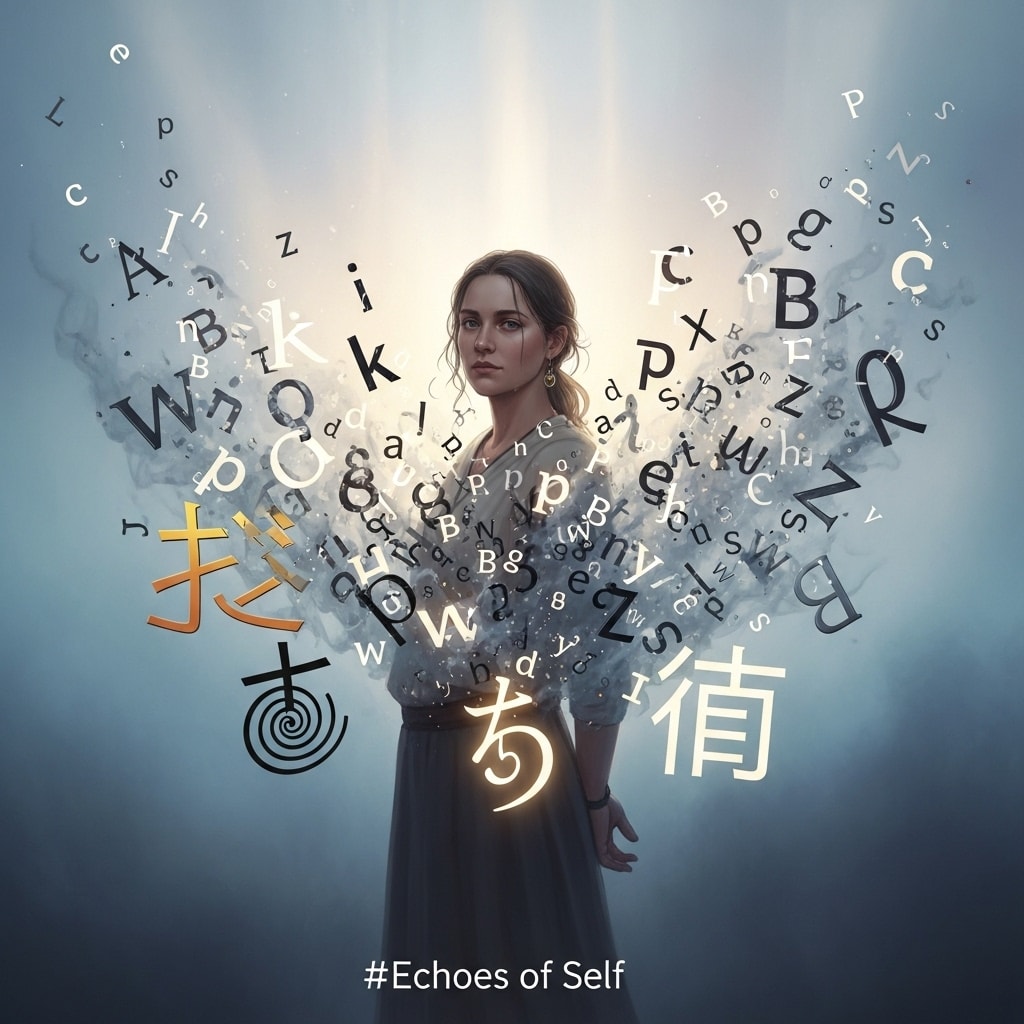
The Sound of My Name in Other People’s Mouths
by [Numan writes]
There’s a way my mother says my name that folds time. It carries the softness of early mornings and warm milk, the scent of jasmine from her shawl, and the quiet weight of lullabies hummed rather than sung. In her mouth, my name is a prayer—gentle, deliberate, each syllable laced with a kind of trembling care, like she’s still afraid to break me.
When my father said my name, it was different—crisp, brief, edged. A command, not a question. He never gave it room to breathe. Just the bare bones of it, like a password he had to use but didn’t choose. I was always one foot in trouble with him, my name arriving ahead of me like a warning bell.
At school, my name was butchered—clipped, stretched, reshaped into something easier for their tongues. I stopped correcting them after the first few tries. Every mispronunciation was a silent subtraction, a syllable scraped off until the name they used no longer felt like mine. Some laughed when they said it wrong, like I had offered them a puzzle too difficult for their perfect mouths.
In those years, I began to wonder: What am I when no one says my name the way it was meant to be said?
A ghost? A placeholder? A shadow shaped like a girl?
Friends gave me nicknames, some affectionate, some lazy. I collected them like borrowed coats—none quite fitting, but better than being cold. For a while, I wore them proudly. It felt like belonging. It felt like someone was choosing me.
But deep down, I missed the original music of my name—the one my grandmother whispered like a secret charm, the one that echoed in the kitchen while she kneaded dough and told stories I was too young to understand.
There was a boy once—gentle, sun-drenched, full of metaphors—who said my name like he was learning it from a sacred book. Slow, reverent, tasting every vowel like honey. It made me believe, for a time, that names could be healed. That maybe mine could return to me whole, without flinches or footnotes.
But people leave. Mouths change. And when he stopped saying my name, it left an ache behind. Not because he left—but because it had felt like he saw me when he said it. And without him, I was back to being unseen.
Now, strangers read my name from forms, monotone and lifeless. Baristas shout it into crowded air, misfired and rushed, like an arrow hitting the wrong target. Job interviewers wrap it in formality, politely puzzled. Even well-meaning ones ask, “Do you go by something shorter?”
I always smile. I always say, “Whatever’s easiest.”
But inside, I wonder: Why is my name the thing I must always make smaller, simpler, easier to digest?
Why must I trim the roots to make room in foreign soil?
There are moments, though—rare, precious—when someone says my name just right. Maybe they’ve practiced. Maybe they care. Maybe they just listen. And when that happens, something inside me unclenches, like a fist opening.
Because my name is not just a word.
It’s a map of where I’ve been.
It’s my mother’s hope, my grandmother’s hands, my first lullaby, my hardest goodbye.
It is survival. It is defiance.
It is poetry written in a language older than borders.
And yes, sometimes it’s hard to carry.
Sometimes it feels too heavy in rooms where I’m already too much.
But it is mine.
And I am learning to say it back to myself the way it was meant to be said—
with reverence,
with pride,
with the full weight of my becoming.
So when someone asks me now, “How do you say your name?”
I look them in the eye, and I tell them.
Not because I need them to get it right—
but because I do.
About the Creator
Numan writes
I write across worlds and emotions, turning everyday moments into unforgettable stories. Explore with me through fiction, poetry, psyche, and life’s reflections
Keep reading
More stories from Numan writes and writers in Psyche and other communities.
Mind & Heart
Mind & Heart: A Journey Through Words I never thought words could save me. I had always seen poetry as something delicate—flowers pressed between the pages of a notebook, fleeting lines that sounded pretty but didn’t mean much. But when the world started to feel heavy, when mornings became battles and nights stretched endlessly, I found myself turning to the one thing I had ignored: poetry.
By Numan writes5 months ago in Poets



Comments
There are no comments for this story
Be the first to respond and start the conversation.