
The Silent Epidemic of Loneliness in a Hyperconnected World
How constant connection is making us feel more alone than ever—and what we can do to truly reconnect

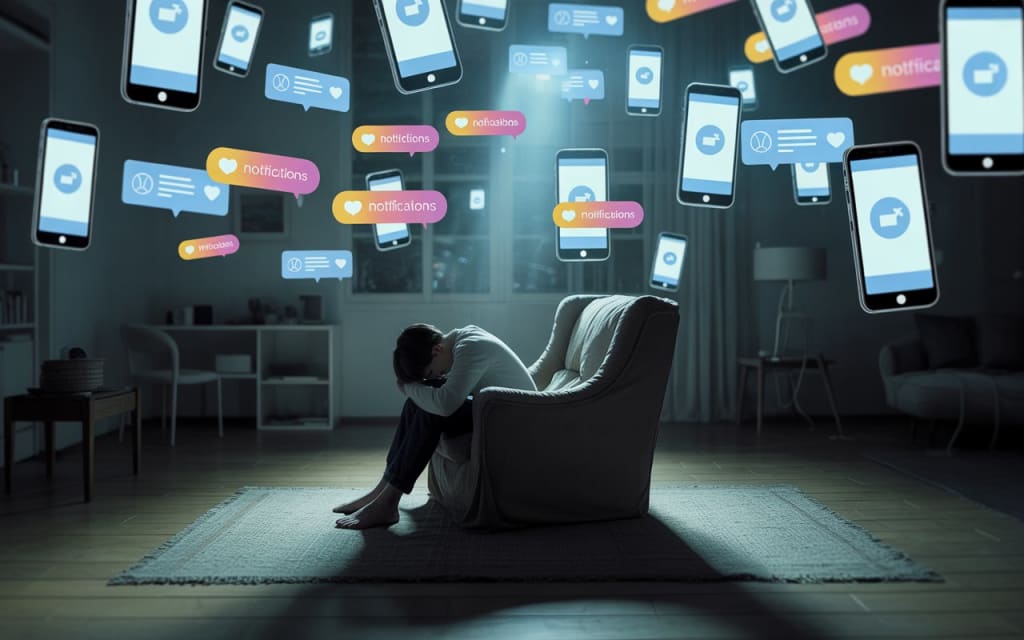
You scroll. You like. You comment. You send a voice note. You reply “LOL” to a meme.
And yet—why does it feel like no one really sees you?
We live in a world that’s never been more connected—on paper. With just a tap, we can reach anyone across the globe, join online communities, or watch someone else’s life unfold in real-time. But behind the flood of notifications, emojis, and perfectly curated posts lies a growing emptiness.
Loneliness is no longer just a feeling—it’s an epidemic. And it's quietly spreading in the one place we thought we'd never be alone: online.
The illusion of Connection
We were promised that technology would bring us closer. And in many ways, it has. You can wish your friend a happy birthday even if they live 5,000 miles away. You can FaceTime your grandparents, meet coworkers on Zoom, or fall in love through DMs.
But there’s a difference between being connected and being known.
Many of us are surrounded by people digitally, but few of us feel emotionally safe, heard, or truly understood. We comment on each other’s photos, but how often do we ask: "How are you really?" We laugh at TikToks together, but rarely share our private fears or late-night anxieties.
The result? A strange emptiness that lingers long after we log off.
Loneliness in Numbers
According to recent studies, feelings of chronic loneliness have doubled in the past decade. What’s more surprising? Young adults, the most digitally active group, are among the loneliest.
We’re constantly “talking,” but our conversations are surface-level. Social media has gamified relationships—friendships become likes, comments, story replies. And when real pain strikes, it’s not a filter we can share on Instagram.
We’re not just lacking company. We’re lacking meaningful presence.
Why It Hurts So Much
Loneliness isn’t just a sad feeling—it’s a real health risk. Research shows it can increase the risk of depression, anxiety, heart disease, and even premature death. It triggers the same parts of our brain that respond to physical pain.
When you post something vulnerable and it’s met with silence, it stings. When you need someone but don’t know who to call, it breaks you. When you’re surrounded by noise but feel invisible, it changes you.
This isn’t just emotional—it's biological. We’re wired for human connection. Without it, we suffer.
Hyperconnectivity Isn’t the Enemy—But It Isn’t the Cure
Let’s be clear: the internet isn’t the villain. It's a tool. But when we confuse digital presence for real intimacy, we build shallow bridges that can’t carry the weight of our loneliness.
- We scroll past cries for help because we don’t want to “ruin the vibe.”
- We send heart emojis instead of asking someone how they’re holding up.
- We build online personas that look perfect—because showing pain feels like losing.
- But the truth is, everyone is silently craving depth. Vulnerability. A sense of being seen.
What We Can Do About It
The good news? We can reverse the tide. And it doesn’t require deleting our accounts or moving off-grid. It starts with small, intentional acts of real connection:
- Message someone not just to react, but to ask how they’re doing.
- If you feel lonely, say it. You’re not weak—you’re human.
- When someone shares something vulnerable, don’t scroll past. Respond.
- Set boundaries. Not every online interaction deserves your energy.
- Most importantly: prioritize offline moments. Face-to-face time. Long conversations. Eye contact.
Closing Reflection
We built a world where we can reach anyone, anytime. But in the process, many of us have lost touch with what real closeness feels like.
Loneliness isn’t always loud. It doesn’t always cry out for help. Sometimes it just hides behind a blue checkmark, a “seen” status, or a smiling selfie.
The epidemic of loneliness won’t be cured by more followers. It will be healed by presence, empathy, and the courage to connect deeply—even when it's uncomfortable.
Because at the end of the day, we don’t want more messages.
We want to be heard.
We don’t want more followers.
We want to belong.
About the Creator
Hilal Hussain
🖋️ One writer. Endless thoughts.
I turn the ordinary into something worth reading. If you're looking for stories that linger in your mind and stir your soul, you're in the right place. Let’s explore the beauty of words — together.
Keep reading
More stories from Hilal Hussain and writers in Psyche and other communities.
I Downsized My Life to 30 Things — Here's What I Gained
I used to own three wardrobes full of clothes, five mugs I never drank from, and a shelf of books I never read. Then one day, I sat on my bed, surrounded by things I didn’t use, and realized — none of it was making me happy.
By Hilal Hussain8 months ago in Lifehack
Top tipple tricks
Been thinking a lot about drinking, lately. Not least because of a recent episode of over-indulgence and the inevitable after effects. Some readers may recall the earlier articles I wrote about beating the booze. Here I set out an experiment in techniques for cutting down on my alcohol intake. The experiment was successful, the techniques worked, and I have armed myself with an arsenal of weapons in the war against the demon drink. I have yet to fire the first round however. It's all a question of timing (perhaps procrastination).
By Raymond G. Taylor5 days ago in Psyche




Comments
There are no comments for this story
Be the first to respond and start the conversation.