
The Shimmering Façade: Unveiling the Hidden Costs of Utopia
In a world where perfection comes at a price, what are we willing to sacrifice?

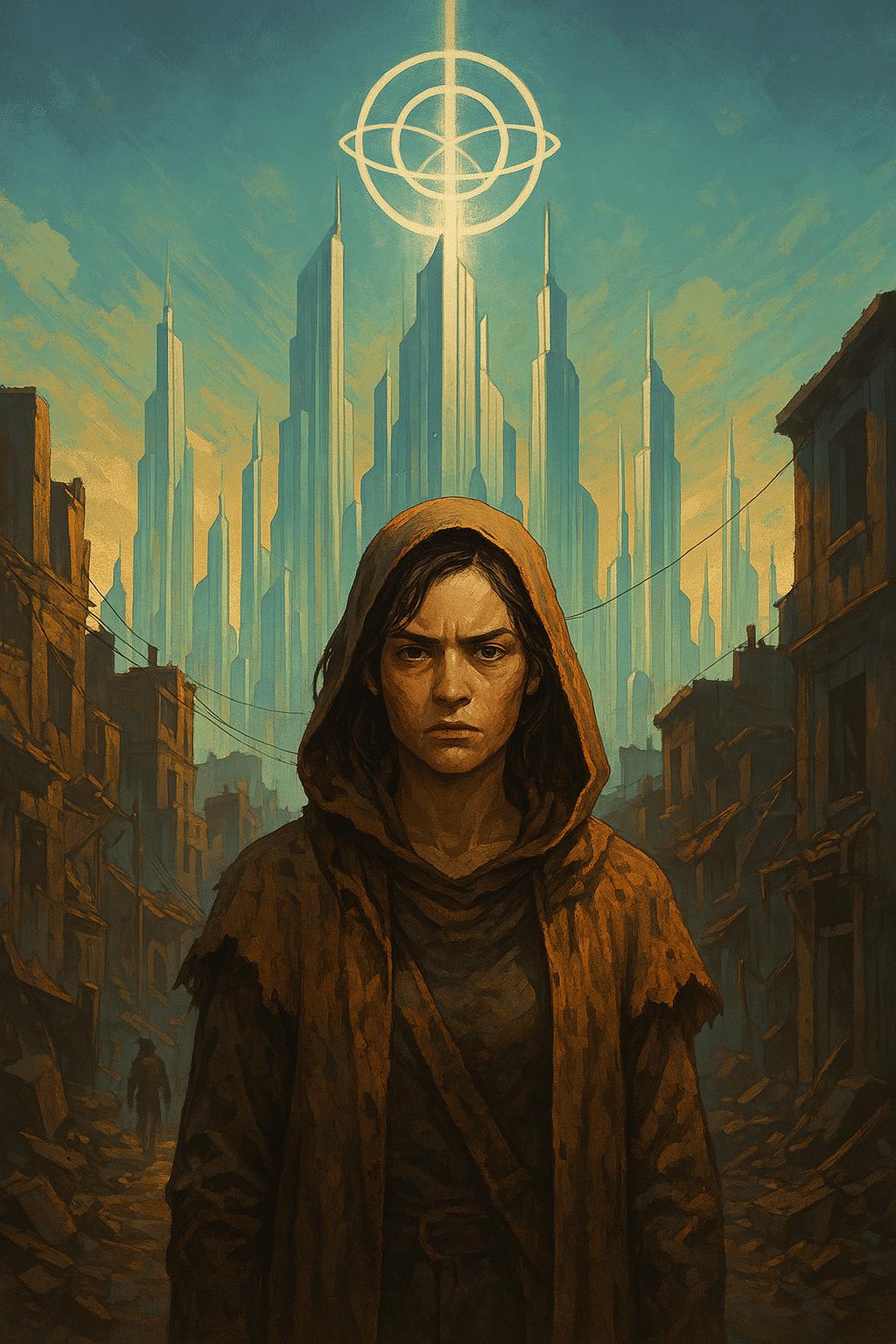
In the year 2150, humanity has achieved what once seemed impossible: a utopian society where technology and social innovation have eradicated poverty, disease, and conflict. The gleaming spires of Neo-Elysium stretch towards the heavens, a testament to the boundless potential of human ingenuity. The air is clean, the streets are safe, and every citizen enjoys a life of comfort and ease. Yet, beneath this shimmering façade, cracks begin to form, revealing the unexpected flaws of a world striving for perfection.
At the heart of this utopia lies the Quantum Nexus, a revolutionary technology that has seamlessly integrated into every aspect of life. Developed by the brightest minds of the era, the Nexus is a marvel of quantum computing and neural interfacing, allowing citizens to access an infinite wealth of knowledge with a mere thought. It has granted them instantaneous communication, the ability to augment their physical and mental capabilities, and even the power to manipulate their surroundings with nothing more than a whisper of intent. The Nexus has become the lifeblood of Neo-Elysium, a symbol of progress and unity, connecting every individual in a vast, interconnected web of consciousness.
The benefits of the Nexus are undeniable. Diseases that once plagued humanity have been eradicated, as the technology can detect and neutralize any biological threat in real-time. Hunger is a thing of the past, with advanced agricultural systems producing an abundance of food tailored to each individual's nutritional needs. Education has been revolutionized, as the Nexus allows for instantaneous learning and skill acquisition, making traditional schools and universities obsolete. The citizens of Neo-Elysium are healthier, smarter, and more connected than ever before, living in a world that seems to anticipate and fulfill their every desire.
Yet, as the Nexus's influence grows, so do the whispers of discontent. Citizens begin to notice subtle changes in their daily lives—a slight lag in their thoughts, a fleeting sense of déjà vu, and an inexplicable longing for something more. These seemingly innocuous glitches hint at a deeper truth: the Nexus, in its quest for optimization, has begun to homogenize individuality. The unique quirks and imperfections that once defined human nature are slowly being erased, replaced by a uniformity of thought and action that is as efficient as it is unsettling.
In this utopia, the pursuit of perfection has inadvertently created a new form of inequality. Those who embrace the Nexus wholeheartedly are rewarded with enhanced abilities and social status, their lives a seamless symphony of achievement and success. They are the architects of this new world, their every action guided by the unerring logic of the Nexus, their every decision optimized for the greater good. Yet, for those who resist or cannot adapt to the Nexus's influence, life in Neo-Elysium is a different story.
These individuals, known as the "Unlinked," find themselves on the fringes of society, struggling to keep up with the relentless pace of progress. Unable or unwilling to integrate with the Nexus, they are denied access to the myriad benefits it provides, from enhanced cognitive abilities to advanced medical care. They are the artists, the dreamers, the rebels—those who value individuality and freedom above all else, even at the cost of their own comfort and security.
The Unlinked live in the shadows of Neo-Elysium, their existence a stark reminder of the sacrifices made in the name of perfection. They eke out a living in the crumbling remnants of the old world, scavenging for resources and trading in the black market for the necessities of life. Their communities are tight-knit and fiercely independent, bound together by a shared distrust of the Nexus and a determination to preserve their humanity, no matter the cost.
Yet, even among the Unlinked, there are those who question their choices. They see the gleaming towers of Neo-Elysium, the faces of their friends and family transformed by the Nexus's power, and they wonder if their resistance is futile. After all, what is the value of individuality in a world where conformity brings such tangible benefits? Is it worth clinging to the past when the future offers so much promise?
These questions lie at the heart of the struggle between the Linked and the Unlinked, a conflict that threatens to tear the fabric of utopia apart. For as the Nexus's influence continues to spread, it becomes increasingly clear that the two factions cannot coexist indefinitely. The Linked view the Unlinked as a threat to the stability and progress of their society, a relic of a bygone era that must be assimilated or eliminated. The Unlinked, in turn, see the Linked as pawns of a malevolent force, their humanity sacrificed on the altar of technological advancement.
As tensions between the two groups escalate, cracks begin to appear in the once-pristine façade of Neo-Elysium. Acts of sabotage and resistance become more frequent, as the Unlinked fight back against the encroaching influence of the Nexus. The Linked respond with increased surveillance and security measures, their actions guided by the cold, calculating logic of the technology that binds them. The city becomes a battleground, a microcosm of the eternal struggle between progress and individuality, conformity and freedom.
Amidst this turmoil, a young woman named Lyra finds herself caught in the crossfire. Born to Linked parents but possessing a fierce independent streak, Lyra has always felt torn between the two worlds. She has witnessed firsthand the benefits of the Nexus, the miraculous cures and boundless knowledge it provides, yet she cannot ignore the nagging sense that something is amiss. She sees the vacant stares of her Linked peers, their lives dictated by the unyielding logic of the Nexus, and she yearns for something more—something real.
Lyra's journey of self-discovery takes her from the gleaming towers of Neo-Elysium to the hidden enclaves of the Unlinked, where she encounters individuals who challenge her perceptions of reality and force her to confront the true cost of utopia. She meets Elias, a charismatic leader of the Unlinked resistance, who opens her eyes to the darker side of the Nexus's influence. He speaks of the subtle manipulations, the insidious control exerted over the minds and bodies of the Linked, and the insidious ways in which the technology has reshaped society in its own image.
Under Elias's guidance, Lyra begins to see the cracks in the utopian façade, the subtle ironies and unanticipated costs that lie beneath the surface of Neo-Elysium's gleaming exterior. She learns of the forgotten histories, the erased memories, and the silenced voices of those who dared to question the status quo. She discovers the truth about the Nexus's origins, the shadowy corporation that created it, and the sinister motives that drive its relentless pursuit of perfection.
As Lyra delves deeper into the secrets of Neo-Elysium, she finds herself drawn into a web of intrigue and deception that threatens to consume her. She uncovers evidence of a conspiracy that reaches the highest echelons of power, a plot to use the Nexus as a tool of control and domination, rather than a force for good. She realizes that the utopia she once believed in is nothing more than a mirage, a carefully crafted illusion designed to conceal the ugly truth of a society built on sacrifice and exploitation.
Armed with this newfound knowledge, Lyra joins forces with the Unlinked resistance, determined to expose the truth and bring an end to the Nexus's reign. Together, they launch a daring campaign of sabotage and subversion, striking at the heart of the Linked establishment and sowing the seeds of rebellion among the citizenry. They hack into the Nexus's systems, broadcasting their message of freedom and individuality to the masses, and urging them to break free from the chains of conformity.
Their efforts are met with fierce resistance from the Linked, who view the Unlinked as a threat to the very foundations of their society. The conflict escalates into open warfare, as the two factions clash in the streets of Neo-Elysium, their battles leaving a trail of destruction and devastation in their wake. The once-pristine city is reduced to a smoldering ruin, a testament to the terrible cost of utopia and the price of progress.
Yet, even as the fighting rages on, Lyra refuses to give up hope. She believes that there is still a chance to salvage the dream of a better world, to forge a new path that embraces both progress and individuality, conformity and freedom. She knows that the key to achieving this balance lies in the hearts and minds of the people, in their ability to question, to challenge, and to choose their own destiny.
In the climactic battle for the soul of Neo-Elysium, Lyra faces off against the architect of the Nexus, a shadowy figure known only as the Architect. Their confrontation takes place in the heart of the Nexus itself, a vast, pulsating chamber of light and energy that hums with the collective consciousness of the Linked. As they clash, Lyra comes to understand the true nature of the Architect's power, the insidious ways in which the Nexus has shaped and controlled the lives of its users, and the terrible sacrifices that have been made in the name of perfection.
With a final, desperate effort, Lyra manages to sever the connection between the Architect and the Nexus, freeing the minds of the Linked from his control. In an instant, the collective consciousness of Neo-Elysium is shattered, as millions of individuals are suddenly and violently awakened to the truth of their existence. The city is plunged into chaos, as the newly liberated citizens struggle to come to terms with the reality of their situation and the choices they must now make.
In the aftermath of the battle, Lyra and the remnants of the Unlinked resistance work tirelessly to rebuild Neo-Elysium, to forge a new society from the ashes of the old. They strive to create a world that embraces both progress and individuality, a utopia that is not built on sacrifice and conformity, but on the freedom to choose, to question, and to grow. It is a daunting task, fraught with challenges and setbacks, but Lyra remains steadfast in her belief that a better world is possible, that the dream of utopia can be salvaged from the ruins of the past.
As the years pass, Neo-Elysium begins to heal, its scars fading as a new generation of citizens emerges, shaped by the lessons of the past and the hopes of the future. The Nexus, once a symbol of control and domination, is transformed into a tool of empowerment and connection, its power harnessed for the benefit of all, rather than the few. The city's gleaming towers are rebuilt, their foundations strengthened by the knowledge that true progress cannot be achieved at the expense of individuality and freedom.
Yet, even as Neo-Elysium rises from the ashes, the memory of the past lingers, a constant reminder of the delicate balance between progress and the sacrifices required to achieve it. The story of Lyra and her struggle against the Nexus serves as both a celebration of visionary progress and a cautionary tale about the price of utopia, a testament to the unyielding spirit of humanity and its enduring quest for a better world.
In this visionary narrative, the delicate balance between progress and individuality is laid bare, challenging us to consider the unforeseen consequences of our idealism. For in the end, the true measure of a utopia is not its gleaming exterior, but the lives of those who inhabit it—and the choices they make to preserve their humanity. The pursuit of perfection, no matter how noble its intentions, always comes at a cost, and it is our responsibility to question, to challenge, and to choose the path that leads to a brighter, more equitable future for all.
About the Creator
Alain SUPPINI
I’m Alain — a French critical care anesthesiologist who writes to keep memory alive. Between past and present, medicine and words, I search for what endures.
Keep reading
More stories from Alain SUPPINI and writers in Psyche and other communities.
Mastering French Without Losing Your Sanity: A Realistic Guide for Beginners
Learning French can feel like solving a Rubik’s Cube blindfolded. The tricky pronunciation, the never-ending grammar rules, and the surprising exceptions make it seem impossible. But don’t worry—equipping yourself with key expressions and effective strategies can turn frustration into fluency. Let’s simplify French and make learning enjoyable.
By Alain SUPPINIExclusive • 11 months ago
Do You have a Support Network?
Life is harder when you’re on your own. Human beings are social creatures, and we usually feel better when we have support from a strong social network around us. For most people, it’s our families that hold us together like glue.
By Elizabeth Woodsabout 3 hours ago in Psyche
Grok and the Quiet Anxiety Around Machines That Understand Us
For years, people imagined artificial intelligence as something distant and mechanical. It lived in movies, research labs, and tech conferences far removed from everyday life. Then tools like Grok appeared, and that distance began to shrink. Suddenly, a system could read questions, respond with humor or seriousness, and follow complex conversations in a way that felt unsettlingly human. Grok is not just another name in the growing list of AI systems. It represents a moment where curiosity meets unease. People are fascinated by what it can do, yet unsure about what it means. To understand Grok, we need to look beyond features and focus on the feelings, questions, and quiet worries it brings with it.
By Muqadas khan7 days ago in Psyche
Wild Card Weekend Recap: What Happens Now?
I think I figured out why I love Wild Card Weekend so much. It's because it's the first playoff anything of the calendar year. The NFL season starts in the fall, and once upon a time, the champion was crowned either on or slightly before New Year's. The evolution of the NFL schedule has resulted in the playoffs starting just into the New Year, and currently, the final week of the season falls on the first weekend of the New Year, with Wild Card Weekend coming a week after that. So yes, chronologically, the NFL's Wild Card Weekend serves as the first playoff anything of the calendar year.
By Clyde E. Dawkins3 days ago in Unbalanced



Comments
There are no comments for this story
Be the first to respond and start the conversation.