
The Science of Solitude: Why Being Alone Is Beneficial for the Mind
How intentional solitude strengthens creativity, emotional resilience, and self-understanding in a hyperconnected world.

Introduction
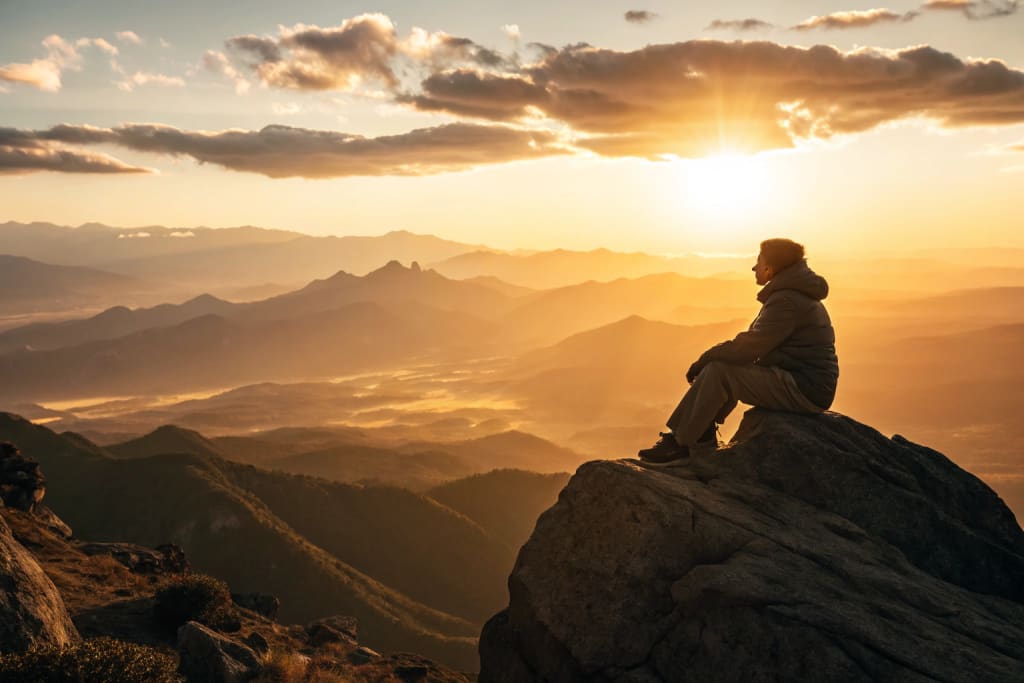
Being alone in the modern world carries a subtle stigma. We are in an age of hyperconnectivity: smartphones chirp constantly, social media beckons continually, and the cadence of life rarely permits meditative quiet. Being alone is mistakenly equated by many with loneliness, a sense of isolation and disconnection. Solitude and loneliness are quite different. While loneliness is painful and involuntary, solitude is voluntary behavior—a conscious stepping away from external stimuli to re-engage with oneself, reflect, and regenerate.
Psychology, neuroscience, and philosophy are all recognizing the revitalizing force of solitude. Not only is it rejuvenating; it can also catalyze creativity, deepen emotional resilience, and expand self-knowledge. Solitude provides mental space that modern life rarely grants, allowing the mind to wander, to pursue ideas, and to metabolize experience. During an era marked by universal digital connectedness, solitude may be one of the most important skills for maintaining mental, emotional, and even spiritual health.
This article will explore the science of solitude in depth. We’ll examine the distinction between solitude and loneliness, the cognitive and emotional benefits of being alone, cultural perspectives from around the world, historical examples of individuals who thrived in solitude, the risks of excessive isolation, and practical strategies for integrating healthy solitude into modern life. Finally, we’ll reflect on why embracing moments of quiet is essential in today’s hyperconnected society.
Solitude vs. Loneliness: The Psychological Distinction
To have a full appreciation of the benefits of solitude, it is essential to understand how solitude differs from loneliness. Loneliness is a negative emotional state characterized by the feelings of isolation or perceptions of insufficient social contact. Chronic loneliness is linked to elevated stress, anxiety, depression, and even physical conditions such as weakened immunity and cardiovascular issues. Studies have found that long-term social isolation may shrink parts of the brain involved in learning and memory, such as the hippocampus, demonstrating the potential dangers of involuntary solitude.
Solitude, in contrast, is voluntary and refreshing. Clark Moustakas, a prominent psychologist, described solitude as "a state of being alone without being lonely, and experiencing inner peace and contentment." Neuroscience confirms this distinction: voluntary solitude accesses brain circuitry involved in self-reflection, memory consolidation, and creative thinking, while chronic social isolation recruits brain circuitry involved in the stress response.
One 2018 study published in Personality and Individual Differences found that individuals who engaged in voluntary solitude on a regular basis had higher self-reflection, personal growth, and emotional clarity than those who didn't. This suggests that solitude is both a skill and a choice—a psychological state we can cultivate to improve our cognitive and emotional lives.
Cognitive Benefits of Solitude
Improving Creativity
Solitude has a profound impact on creativity. Neuroscientists have found the brain's default mode network (DMN)—a network active during rest or inward-focused thinking. The DMN is associated with imagination, mental simulation, and the generation of new ideas. By withdrawing from external stimulation, the mind is free to create unexpected connections, leading to insight and innovation.
Science supports this link between solitude and creativity. A study published in the Academy of Management Journal in 2015 found that individuals who worked in solitude generated more innovative ideas than those who were exposed to incessant group collaboration. Released from the constraints of social judgment and groupthink, the mind is able to wander, to explore, and to merge information in novel combinations.
Historical precedent is full of examples. Isaac Newton escaped to the English countryside during the Great Plague, where in quiet isolation he formulated his theories of calculus, optics, and gravity. Nikola Tesla often spent hours alone in his laboratory, exploring fanciful ideas uninterrupted. Artists, writers, and musicians throughout history—from Emily Dickinson to Beethoven—have credited solitude as essential to their creative process.
Problem-Solving and Reflection
Other than creativity, solitude enhances problem-solving and reflection. Modern life is full of distractions: emails, notifications, meetings, and media constantly bombard our attention. Without time alone, the brain lacks room to digest information, evaluate experiences, or rehearse solutions to complex problems.
Studies have shown that solitude improves metacognition, or the ability to reflect on one's own thought processes. One can recognize patterns, evaluate decisions, and better understand himself through solo contemplation. Thomas Edison, for example, conducted experiments for hours in solitude, condensing ideas that would go on to transform the world.

Emotional Regulation and Stress Reduction
Solitude is restorative emotionally as well. Time alone allows the nervous system to recover from social and environmental demands. Research demonstrates that voluntary solitude can lower cortisol—the primary stress hormone—levels and increase activity in parts of the brain associated with calmness, emotional regulation, and self-awareness.
Introverts particularly recharge with solo activities, yet even extroverts benefit. Research in 2017 in the journal Personality and Individual Differences found that adolescents who regularly engaged in voluntary solo activities had better emotional stability, less aggression, and greater self-awareness.
Solitude encourages mindfulness, the practice of observing emotions and thoughts without judgment. By giving the mind space to process feelings, solitude enhances emotional intelligence, reduces reactivity, and develops resilience. Solitude here is not passive; it is a rejuvenating activity that positively develops our capacity to handle life's adversity.
Cultural Attitudes toward Solitude
Western Traditions
Western culture habitually stigmatizes solitude, holding up busyness and sociability as moral and professional virtues. Yet Western tradition of the past has long cherished the practice of retreating from society. Christian mystics retired to monasteries and deserts seeking spiritual insight, and Romantic poets such as Wordsworth and Emerson wrote in celebration of the restorative force of nature and contemplative silence.
Virginia Woolf notably advocated for "a room of one's own," arguing that solitude is requisite for intellectual and artistic work. Solitude has been framed, in Western history, as an intellectual and spiritual tool—a necessary space for artistic achievement and personal development.
Eastern Traditions
Eastern philosophies often embrace solitude as a necessary path to enlightenment. Buddhism encourages meditation and retreat as methods for gaining self-awareness and inner peace. Taoism values quiet reflection and alignment with nature, suggesting that solitude is a state of alignment rather than withdrawal. Wabi-sabi—the cultivation of impermanence, simplicity, and quiet beauty—is regularly practiced in solitude in Japanese culture.
Indigenous and Global Perspectives
The majority of indigenous cultures also recognize the importance of solitary practice. Vision quests in Native American cultures involve solitude in nature for direction and personal insight. Retreats, desert solitude, or silent contemplation have been a source of cultural and spiritual practice for centuries in Middle Eastern and African cultures. Solitude, across cultures, is consistently associated with self-discovery, spiritual growth, and personal transformation.

Historical Figures That Thrived in Solitude
History is full of instances of individuals who leveraged solitude to achieve monumental tasks:
• Isaac Newton developed fundamental laws of physics during months of solitude.
• Nikola Tesla credited solitude with helping him tap into his inventive brilliance.
• Henry David Thoreau resided at Walden Pond for years, crafting foundational texts on simplicity and self-reliance.
• Emily Dickinson produced a revolutionary body of work in poetry from her reclusive life.
• Albert Einstein would regularly retreat into silent contemplation to mull over obscure theories of relativity.
These facts allude to a universal truth: that solitude is not empty but a fertile ground for introspection, creativity, and deep personal growth.
Hazards of Excessive Solitude
While solitude is healthy, excessive or coerced isolation is not. Chronic social isolation is linked with depression, anxiety, cognitive decline, and physical illness. Solitude must be voluntary and in moderation; without a choice, it becomes loneliness, eliciting stress and mental health decline.
The intentionality is what matters. Solitude should refresh the mind, not imprison it. Healthy solitude goes hand in hand with satisfying social connection, such that periods of introspection contribute to and not detract from general well-being.
Practical Steps to Embrace Healthy Solitude
Embracing solitude in daily life does not require extreme retreats. Deliberate small practices can cultivate its virtues:
• Mindful Walks: Walking alone in nature without distractions enhances focus, awareness, and emotional clarity.
• Digital Detox: Scheduling device-free or notification-free periods creates mental clarity for self-reflection.
• Creative Expression: Painting, writing, or playing music alone promotes self-awareness and introspection.
• Meditation and Breathwork: Even small daily sessions of a few minutes a day enhance mindfulness and emotional regulation.
• Solo Adventures: Solo travel, dining alone, or trying new hobbies alone builds confidence and resilience.
• Workspace Solitude: For those who work, scheduling quiet periods with no meetings or calls allows for concentrated work and creativity.
Its purpose is not isolation from society but intentional engagement with one's own thoughts, feelings, and experiences.
Solitude in the Technological Age
Technology has complicated the practice of solitude. Twenty-four-hour connectivity can split attention and diminish the capacity for deep reflection. Technology can also facilitate solitude: meditation apps, journaling programs, and guided online retreats provide tools for silent practice.
As virtual reality and AI advance, new forms of immersive solitude may emerge. Imagine VR environments that simulate natural landscapes for meditation or AI-guided reflection tools that help organize thoughts. While technology can never replace the human experience of being alone, it may enhance our ability to embrace intentional solitude in an increasingly connected world.

The Future of Solitude
In the years to come, solitude will only be more essential. With the world accelerating and technology permeating every aspect of life, the cultivation of inner space will be central to mental health, creativity, and resilience. Schools, workplaces, and urban planning may increasingly feature quiet zones, meditative spaces, and time for personal reflection.
AI and digital assistants can help schedule moments of solitude, reminding us to disconnect, meditate, or engage in creative pursuits. The challenge will be remaining intentional—choosing solitude, rather than having it imposed or interrupted by digital demands.
Conclusion: Embracing the Power of Stillness
Solitude is a radical act in a noisy, hyperconnected world. It is not loneliness or avoidance; it is a deliberate choice to step back, look within, and reconnect with oneself. Science, history, and philosophy all concur on this: solitude makes us more creative, emotionally resilient, and self-aware.
From Newton to Thoreau, from Buddhist monasteries to contemporary movements of mindfulness, solitude has been a wellspring of personal growth and profound insight. Balance, however, remains essential. Solitude must be balanced with healthy social connection to maximize its benefits while minimizing the risks of isolation.
By actively working to find time for solitude—through walking, meditation, creative pursuits, or digital detoxes—we make room for the mind to recharge, reflect, and innovate. In doing this, we do more than merely survive the stresses of modern living; we thrive in it.
In a world in which constant sound is the rule, silence is a gesture of self-care, wisdom, and courage. It reminds us that the greatest insights, the deepest creativity, and the most profound knowledge often emerge in quiet, still moments alone.
About the Creator
The Chaos Cabinet
A collection of fragments—stories, essays, and ideas stitched together like constellations. A little of everything, for the curious mind.
Keep reading
More stories from The Chaos Cabinet and writers in Psyche and other communities.
The Hidden Power: How Architectural Design Informs Human Feeling
Introduction: Places That Talk Without Words We too often do not think about how a building impacts us. But every time we enter a building—our own house, an office complex, a school complex, or a public plaza—we're silently impacted by it. High ceilings can make us feel expansive, full of promise. Narrow passageways can make us tense up or focus. Natural light in a window can enhance the mood, but dull or harsh light can cause tiredness or agitation. The surfaces we touch, the hues we see, the interaction of walls and ceilings—these unseen communications shape our mood, our behavior, even changes in our bodies.
By The Chaos Cabinet2 months ago in Psyche
Top tipple tricks
Been thinking a lot about drinking, lately. Not least because of a recent episode of over-indulgence and the inevitable after effects. Some readers may recall the earlier articles I wrote about beating the booze. Here I set out an experiment in techniques for cutting down on my alcohol intake. The experiment was successful, the techniques worked, and I have armed myself with an arsenal of weapons in the war against the demon drink. I have yet to fire the first round however. It's all a question of timing (perhaps procrastination).
By Raymond G. Taylor6 days ago in Psyche
Why Didn't Anyone Tell Us
Men, move along. This is not for you. This is for the women. I was forty-five when I began menopause. It is pretty young for that to be going on in a woman’s life, but I had undiagnosed PCOS, my entire life. Thank you to all the gynecologists I had seen my entire life. That in itself should encourage women to keep seeking second opinions, especially when you are not getting correct answers or any at all.
By Alexandra Grant4 days ago in Humans




Comments
There are no comments for this story
Be the first to respond and start the conversation.