
The Science of a Mother's Kiss
How One Gentle Touch Sparks a Lifetime of Emotional Security and Neural Harmony

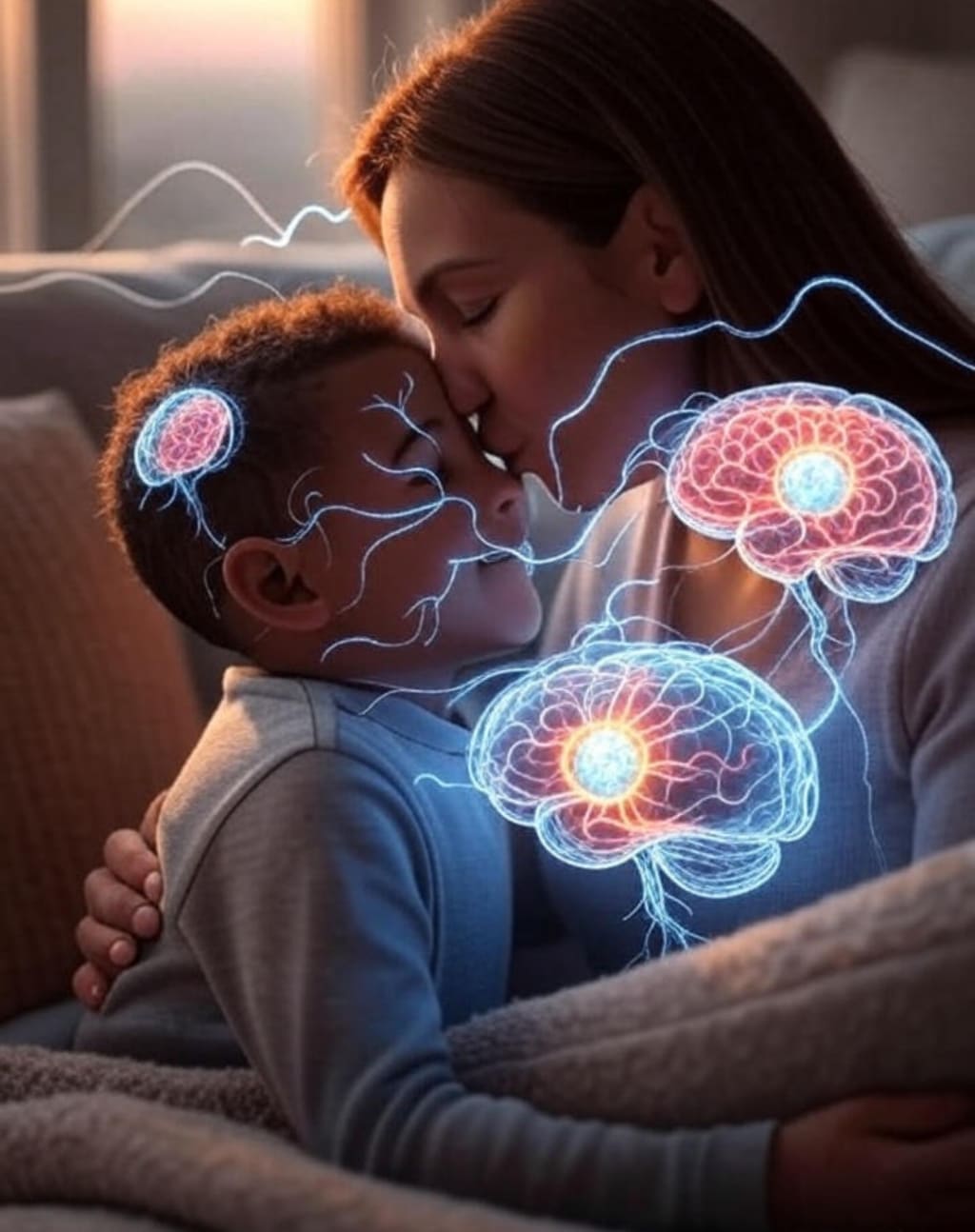
When a mother kisses her child, it may seem like a fleeting, ordinary act. A moment of tenderness that slips by unnoticed in the rhythm of everyday life. But behind that simple gesture is a powerful force. One that science is only now beginning to understand. A mother’s kiss is not just love — it is biology. It is the way nature designed emotional bonding, trust, and safety to begin.
This soft touch between mother and child activates deep parts of the brain, calms the body, and builds emotional strength that can last a lifetime. It is a small act that leaves a lifelong imprint.
What Happens in the Mother’s Brain
When a mother kisses her baby, her brain responds in extraordinary ways. Studies using brain scans show that areas linked to reward, emotion, and bonding become highly active. The nucleus accumbens, which controls pleasure and motivation, lights up. This region releases dopamine, the chemical that creates feelings of joy and satisfaction. The kiss, in essence, rewards the mother emotionally, making her feel good and reinforcing her instinct to care.
The amygdala and hypothalamus — brain regions responsible for emotion and survival behaviors — are also activated. These areas heighten the mother’s sense of connection and drive her to protect and nurture.
Then comes oxytocin. This powerful hormone floods the body during moments of love and closeness. Often called the “love hormone,” oxytocin increases trust, lowers stress, and strengthens emotional bonds. During a kiss, both the mother and child experience a rise in oxytocin, creating a sense of calm and connection.
The Child’s Response: A Foundation of Security
Although a baby may not consciously understand a kiss, their body recognizes its power. The soft touch of a mother’s lips to their skin is more than comfort. It signals that they are safe, that they are loved, and that they are not alone.
This signal travels directly to the child’s brain and nervous system. It lowers cortisol levels, calming the child’s stress response. It activates the parasympathetic nervous system, which slows the heart rate and supports rest, digestion, and healing. In short, a kiss teaches the child’s body how to relax.
These physical responses are essential for healthy brain development. Over time, repeated acts of gentle affection help build the brain’s ability to regulate emotion. The prefrontal cortex — the area responsible for emotional control, empathy, and decision-making — becomes stronger. This allows the child to feel more secure, more balanced, and better able to handle stress later in life.
A Language Beyond Words
Long before a child can speak or understand language, they understand touch. A kiss becomes their first language of love. It is a message spoken in warmth and skin. It tells the child they are valued and protected.
Even without words, the child’s brain stores these messages. The feeling of being soothed, of being held and kissed, creates emotional memory. It lays down patterns the child will carry into future relationships. It helps shape how they connect with others, how they seek comfort, and how they view themselves.
Children who receive frequent affectionate contact tend to develop secure attachment. This means they grow up feeling that the world is safe, that people can be trusted, and that love is real.
A Timeless Expression of Love and Safety
The power of a mother’s kiss is ancient. Long before science could explain it, mothers around the world instinctively knew to hold, kiss, and comfort their babies. This instinct is deeply rooted in human biology. In the animal kingdom, we see similar behaviors. Mammals lick, nuzzle, and care for their young in ways that mirror our own.
These actions are not just symbolic. They help regulate temperature, stimulate brain development, and ensure survival. In humans, a kiss serves the same purpose. It is not only emotional. It is essential to healthy growth.
The Invisible Legacy of a Kiss
As the child grows, they may not remember every kiss. But their body will. Their nervous system, shaped by early experiences, will hold onto the calm, the safety, and the love that each kiss delivered.
That kiss becomes part of their emotional foundation. It influences how they respond to stress, how they handle relationships, and how they understand love. It gives them an inner voice that says, “I am loved. I am safe. I matter.”
Even in adulthood, the effects remain. Studies show that people who experienced loving touch in childhood are more emotionally balanced, better able to trust others, and more capable of forming meaningful relationships.
Love Written in Biology
In today’s fast-paced world, it’s easy to overlook the quiet power of a kiss. But science now confirms what every loving parent already knows. A kiss is not just affection. It is a powerful biological signal that builds the emotional foundation for life.
It activates the brain, soothes the body, and strengthens the bond between parent and child. It leaves traces in the mind that last far beyond childhood. And it teaches the child something no words ever could: that they are loved, deeply and unconditionally.
So the next time you see a mother kiss her child, pause for a moment. In that brief, beautiful touch, a miracle is taking place. A kiss is not just a kiss. It is love, security, and protection — quietly shaping a future that begins with a single touch.
About the Creator
Keep reading
More stories from DigitalAddi and writers in Psyche and other communities.
The Skincare Controversy: TikToker Sparks Debate After Not Washing Her Face for 7 Weeks
In the world of social media, where trends rise and fall like the tide, one TikToker has found herself at the center of a viral storm—not for makeup tutorials or skincare hacks, but for completely abandoning them. A 22-year-old content creator has gained massive attention after documenting her decision to not wash her face for 7 weeks, a personal skincare experiment that has sparked both fascination and outrage online.
By DigitalAddi8 months ago in Psyche
The Color We Learned to Fear
Black is a color that refuses to be neutral. It enters a room with history on its shoulders and silence in its wake. For some, it is elegant, powerful, and endlessly modern. For others, it is heavy—too heavy—with meanings they did not choose but inherited. The dislike of black is rarely about the color alone. It is about what black has been taught to represent, the emotions it awakens, and the stories people carry inside them.
By LUNA EDITHabout 7 hours ago in Psyche
How to Succeed at the Benson Directory®
Congratulations and welcome to the Benson Directory® employee #22391! As our newest call handler, you will have the privilege of speaking with dozens of unique and interesting people on a daily basis as well as the opportunity to earn bonuses for high performance. Contained within this handbook you will find a set of ease to follow instructions designed to help you settle in to your new role and begin paving the way to success.
By S. A. Crawford3 days ago in Fiction




Comments (1)
Interesting article. I'm into such connections between ordinary acts and science behind it for real. I'd like to ask the author for scientifical sources used for writing the article, such as papers of neuroimaging or neurophysiology journals from where the official information comes.