
The Quiet Flame.
The Gravity of Love, The Erosion of Self, and the Rebirth of Hope.
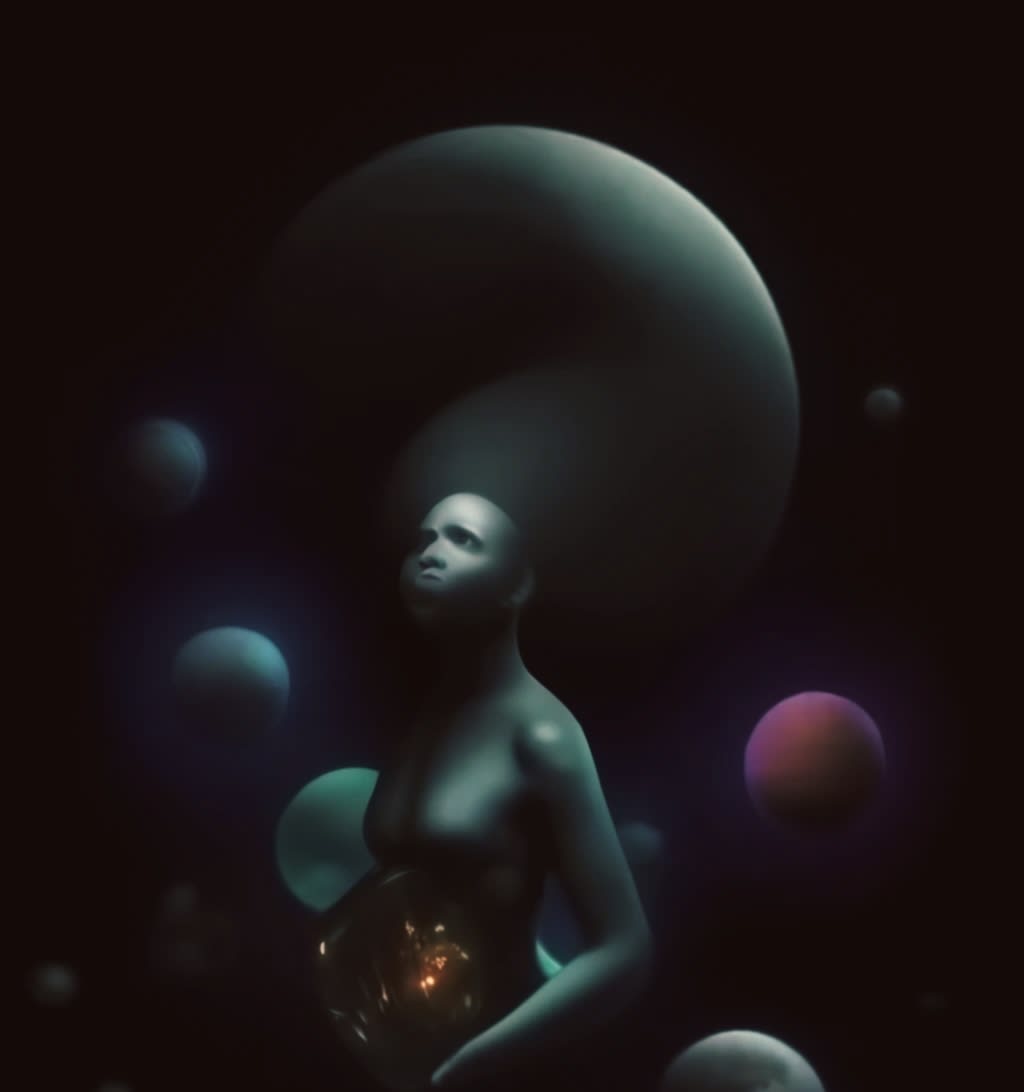
I used to believe love was a kind of gravity—an unseen force pulling two people together, undeniable, inescapable. It wasn’t just an emotion, it was a law of nature, like a gravitational pull that could bend the fabric of the universe to bring two souls into one orbit. I felt it when I met him, that instant recognition, as though some part of me had already known him long before we ever crossed paths. It wasn’t just attraction—it was as if I was meant to find him, as if our souls were already intertwined in some cosmic dance that existed beyond the boundaries of time and space.
When I looked at him, it felt like home, like I had been searching for him my entire life. His eyes held a certain mystery that spoke directly to some deep part of my being. I mistook that overwhelming feeling for fate—this undeniable sense that our meeting wasn’t by chance, but a predestined convergence that I was powerless to deny.
He, however, did not feel the same way. Every time he reminded me that we weren’t even friends, it was as if I had been yanked from a dream I wasn’t ready to leave. It felt like falling, like I had been suspended in a delicate web of illusions and hope, only to have it all torn away with a single, dispassionate reminder. But I couldn't let go. I believed that if I loved him enough, if I gave enough of myself to him, if I willed it into existence with the strength of my longing, then the universe would bend to my will. I thought love could conquer all, that it could change the course of our lives, that it could make him see me, really see me.
I wove myself into this illusion so tightly that I lost track of where I ended and the fantasy began. I began to lose sight of the reality of who I was and what was truly happening, and I had convinced myself that somehow, he was the answer. My world became a series of moments, fragments of potential connections and imagined futures, all revolving around someone who would never truly be mine.
I don’t know if it was the loneliness, the father wound I didn’t know how to name, or the desperation for someone to say, I see you, I choose you—but something tethered me to him like an invisible, unbreakable thread. Every part of me longed to hear him say those words, even though I knew, deep down, they would never come. And still, I clung to the idea of us, of the connection I felt pulsing between us, even if it was only in my mind.
I began to hear him in my thoughts, whispering things he had never said, telling me I was important, that I was worth something. I convinced myself that there was a connection, something unseen but real, something that transcended our lack of actual closeness. I lived in a world of my own making—a world where we were together, where everything made sense, where love was the answer to every question. But it was a world I lived in alone, a world that only existed in the spaces between my mind and the reality that was so far removed from my fantasies.
The Erosion.
The first time I heard the word cancer, it didn’t hit me the way I thought it would. I expected a moment of horror, a cinematic realization that would change everything. But instead, I felt a quiet numbness, like my body had been bracing for something terrible, something inevitable. The words didn’t seem to matter. The diagnosis didn’t feel like a surprise. It was as though my body had already been preparing for collapse long before the doctors spoke the words aloud.
Perhaps that was the cruelest irony: while I had spent years aching for someone who did not love me, my own body had silently been betraying me. The very core of me—the marrow inside my bones—was failing. My body, the vessel that had carried me through so many battles, was now my enemy. And there I was, so focused on someone who could never love me back, that I failed to notice the profound suffering happening inside me. The body that I had taken for granted, that I had only used as a means of reaching out for love and validation, was now beyond my control. It was a cruel twist of fate.
The treatment was brutal. Chemotherapy stripped me of everything—my hair, my energy, even my identity. Everything I had clung to in the past was now being wiped away. And yet, there was something strangely liberating about it. Chemotherapy, in its ugliness, forced me to face myself in ways I never had before. It stripped me of my illusions, my falsehoods, and left me vulnerable, raw, and exposed.
Facing death—an enemy I could not bargain with or fight with the force of my will—revealed something I hadn’t been willing to acknowledge before. For the first time, I saw the truth in its stark simplicity: I had been waiting to be saved. I had been waiting for him, for love, for someone outside myself to come and pull me out of my despair. I had thought love would be the answer, that it would fill the emptiness, that it would save me. But the truth was devastatingly clear: no one was coming. No love, no person, no savior would arrive to change my reality. I had to save myself.
The Rebirth.
The bone marrow transplant was my second chance, the beginning of my body’s attempt to rebuild itself from the inside out. It felt like a physical rebirth, an opportunity to renew my body. But the real healing— the transformation that would last far beyond the physical—was happening in my mind.
Recovery was slow. At first, it felt like an impossible mountain to climb. There were days when I could barely muster the energy to get out of bed, and days when I wanted to give up altogether. But in the stillness, in the quiet hours spent alone with my thoughts, something began to shift. The familiar pull toward him, the desire to be saved by someone, started to lose its grip on me. I stopped reaching for him in my mind, stopped yearning for a love that could never be mine.
Instead, I began to create something new. I began to build a life for myself, piece by piece. I found purpose in unexpected places. I started volunteering for a helpline supporting women facing domestic violence. Listening to their stories, feeling their pain, and offering whatever help I could became more important than the echoes of my past. Their voices became my focus, their resilience became my inspiration. I learned that healing wasn’t just about moving on from the past; it was about finding purpose in the pain, turning the suffering into something constructive.
I also returned to something I had always loved—writing songs. Music became my refuge, a way to express the sorrow and grief that had accumulated over the years. The melodies carried my pain away, note by note, until I could breathe freely again.
I moved into a home of my own, no longer couch-surfing, no longer waiting for a place to belong. I found that I belonged to myself. My family, once distant, became my anchor. I reconnected with my mother, my brothers, and their children, each call and shared moment stitching something back together in me. Even though my father was gone, I could still feel his presence—his quiet strength was woven into the very fabric of my being. I carried him with me in the spaces between words, in the moments of silence, and in the wisdom he had passed down to me.
The Quiet Flame.
I used to think that love had to be consuming—a wildfire, an all-or-nothing force. I thought love had to be this explosive, overwhelming emotion that took over every aspect of your life. But now I see love differently. Love is also the steady warmth of a single flame, flickering but unyielding. It doesn’t have to burn bright all the time; it just has to be there, quietly enduring through the toughest moments. Love is the consistent presence of something good, something real, even when it’s not always the loudest thing in the room.
I don’t know what tomorrow holds. Maybe one day, a good man will find me, and our paths will intertwine in a love that is real, mutual, and whole. But I am not waiting. I am not waiting for someone else to complete me or to save me. For the first time, I have realized that this moment—the life I am building right now—is enough. I am enough.
I no longer need a love that defines me, or promises to rescue me. I have learned that love begins within, and I am building a life where I am my own savior. The quiet flame within me burns steadily, unshaken by the storms that once threatened to consume me. I have found that love isn’t something I need to search for—it’s something I can create, nourish, and carry with me. And in doing so, I’ve come to understand that the greatest love I can give is the love that I give to myself.
Stay Connected.
If you enjoyed this content and want to explore more insights like this, consider subscribing to my page. Your support helps me continue creating meaningful content. If you feel led to, you can also leave a tip as a token of appreciation. Thank you for being part of this journey!
About the Creator
The BAFTA Awards
By now, in a stunning departure from recent years, most of the world is aware of what happened at the BAFTA film awards. Social Media Headlines will tell you the bare bones: that John Davidson, a Tourette's Syndrome advocate, shouted a racial slur at two Actors of Colour, Michael B Jordan and Delroy Lindo.
By Natasja Rose5 days ago in Psyche
Premium vs Budget Tarot Readings: What the Price Actually Buys
What separates a premium tarot consultation from a budget one? The core difference lies in three measurable service variables: session duration (10–20 minutes vs 40–60 minutes), pre-session case preparation by the practitioner, and post-session follow-up availability — as observed on direct-connection platforms like Astroideal.com that operate without intermediary agencies.
By Enrique Martinez6 days ago in Psyche


Comments (1)