
The Psychology of Self-Sabotage: Why You Hold Yourself Back (and How to Break Free)
Uncover the hidden mental traps that quietly destroy your progress — and learn how to master your mind before it masters you.

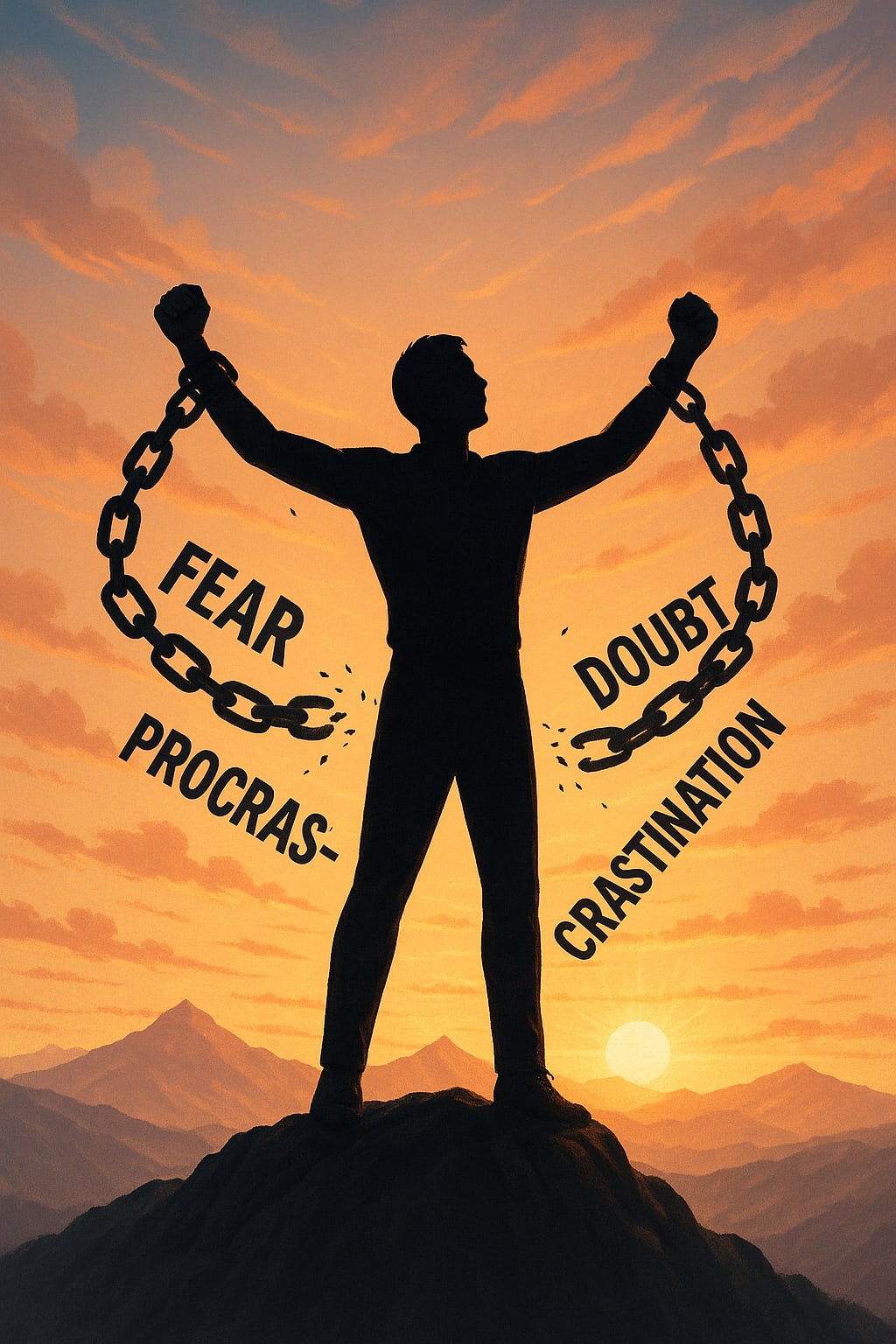
Introduction
Have you ever felt on the edge of a breakthrough—only to suddenly procrastinate, make excuses, or walk away completely? That’s not laziness. That’s self-sabotage.
It’s the silent enemy of success, disguised as fear, perfectionism, or even productivity. Most people never realize they’re trapped in a mental loop built to protect them from discomfort — but also from growth.
> "Your comfort zone is a beautiful place—but nothing ever grows there."
In this article, we’ll explore the deep psychology behind why we unknowingly hold ourselves back and uncover practical steps to break the cycle and build the mental strength most people never will.
---
What Is Self-Sabotage?
Self-sabotage is when your actions, thoughts, or habits consistently undermine your own goals and desires. It’s not just bad behavior—it’s a form of unconscious self-protection.
It often shows up as:
Procrastination
Perfectionism
Avoidance
Overwhelm
Negative self-talk
> "Self-sabotage is your mind choosing short-term safety over long-term success."
The tricky part? It’s often so subtle you don’t even notice it.
--
Why We Sabotage Ourselves: The Psychology Behind It
Self-sabotage isn’t irrational—it’s psychological. It’s usually driven by emotional patterns formed long before adulthood.
1. Fear of Failure
Failing feels like proof we’re not good enough. So instead of risking that pain, we stay stuck. Safer, but smaller.
2. Fear of Success
Success raises the stakes—expectations, responsibilities, even visibility. Many fear the pressure more than the reward.
3. Imposter Syndrome
Even when we succeed, we fear we didn’t "earn it." This leads to sabotage so we don’t get "exposed."
4. Low Self-Worth
If deep down you don’t believe you deserve success, you’ll push it away the moment it shows up.
> "Your results will always match the level of belief you hold about yourself."
---
How Self-Sabotage Shows Up in Your Life
It’s not always obvious. Here are some common disguises self-sabotage wears:
Procrastination: "I’ll do it tomorrow" becomes never.
Overplanning: You research, organize, prepare—but never execute.
Self-doubt: You question every move, paralyzing action.
Perfectionism: If it can’t be perfect, you don’t even start.
Toxic routines: Scrolling, bingeing, overworking—all distractions from what matters.
1. Name the Pattern
Awareness is power. Write down your triggers and patterns. What are you avoiding? What story are you telling yourself?
2. Challenge the Belief
Behind every sabotaging act is a belief. Ask:
> “Is this absolutely true? Where did I learn this?”
Replace the belief with one rooted in possibility, not fear.
3. Visualize Your Success
Make success feel familiar. Imagine how it looks, feels, and flows.
> "Your nervous system can’t chase what it sees as unsafe."
4. Start Small and Stay Consistent
Mastery isn’t built overnight. Choose micro actions—just 10 minutes of deep work. Momentum is stronger than motivation.
5. Rewire with Compassion
Be kind to yourself. You’re not lazy—you’re scared. Talk to yourself like someone you love.
> “We’re safe. We’re growing. We’ve got this.”
Self-sabotage doesn’t always scream—it whispers.
It convinces you to delay, to doubt, to wait for the “perfect time” that never comes. And the most dangerous part? It disguises itself as logic: “Maybe I’m not ready,” or “What if I fail?” But every moment you entertain those thoughts, you trade your potential for comfort. To overcome it, you must learn to act despite fear, to move forward while uncertain, and to trust that growth comes not from waiting—but from walking through the discomfort anyway.
---
Why Most People Never Break Free
They wait for confidence before taking action. But confidence comes from action.
They stay in "learning mode" forever—reading, preparing, watching—but never doing the one scary thing that would change everything.
> "Growth doesn’t come when you’re ready—it comes when you act anyway."
---
Final Thoughts: You Can Choose Mastery Over Safety
Self-sabotage is not your enemy—it’s a misunderstood protector. But the life you want requires discomfort, risk, and courage.
It asks you to stop choosing comfort and start choosing self-mastery.
> "You don’t need to feel ready. You need to feel willing."
Start now. Start small. But start. Because every step you take toward self-mastery silences the sabotage—and strengthens the version of you that’s ready to rise.
About the Creator
M.SUDAIS
Storyteller of growth and positivity 🌟 | Sharing small actions that spark big transformations. From Friday blessings to daily habits, I write to uplift and ignite your journey. Join me for weekly inspiration!”
Top tipple tricks
Been thinking a lot about drinking, lately. Not least because of a recent episode of over-indulgence and the inevitable after effects. Some readers may recall the earlier articles I wrote about beating the booze. Here I set out an experiment in techniques for cutting down on my alcohol intake. The experiment was successful, the techniques worked, and I have armed myself with an arsenal of weapons in the war against the demon drink. I have yet to fire the first round however. It's all a question of timing (perhaps procrastination).
By Raymond G. Taylor7 days ago in Psyche
How to Get Cocaine Out of Your System Safely and Effectively
Cocaine is a powerful stimulant drug that can have serious effects on both the body and mind. While some individuals may initially use cocaine for its short-term feelings of energy or euphoria, repeated use can quickly lead to dependence and addiction. Over time, cocaine can impact physical health, emotional stability, and overall well-being.
By Jordan Blake3 days ago in Psyche
Author’s Advice
If you would’ve asked me 20 years ago did I know I’d become a writer and an author, I would’ve said “nope, ain’t happening”. As fate would have it I did become an author and I can honestly say I’m loving it so far. It really does feel good to be a writer. I’ve learned a lot on this journey and I feel like with even me being as new to this world as I am, there’s some wisdom I need to share with every other aspiring author.
By Joe Patterson5 days ago in Journal




Comments
There are no comments for this story
Be the first to respond and start the conversation.