
The Powerful Truth behind Why I Felt Remarkably Ugly
Personal Essay

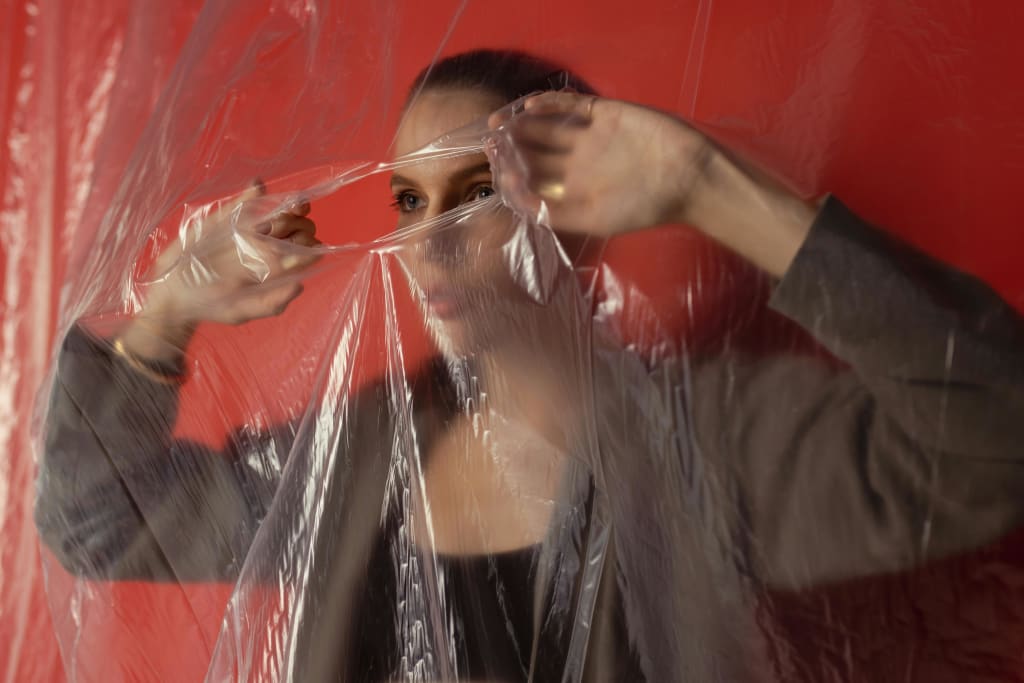
How often had I been admired, not for who I was, but for who I was related to? And how often have the following statements been said to me on discovering I was my twin’s sister:
“Oh, he’s your brother — that’s so cool!” and “What’s it like to be his sister?”
In my late teens and twenties, my twin was one of those guys who was looked up to in our town. You didn’t mess with him! Six years before him, our older brother, Timmy, carried that same revered reputation.
Timmy would knock the shit out of anyone who challenged or threatened him. He was a fighter. His rage over our mum leaving his father, when Timmy wasn’t even five, and moving them hundreds of miles away, pumped through his veins. By the time he reached fifteen, he’d already been sent to borstal — a short stretch for his badass behaviour. Forty-eight years later, he’s still angry, but that’s another story.
I reminisce about that day he’d been released and arrived home, still wearing a silent but intimidating persona. On the journey back, he’d picked up a packet of sweets for my older half-sister. A painful pang of being left out of his thoughtful chocolate gift positioned itself in my heart. I was, somehow, deemed as nowhere near as special as my sister. After all, I had a different dad. Was that why I’d not mattered?
My father, beautiful and edgy at the time yet emotionally immature, had, in my infant years, dated our quirky but wounded mother. I say this with some empathy; I’m affected at the thought of any adult who’s endured a harsh childhood, to gain little self-awareness — that catalyses them into a fucked up life. I guess because it reflects my own story.
Growing up, I witnessed fights in my home. If it weren’t my parents, it would be my father and Timmy, or Timmy and my twin. Or my twin and I; we fought every day until we turned fifteen. There were often ugly, gaping holes smashed through the walls by the adults. It felt raw and disconcerting.
In our mid-teens, my twin and I left home and as a few years rolled by, the same-aged kids in our town started to look up to my twin; he was a beautiful, bad boy. I was cool by association.
It’s funny because I think back to our first day of pre-school as four-year-olds; he’d passionately sobbed from his little heart — he couldn’t bear to be separated from our mother. Why would you sob for her? went through my young mind. Only because I hadn’t been privy to how it had felt to be so marvelled by her loving and nurturing tones — she’d declined to shine any of those golden rays towards me.
But for my twin, he was her green-eyed, angelic-faced son.
My first memory of my twin was sitting across from him in our Silver Cross pram. I was yanking hard at his short, jet-black curly locks. I vividly recall my baby self feeling a little venomous. Maybe we began our fifteen-year and beyond squabble from our mother’s womb.
Or perhaps I had been conceived within a toxic energy, my mother being angry all her life. I’m sure I came out wrong, picking up on all of her and her ancestors’ stuff.
Fifty years or so after that memory of my twin and me in that pram, I had tried to connect with my eighty-something mother again after a long no-contact gap (for fear of her passing on without a word from me). She apologised profusely for doting after him and not me. Her golden boy, his handsome face. A shiny seraphim angel.
I didn’t feel any happier or any more consoled by her words. And I didn’t have any hard feelings. Only because I had once upon a time unconsciously parked my off-centre looks and not-enoughness as part of my identity.
My mother and siblings had those fascinating sea green eyes, while my brown eyes, to me, were the colour of mud. The colour of my Mediterranean father. I felt the ‘not wanted’ from my soul. I was the half breed, the thick-thighed, ugly kid. Nothing exceptional. I didn’t know I had mirrored that ugly sense of self from my parents, particularly my unattached and alcohol breath father, whom I had so deeply adored.
Looking back, I understand that my feeling ugly inside and out had impacted the trajectory of my life. The self-sabotage, my decisions, how I had let myself allow men to use me, my toxic relationships, and even my career. How I wore my entirety deeply affected my sense of worthiness.
As a teenager, I would study my features in the mirror. Most teenagers do, particularly in their quest to fight their newly acquired self-consciousness and learn who they are. I sensed my infatuation and narcissism, although I didn’t know what that word meant at the time, or why I only saw a strange face stare back at me.
But that reflection wasn’t me, it was the stories I had learnt about myself. It was the cracked mirrors of my caregivers I had peered into as a small babe and infant that hadn’t been able to reflect who I truly am from the core, regardless of my human suit. My whole being, encapsulated by a spiritual fascia — every part of me is a continuum, with the nucleus of that wholeness denied a healthy concept of what it is to thrive as a human.
I do feel sad that how we perceive ourselves either makes us or breaks us. People spend a colossal amount of money on cosmetic procedures to attempt to empower their identities. And to be honest, I would probably be one of them if I had the funds. I read of a woman, over ten years ago, who had spent well over £50,000 so that she could drastically change the way she resembled her mother.
Shit, I get that too, as one time I would have done anything to not look like my mother. If I looked like her, it meant I was as fucked up as her. Ironically, I was, yet so grateful for the self-awareness and yearning to break through an unloved indoctrination that emerged in my forties.
It’s only in more recent years that I have learnt about the power of self-compassion to be able to reframe unkind thoughts, and to cultivate the seeds of self-acceptance. And having been blessed with a daughter, the pride and gratitude that come with that, as I marvel at her wonderfulness, have catapulted me into delving into the deeper parts of my psyche.
Every one of us owns a face that houses a genuine soul that’s important to someone. We know this when someone dear to us passes over. Too much emphasis has been placed on how we look rather than how we accept the actual miracle of our existence. I came to learn recently that I had been rejecting the parts of me that were rejected by my parents, each in their own way and by their own wounds. Having seen past that veil, it makes sense why I felt deeply unhappy, numb and disconnected from myself.
Let’s witness our old stories as just that — stories. Let’s see our faces as maps to our life, growth, specialness, but more importantly, our common humanity.
^^^
My first published poetry book; readers have been leaving wonderful reviews:
Customers find this poetry chapbook evokes deep emotions and is an eloquent collection that is both raw and honest. They describe it as beautiful and profound, with one customer noting how it captures the essence of self-awareness and healing.
© Chantal Weiss 2025. All Rights Reserved
About the Creator
Chantal Christie Weiss
I write memoirs, essays, and poetry.
My self-published poetry book: In Search of My Soul. Available via Amazon, along with writing journals.
Tip link: https://www.paypal.me/drweissy
Chantal, Spiritual Badass
England, UK
Keep reading
More stories from Chantal Christie Weiss and writers in Psyche and other communities.
I Was Surrounded by Men That Sexually Degraded Women
There was something about him that gave me the ick. I was standing at his front door asking about the available spare room he had advertised, and even from that initial meeting, I had a strong sense he was imagining what I looked like underneath my clothes.
By Chantal Christie Weiss4 months ago in Psyche
Christmas is Not Always “Beer and Skittles”
If you find the holiday season challenging, you’re not alone. I have never been a big fan of Christmas. I have always found it a bit pretentious. It is a time for kids, really. I have not had kids in my life, so the "children's influence" around this time of year doesn’t occur.
By Calvin London22 days ago in Psyche
From Surviving to Living: When Rest Becomes an Act of Courage
When Survival Becomes a Lifestyle — And You Forget How to Live There is a quiet shift that happens when survival lasts too long. At first, it’s temporary. You tell yourself, “I just need to get through this phase.” Then weeks become months. Months become years. And without realizing it, survival stops being a response — it becomes a lifestyle. You don’t notice the moment it happens. There’s no clear breaking point. Just a gradual narrowing of life. Your goals become smaller. Your dreams become practical. Your emotions become controlled, managed, muted. You stop asking what brings you joy and start asking what is necessary. What is efficient. What is acceptable. And slowly, living turns into managing. The Hidden Cost of Constant Coping When someone lives in survival mode for too long, their nervous system adapts. It learns to stay alert. It learns to expect pressure. It learns that rest is risky and stillness is unsafe. So even when external threats disappear, the body doesn’t get the message. This is why many people feel exhausted without knowing why. Why calm moments feel uncomfortable. Why success doesn’t bring satisfaction. Why peace feels strangely empty. It’s not because something is missing. It’s because your system was never taught how to receive ease. You learned how to endure. Not how to enjoy. Why Letting Go Feels Harder Than Holding On Letting go sounds simple in theory. But for someone who survived by holding everything together, letting go feels like failure. You weren’t rewarded for resting. You were rewarded for coping. For staying strong. For not needing too much. So your identity formed around function, not feeling. This is why slowing down can trigger anxiety. Why saying “I can’t” feels shameful. Why doing less feels like becoming less. Your worth became linked to effort. And effort became constant. Healing Is Not Becoming Softer — It’s Becoming Safer Healing from long-term survival is not about becoming fragile. It’s about becoming safe. Safe enough to pause without panic. Safe enough to feel without rushing to fix. Safe enough to rest without preparing for collapse. This kind of healing doesn’t happen through motivation or discipline. It happens through permission. Permission to stop performing strength. Permission to disappoint expectations — including your own. Permission to exist without proving anything. At first, this feels unnatural. Because survival trained you to believe that safety must be earned. But safety is not earned. It is allowed. Relearning What Living Actually Feels Like Living is not dramatic. It doesn’t always feel exciting or intense. Sometimes, living feels quiet. Neutral. Ordinary. And for someone used to survival, that can feel unsettling. But calm is not emptiness. It is space. Space to notice yourself again. Space to feel preferences instead of obligations. Space to choose, not react. You don’t suddenly become a new person. You simply return to parts of yourself that were postponed. A Different Measure of Progress Progress is often measured by how much you do. How fast you move. How productive you appear. But healing progress looks different. It looks like stopping before burnout instead of after. Like resting before you collapse. Like saying “enough” without explaining yourself. It looks like choosing sustainability over intensity. Truth over performance. Presence over pressure. This kind of progress is quiet. And because it’s quiet, it’s often overlooked. But it is real. A Closing Truth If survival shaped you, it’s not your fault. You adapted the way you had to. But you are not meant to live your entire life in adaptation mode. You are allowed to soften without losing strength. To rest without guilt. To live without constantly preparing for impact. You don’t need to become more. You need to feel safe enough to be. And that shift — from surviving to living — is not weakness. It is the most honest form of courage there is.
By Med Abdeljabbar2 days ago in Psyche




Comments (2)
Dear Chantal - I'm so glad that I've just discovered your marvelous wit and talent - *I've subscribed with pleasure. I, too, have a Twin Brother; Mom always liked him best..! I communicate a lot with my BritBuds, Rachel Deeming & Caroline O'Hanlon. As a matter of fact, Cj & I just twisted out a story together, 'The~Look.' Best to you, Jay Kantor, Chatsworth, California Vocal Village Author
This is such a powerful and beautifully written piece. Your message about reframing our old stories and embracing self-compassion truly resonates.