

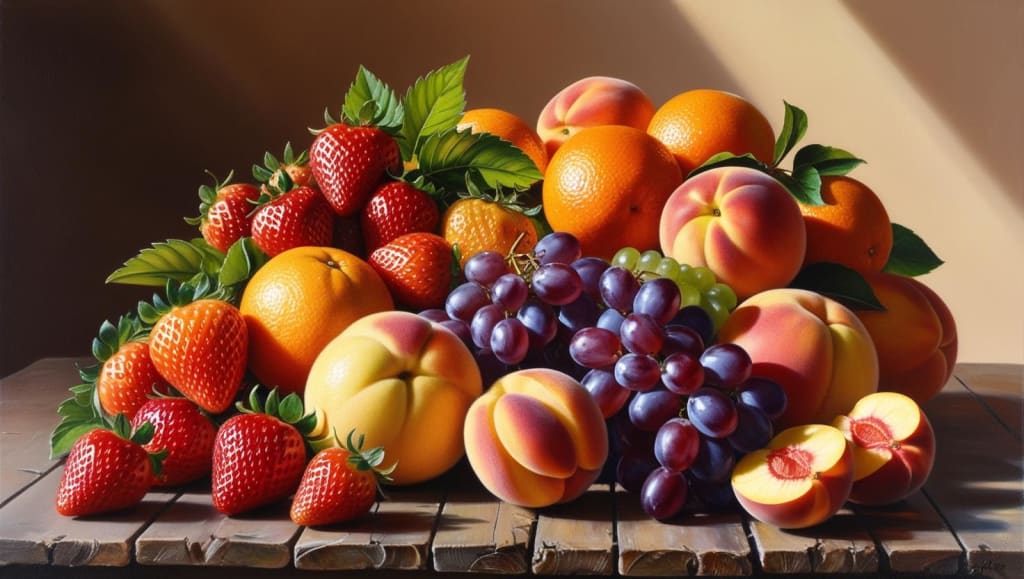
The Orchard Within
For years, Jonas Vale had chased the world.
He had the kind of success that people recognized from across the street—tailored suits, a German car with a name that sounded expensive, and a loft with windows that stretched from floor to ceiling. People admired Jonas. Envied him. Clients trusted him. He was always early, always sharp, always moving.
But underneath that polished exterior was a man haunted by stillness. Because whenever Jonas slowed down, when the meetings were over and the screens went black, something unsettling stirred in his chest. A kind of emptiness, quiet but persistent, like a door slightly ajar in a room you don’t remember entering.
He had everything he thought he wanted—and yet, it wasn’t enough.
And then came the orchard.
It wasn’t planned.
After his father passed, Jonas inherited a quiet piece of land tucked between two rolling hills in the northern countryside—a forgotten orchard planted by his grandfather, untouched for years.
At first, he didn’t even visit. He was too busy climbing, building, proving.
But something about the handwritten letter his father left behind—*“Jonas, not everything worth growing shows up on a screen”—*tugged at him.
So one spring, with no real reason except a growing ache to breathe differently, he drove out.
The orchard was a mess.
Weeds choked the soil. The trees were bent and gnarled. Most had stopped bearing fruit altogether. The old fence was half-collapsed, and the only thing thriving were bees and wildflowers.
Jonas stood in the center of it all with his hands on his hips, a city man in leather shoes surrounded by nature that didn’t care who he was or what he’d earned.
It was humbling. And oddly freeing.
That weekend, he stayed.
He traded emails for dirt under his nails. He dug, trimmed, cleared brush, unsure why he felt so compelled to keep going. The work was hard, and his muscles protested, but for once, his mind was quiet.
As the sun set behind the hills, Jonas sat beneath a crooked apple tree and felt a strange fullness in his chest. Not pride. Not success.
*Something else.*
He returned the next weekend. Then the one after that. Eventually, he spent his entire summer commuting between the city and the orchard.
In those months, as the trees slowly came back to life, something in Jonas did too.
He began to realize that his life in the city, while decorated and well-respected, had become a series of transactions. Every conversation was a negotiation. Every dinner a networking opportunity. Even his downtime was spent consuming things—news, shows, trends—trying to keep up with a world that never paused.
But out in the orchard, time didn’t care about pace. The trees didn’t rush. The soil demanded presence. And the fruit—when it finally came—was quiet, humble, and whole.
One evening in late August, Jonas stood beneath a plum tree, holding a ripe fruit in his hand. The sky was golden. Crickets chirped nearby. There was no Wi-Fi, no notifications. Just him, the orchard, and the understanding that bloomed like a whisper:
*These are the real fruits of life.*
Not the kind you post. Not the ones that win awards or spark envy. But the kind that *feeds* something inside you—something you didn’t even know was starving.
The Fruits Jonas Found
In the weeks that followed, Jonas began journaling again, something he hadn’t done since college. Through his words, he began to name the fruits he had discovered—not on the trees, but within himself.
1. Peace
It wasn’t flashy. It wasn’t even noticeable at first. But it was there.
In the way he woke up without anxiety. In the way he no longer rushed through meals or silences. Peace, he realized, wasn’t the absence of problems, but the presence of alignment. Of being okay with who he was, even when he wasn’t achieving anything.
2. Connection
Out in the countryside, Jonas made friends with neighbors who didn’t care about his business card. There was Martha, who brought him jars of homemade jam, and old Mr. Talbot, who taught him how to graft branches.
They shared stories, not strategies. Laughter, not leverage. These people didn’t want anything from him—just his company. It was simple, honest connection. And it healed something he didn’t know was wounded.
3. Purpose
Jonas didn’t quit his job. But he started showing up differently.
He no longer worked for applause. He worked with presence. He mentored younger colleagues instead of competing with them. He found meaning in creating balance—between the doing and the being.
He even started bringing fruit from the orchard to his office, placing a basket in the break room with a note: *“Fresh from the orchard. Take what you need.”*
4. Gratitude
It surprised him how grateful he became for small things: the smell of the earth after rain, the curve of a plum in his hand, the laughter of children walking past the fence. These weren’t luxuries. They were life.
Gratitude, he found, wasn’t about saying “thank you” for things. It was about recognizing the sacred in the ordinary.
5. Authenticity
The more time Jonas spent with himself—without performance, without goals—the more he remembered who he was.
Not the polished version. Not the man in the elevator pitch.
But the kid who used to draw in the margins of his notebooks. The boy who once dreamed of being a writer, not a banker. The teenager who used to lie in fields and name the shapes in clouds.
He didn’t abandon his responsibilities. But he stopped abandoning himself.
Seasons Change
By the time fall arrived, the orchard was producing again. Not perfectly, but enough. Enough to share. Enough to preserve. Enough to remind him that growth doesn’t always show up in a straight line.
On one particular Sunday, Jonas invited a few colleagues and friends to visit. They walked the rows of trees, picked apples and pears, and sat around a fire telling stories.
One of them asked, “So what made you fix up this place?”
Jonas smiled. “I didn’t fix it. It fixed me.”
The Truth That Grew
In the end, the orchard wasn’t about fruit. Not really.
It was a mirror.
A reminder that we all carry soil inside us—waiting to be tended. That beyond the noise of consumerism and ambition lies something much more tender: the desire to live well, to love deeply, and to leave something honest behind.
Material wealth has its place. It can bring comfort, options, freedom. But if it costs you your peace, your purpose, your people—then it's not wealth. It’s weight.
The real fruits of life? They’re intangible. But they last longer. They grow slowly. And they feed you in ways no currency ever could.
So Jonas keeps the orchard.
Not because it’s profitable.
But because it reminds him every season what really matters.
And if you’re quiet enough, and the wind is right, you might hear him humming between the rows—barefoot in the dirt, finally home in his own life.
About the Creator
Gabriela Tone
I’ve always had a strong interest in psychology. I’m fascinated by how the mind works, why we feel the way we do, and how our past shapes us. I enjoy reading about human behavior, emotional health, and personal growth.
Keep reading
More stories from Gabriela Tone and writers in Psyche and other communities.
The Rhythm of Little Stars
The Rhythm of Little Stars A Journey to Finding the Perfect Baby Schedule When Emma first brought baby Oliver home from the hospital, she thought she was ready. She had read the books, joined the forums, listened to every piece of advice from mothers, grandmothers, neighbors, and strangers in grocery store lines. "Sleep when the baby sleeps," they said. "Feed on demand." "Let them cry it out." "Never let them cry it out."
By Gabriela ToneExclusive • 11 months ago


Comments (1)
These are the real fruits of life.Amazing written.