
The Dopamine Drought
Reclaiming Focus in an Age of Distraction

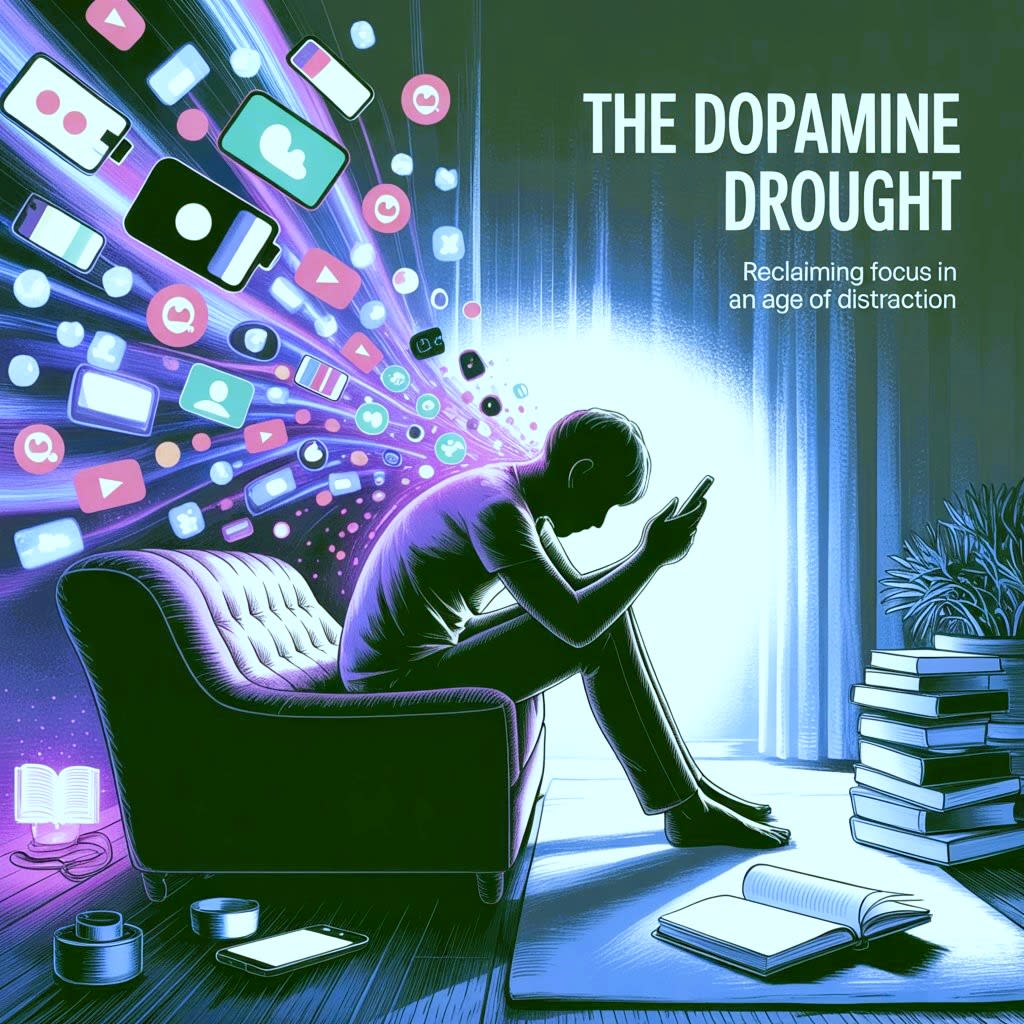
In the digital age, our brains are being rewired. Constant notifications, endless scrolling, and algorithmic content designed for maximum engagement are draining our attention spans and reshaping how we process pleasure. We’re always stimulated, yet rarely satisfied. Welcome to what psychologists and neuroscientists are calling the dopamine drought—a growing epidemic of mental fatigue, focus loss, and overstimulation.
If you’ve ever felt like it’s harder to concentrate, finish a book, or even enjoy the things you once loved, you're not alone. This article will explore what the dopamine drought is, how it’s affecting our brains, and most importantly, how to reclaim focus in an age of distraction.
________________________________________
What Is Dopamine? Understanding the Brain’s Motivation Chemical
Dopamine is a neurotransmitter—a chemical in your brain that plays a key role in how we feel pleasure and stay motivated. But contrary to popular belief, dopamine isn’t about the reward itself. It’s about the anticipation of the reward. It’s what drives you to take action—whether that’s checking your phone, refreshing a page, or finishing a task.
In a balanced system, dopamine encourages productivity, goal-setting, and curiosity. But when overstimulated, the system becomes desensitized. Just like overusing a muscle leads to strain, overusing your brain's dopamine pathways can lead to burnout, apathy, and reduced enjoyment of everyday activities.
________________________________________
What Is the Dopamine Drought?
The dopamine drought is a condition where the brain, overwhelmed by constant digital stimulation, becomes less sensitive to dopamine. That means normal activities—like reading, working, or even socializing—start to feel boring or exhausting.
This desensitization leads to:
• Shortened attention spans
• Decreased motivation
• A constant craving for novelty
• Difficulty focusing on long-term goals
The brain begins to crave quick, easy rewards—like scrolling through social media, watching short-form videos, or playing fast-paced games—over more meaningful, but slower-rewarding, activities.
________________________________________
The Attention Economy and Its Role
Tech companies thrive on your attention. The more time you spend on their platforms, the more money they make. That’s why social media, news apps, and games are engineered to deliver constant stimulation. Each like, ping, or viral video gives your brain a small dopamine hit.
The result is a never-ending loop of distraction:
1. You feel bored.
2. You check your phone or refresh an app.
3. You get a hit of dopamine.
4. You feel good for a moment.
5. You go back to boredom—and the cycle repeats.
Over time, this rewires your brain to seek instant gratification, making it harder to stay focused on anything that doesn’t give immediate rewards.
________________________________________
Symptoms of a Dopamine Drought
You may be experiencing a dopamine drought if:
• You can’t focus for more than a few minutes.
• You constantly reach for your phone or multitask.
• You’ve lost interest in hobbies or activities you once enjoyed.
• You feel mentally drained even after resting.
• You struggle to complete tasks or maintain motivation.
If this sounds familiar, you’re not alone—and it’s reversible.
________________________________________
How to Reclaim Your Focus in the Digital Age
Breaking the cycle of the dopamine drought doesn’t mean giving up technology. It means becoming intentional about how you engage with it. Here are actionable steps to help reset your dopamine system and rebuild your attention span.
1. Start a Dopamine Detox
A dopamine detox involves temporarily abstaining from high-stimulation activities such as:
• Social media
• Streaming services
• Junk food
• Video games
Instead, engage in “low-dopamine” activities like walking, journaling, or reading. Even 24–48 hours of reduced stimulation can help your brain reset.
2. Practice Deep Work
Set aside time blocks—ideally 60 to 90 minutes—for deep, uninterrupted work. Turn off notifications, silence your phone, and focus on a single task. Over time, your brain relearns how to sustain attention and enjoy progress.
3. Limit Multitasking
Multitasking reduces productivity and increases cognitive fatigue. Train your brain to focus on one task at a time, whether that’s writing an email, cooking a meal, or having a conversation.
4. Rediscover Boredom
Boredom isn’t your enemy—it’s a powerful trigger for creativity and reflection. Give your mind time to wander by:
• Taking tech-free walks
• Sitting in silence
• Meditating or daydreaming
This allows your brain to rest and recharge without artificial stimulation.
5. Prioritize Sleep and Nutrition
Lack of sleep and poor diet disrupt your dopamine balance. Ensure you're getting:
• 7–9 hours of quality sleep per night
• A diet rich in whole foods, especially those that support brain health like omega-3s, magnesium, and protein
These natural habits restore your baseline dopamine function over time.
6. Use Technology With Purpose
Instead of scrolling mindlessly, use apps and devices for intentional tasks: learning a new skill, organizing your life, or connecting meaningfully with others. Set time limits on high-dopamine apps to prevent overuse.
________________________________________
Why Reclaiming Focus Is a Superpower
In an era where everyone is distracted, the ability to focus is a competitive advantage. It allows you to think clearly, finish what you start, and feel genuinely fulfilled. When you reduce overstimulation and retrain your dopamine system, you don’t just improve your productivity—you improve your life.
You become more present, more creative, and more in control.
________________________________________
Conclusion: Balance Is the Cure
The dopamine drought isn’t a personal failure—it’s a systemic issue caused by our environment. But by becoming aware of how your brain responds to stimulation and intentionally choosing how to engage with it, you can reclaim your focus.
The key is balance: Allow space for boredom, limit mindless consumption, and seek meaningful rewards. Rewiring your brain takes time, but the results—clarity, purpose, and peace—are well worth the effort.
About the Creator
shoaib khan
I write stories that speak to the heart—raw, honest, and deeply human. From falling in love to falling apart, I capture the quiet moments that shape us. If you've ever felt too much or loved too hard, you're in the right place.
Keep reading
More stories from shoaib khan and writers in Psyche and other communities.
The Dopamine Trap Explained
In the age of endless scrolling, constant notifications, and the dopamine rush of “likes,” social media has become more than a tool — it’s a carefully engineered system designed to influence your behavior. But have you ever wondered how social media keeps you hooked?
By shoaib khan8 months ago in Psyche
Toxic Movie Explained: Why This Film Feels Uncomfortable
Some films entertain. Some distract. And then there are films that sit with you long after the screen goes dark. The toxic movie falls into that last category. It is not easy to watch, and it does not try to be. From the first scenes, there is a quiet discomfort that grows with every moment. Characters make choices that feel wrong, yet familiar. Conversations feel heavy, even when nothing dramatic is happening. Viewers often finish the toxic movie feeling unsettled, unsure whether they liked it or not. That reaction is the point. This film forces us to look at harmful behavior, emotional control, and silent damage in ways that feel deeply personal. It asks us to notice what we often ignore in real life.
By Muqadas khan4 days ago in Psyche
Bruce Lee and The God of War: Kuan Ti
It starts with love.. The Power to the God Of War and Wealth Walk into a Chinese restaurant (even in Oklahoma, USA), a Chinese police station, a kung fu martial arts studio or even a Chinese temple and you often see a red faced warrior holding a heavy quan-do (spear like weapon).
By WILD WAYNE : The Dragon King5 days ago in Chapters



Comments
There are no comments for this story
Be the first to respond and start the conversation.