
The Day My Phone Died — and I Finally Woke Up
Sometimes the smallest breakdowns lead to the biggest breakthroughs.


“I thought I lost time when my phone died, but what I found was something deeper — stillness, presence, and a self I’d been running from.”
I didn’t plan to start a new life that Tuesday morning — I just forgot to charge my phone.
It was one of those mornings where you wake up already behind. I’d slept through my alarm, skipped breakfast, and sprinted out the door with one shoe half-tied and half a charge left on my phone. I figured I’d make it through the day. But by 10:03 a.m., the screen went black and stayed black.
At first, I panicked.
No emails. No texts. No music to drown out my thoughts. No social scroll to keep my fingers busy. I tapped the screen over and over, hoping maybe it would flicker back to life. It didn’t. I was officially offline. Unreachable. Disconnected. And for someone who lived with a screen in hand, it felt almost like being erased.
My first instinct was to borrow a charger. Ask a stranger. Run to a convenience store. But I didn’t. I paused. And in that moment, something odd happened: the world… didn’t end. It just got quieter.
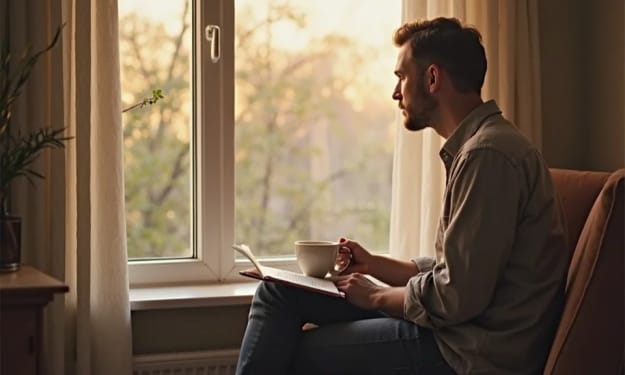
I looked around the café where I was sitting — the same one I’d gone to every Tuesday for months. But for the first time, I actually saw it. The chipped edge of the table. The soft jazz playing overhead. The way the barista smiled at every single customer like they were someone special. I’d missed all of it before. Too busy scrolling, replying, refreshing.
At the next table, a woman wiped crumbs from her daughter’s chin while the little girl giggled. Across the room, two elderly men argued over a crossword puzzle, pointing with stubby fingers and laughing like schoolboys. I didn’t know any of these people, but suddenly, I felt like I was part of something. Something real.
I ordered another coffee and just sat. No headphones. No laptop. Just me. And it was uncomfortable, at first. Being alone with your thoughts when you're not used to it is like suddenly hearing your own heartbeat — too loud, too close. But after a while, it wasn’t scary. It was still.
When I walked out, I walked slower. I noticed the cracks in the sidewalk and the way the breeze played with the corner of my coat. I passed a street musician I’d never noticed and actually stopped to listen. He smiled when I clapped. It was the first time in weeks I’d clapped for anything.
Later that day, I wrote on the back of a receipt — just a few lines, something that felt like a poem. I hadn’t written for myself in years. I used to write every day. Somewhere along the way, I’d traded that for scrolling and noise. I didn’t even notice when I stopped.
When I got home that evening, I plugged my phone in. But I didn’t pick it up right away. I sat on my bed and let the quiet fill the room like warm light. I breathed. I thought. I smiled.
Since then, I’ve started turning my phone off for at least an hour a day. Not because I hate technology — I don’t. But because sometimes, we need to disconnect to reconnect. To come back to the parts of life that don’t need a password or a signal. The sound of your own voice. The rhythm of your breath. The joy of being fully here.
That Tuesday, I thought I’d lost time.
But really, I found it.
And more than that — I found myself.
________________________________________________________________________
Thank you so much for reading this! 🥰 If you liked my writing, please leave a comment, click the heart and subscribe for free!
You might enjoy this as well:
1: The Day I Lost My Train of Though
2: The Day I Forgot My Own Birthday
3: 8 Brain Exercises That Will Boost Your Memory
About the Creator
Mahmood Afridi
I write about the quiet moments we often overlook — healing, self-growth, and the beauty hidden in everyday life. If you've ever felt lost in the noise, my words are a pause. Let's find meaning in the stillness, together.
Keep reading
More stories from Mahmood Afridi and writers in Psyche and other communities.
From Surviving to Living: When Rest Becomes an Act of Courage
When Survival Becomes a Lifestyle — And You Forget How to Live There is a quiet shift that happens when survival lasts too long. At first, it’s temporary. You tell yourself, “I just need to get through this phase.” Then weeks become months. Months become years. And without realizing it, survival stops being a response — it becomes a lifestyle. You don’t notice the moment it happens. There’s no clear breaking point. Just a gradual narrowing of life. Your goals become smaller. Your dreams become practical. Your emotions become controlled, managed, muted. You stop asking what brings you joy and start asking what is necessary. What is efficient. What is acceptable. And slowly, living turns into managing. The Hidden Cost of Constant Coping When someone lives in survival mode for too long, their nervous system adapts. It learns to stay alert. It learns to expect pressure. It learns that rest is risky and stillness is unsafe. So even when external threats disappear, the body doesn’t get the message. This is why many people feel exhausted without knowing why. Why calm moments feel uncomfortable. Why success doesn’t bring satisfaction. Why peace feels strangely empty. It’s not because something is missing. It’s because your system was never taught how to receive ease. You learned how to endure. Not how to enjoy. Why Letting Go Feels Harder Than Holding On Letting go sounds simple in theory. But for someone who survived by holding everything together, letting go feels like failure. You weren’t rewarded for resting. You were rewarded for coping. For staying strong. For not needing too much. So your identity formed around function, not feeling. This is why slowing down can trigger anxiety. Why saying “I can’t” feels shameful. Why doing less feels like becoming less. Your worth became linked to effort. And effort became constant. Healing Is Not Becoming Softer — It’s Becoming Safer Healing from long-term survival is not about becoming fragile. It’s about becoming safe. Safe enough to pause without panic. Safe enough to feel without rushing to fix. Safe enough to rest without preparing for collapse. This kind of healing doesn’t happen through motivation or discipline. It happens through permission. Permission to stop performing strength. Permission to disappoint expectations — including your own. Permission to exist without proving anything. At first, this feels unnatural. Because survival trained you to believe that safety must be earned. But safety is not earned. It is allowed. Relearning What Living Actually Feels Like Living is not dramatic. It doesn’t always feel exciting or intense. Sometimes, living feels quiet. Neutral. Ordinary. And for someone used to survival, that can feel unsettling. But calm is not emptiness. It is space. Space to notice yourself again. Space to feel preferences instead of obligations. Space to choose, not react. You don’t suddenly become a new person. You simply return to parts of yourself that were postponed. A Different Measure of Progress Progress is often measured by how much you do. How fast you move. How productive you appear. But healing progress looks different. It looks like stopping before burnout instead of after. Like resting before you collapse. Like saying “enough” without explaining yourself. It looks like choosing sustainability over intensity. Truth over performance. Presence over pressure. This kind of progress is quiet. And because it’s quiet, it’s often overlooked. But it is real. A Closing Truth If survival shaped you, it’s not your fault. You adapted the way you had to. But you are not meant to live your entire life in adaptation mode. You are allowed to soften without losing strength. To rest without guilt. To live without constantly preparing for impact. You don’t need to become more. You need to feel safe enough to be. And that shift — from surviving to living — is not weakness. It is the most honest form of courage there is.
By Med Abdeljabbar7 days ago in Psyche



Comments
There are no comments for this story
Be the first to respond and start the conversation.