
The Dark Side of Human Nature: Understanding the Psychology of Evil
A deep dive into the origins and manifestations of dark psychology in everyday life

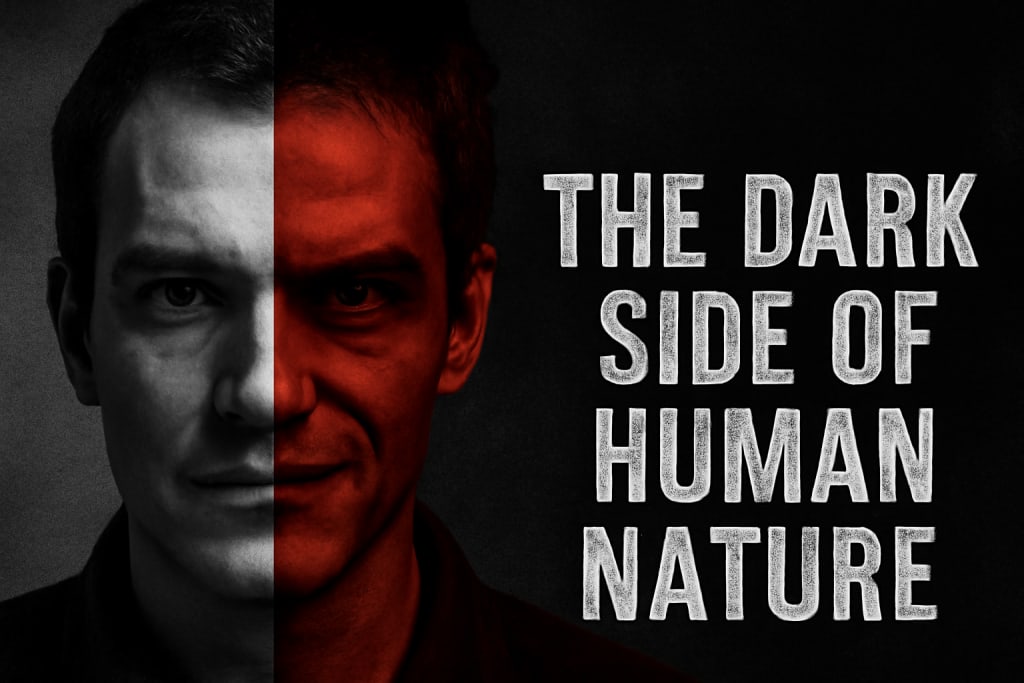
The human mind is capable of extraordinary acts of compassion and kindness, but it is equally capable of darker, more destructive forces. Throughout history, humanity has witnessed events that seem beyond comprehension—acts of cruelty, violence, and manipulation that often leave us questioning the nature of good and evil. Is the human mind inherently evil, or are these actions a result of social, psychological, and environmental factors? In this article, we will explore the psychology of evil, understanding its roots, its manifestations, and how it plays out in everyday life.
1. The Origins of Evil: Is It Inherited or Learned?
One of the age-old debates in psychology is whether evil is innate or learned. Are individuals born with the capacity for evil, or do societal influences mold them into destructive beings?
The nature vs. nurture debate has long been at the heart of understanding human behavior. Psychologist Philip Zimbardo, famous for his Stanford prison experiment, demonstrated how ordinary people could be driven to commit extraordinary acts of cruelty when placed in positions of power. This suggests that evil may not be an inherent trait but rather a product of specific situations and environments. When individuals are placed in high-stress, power-driven situations, they may abandon their moral compass, resulting in behaviors they would otherwise never display.
Additionally, childhood experiences play a significant role in shaping an individual's propensity toward harmful behavior. Research has shown that early trauma, neglect, and abuse can foster feelings of resentment, anger, and a desire for control, which may lead to violent or manipulative tendencies in adulthood.
2. The Role of the Subconscious: How Dark Thoughts Influence Behavior
Most people are unaware of the powerful influence their subconscious mind has on their behavior. The subconscious, responsible for 95% of our actions, holds deeply buried memories, emotions, and desires that can emerge in ways we don’t fully understand.
Individuals with dark psychological traits often exhibit behaviors that are linked to repressed emotions. Freud’s theory of the unconscious mind explains how unresolved traumas and unacknowledged desires can manifest in destructive ways. When these suppressed thoughts surface, they may drive an individual to take actions they don't consciously endorse, such as manipulation, deceit, or aggression.
The dark triad of personality traits—narcissism, Machiavellianism, and psychopathy—are considered core indicators of destructive behavior in individuals. People with high levels of these traits are more likely to engage in unethical, deceitful, and harmful activities. These traits often reside in the subconscious and manifest in manipulative behaviors, with little regard for the well-being of others.
3. The Psychology of Manipulation: Gaslighting and Coercion
One of the most insidious forms of evil is psychological manipulation, particularly gaslighting. Gaslighting is a form of emotional abuse in which one person manipulates another into questioning their own reality. This is a common tactic used by narcissists and psychopaths to gain control over their victims, often leading them to feel confused, powerless, and disconnected from their sense of self.
Gaslighting, a term popularized by the 1944 film Gaslight, involves subtle distortions of reality that cause the victim to doubt their own memory, perception, or sanity. It’s a slow and insidious process that, over time, erodes the victim’s self-worth and mental stability.
This form of manipulation is not limited to personal relationships—it can also be seen in political or corporate settings, where individuals or groups with power use coercion and deception to manipulate public opinion, control the narrative, and exploit vulnerable populations.
4. The Mob Mentality: How Social Influence Spurs Evil Actions
The mob mentality, or herd behavior, refers to the psychological phenomenon in which individuals in a group act in ways they would not if alone, often abandoning their personal morals or judgment. This is particularly evident in situations of groupthink, where individuals are pressured into conforming to the opinions or behaviors of a group, leading to collective actions that are often destructive.
The Bystander Effect is another example of how individuals may fail to act in situations of distress or harm due to the presence of others. When a group of people witnesses an emergency, each person feels less responsible for intervening, assuming someone else will take action. This diffusion of responsibility can lead to tragic outcomes, where no one takes the necessary steps to help.
Social media and online communities have exacerbated these effects, allowing individuals to engage in cyberbullying, online harassment, and hate speech, often under the guise of anonymity. The digital age has made it easier for people to hide behind screens and engage in harmful behavior without facing immediate consequences.
5. The Dark Psychology of Serial Killers and Psychopaths
One of the most chilling examples of dark psychology is the phenomenon of serial killers. Serial killers, like Ted Bundy or John Wayne Gacy, exhibit behaviors that deviate significantly from societal norms. These individuals often experience a lack of empathy and a disregard for human life, traits commonly associated with psychopathy.
Psychopathy is characterized by a lack of remorse, superficial charm, and manipulative tendencies. Psychopaths often have an innate ability to blend in with society while concealing their dark impulses. They may rise to positions of power or influence, where their lack of empathy allows them to exploit others without hesitation.
The case of Ted Bundy, who admitted to murdering over 30 women, illustrates how even the most violent acts can be committed by individuals who appear outwardly normal. Bundy was known for his charm and intelligence, which he used to manipulate his victims, making his crimes even more chilling.
6. The Power of Empathy: Can We Counteract the Darkness Within?
While the concept of evil may seem daunting, it is not irreversible. Empathy, the ability to understand and share the feelings of another, is a powerful tool in combating harmful behaviors. Research has shown that fostering empathy in individuals, especially from a young age, can significantly reduce aggressive and violent tendencies. Cognitive-behavioral therapy (CBT) has also proven effective in treating individuals with antisocial or psychopathic tendencies, helping them to reframe their thoughts and develop healthier ways of interacting with others.
However, a world that fosters compassion, understanding, and self-awareness is essential in mitigating the darker aspects of human psychology. The more we understand about the origins of evil and destructive behavior, the better equipped we are to prevent it in our societies, homes, and personal lives.
Conclusion: A Dual Nature
The human psyche is complex and multi-faceted. While humanity has the potential for extraordinary kindness and empathy, it also harbors the capacity for cruelty and manipulation. Understanding the psychology behind these darker traits is crucial not only for protecting ourselves but also for fostering a society where light can outweigh darkness.
Through continued research, self-reflection, and empathy, we can strive to overcome the darker impulses within and create a world that values human dignity, compassion, and ethical responsibility.
This article delves into the darker aspects of human psychology, offering a professional yet deeply disturbing exploration of the origins and manifestations of evil. It combines academic theory with real-world examples to engage readers with its unsettling yet fascinating subject matter.
About the Creator
Amanullah
✨ “I share mysteries 🔍, stories 📖, and the wonders of the modern world 🌍 — all in a way that keeps you hooked!”
Society Often Teaches Us to Suppress Our Sad Feelings, Branding Them as Negative.
Allow yourself the time to feel, process, and let go. What a journey we’ve traveled together. You can relate to that pain that appears out of nowhere and wants to linger in our minds. Once fear moves in, it takes root—spreading doubt, loneliness, and confusion It’s that kind of pain that overtakes your mental health, gradually making a home within you. Your thoughts can create a space filled with fear, a feeling that we often cling to because it’s the one our minds use against us—leading to a fierce battle between your thoughts and your feelings. It’s a struggle no one wants to lose, yet losing yourself feels like an ever-present threat. Isn’t that a trick life plays on us?
By Johana Torres10 days ago in Psyche
The Silent Pattern That Is Draining Your Life Without You Noticing
The Silent Pattern That Is Draining Your Life Without You Noticing Not all psychological struggles announce themselves loudly. Some don’t come as panic attacks, breakdowns, or visible crises. Some arrive quietly. They blend into your routine. They feel like “just life.” And that is exactly why they are so dangerous. This article is about one of those patterns. When Functioning Becomes a Disguise You wake up. You do what needs to be done. You fulfill responsibilities. From the outside, you look fine. But internally, something feels… depleted. Not sadness. Not anxiety. Just a constant low-level exhaustion — mental, emotional, existential. This is not laziness. And it is not weakness. It is a psychological pattern built around over-functioning. The Over-Functioning Trap Over-functioning happens when your sense of worth becomes tied to: Being useful Being reliable Being the “strong one” Holding everything together At first, it feels like maturity. Later, it becomes identity. Eventually, it becomes a prison. You stop asking: “What do I need?” “What do I feel?” “What do I want?” Because survival has trained you to focus only on: “What must be done next?” Why This Pattern Forms This pattern often develops early: In emotionally unpredictable environments In households where your needs were secondary When being “low-maintenance” kept the peace When responsibility arrived before safety So you adapted. You learned to function without support. You learned to silence discomfort. You learned to keep moving — no matter the cost. And it worked. Until it didn’t. The Cost No One Talks About The cost is subtle but heavy: Chronic emotional numbness Difficulty resting without guilt Feeling disconnected even during success A sense that life is happening around you, not within you You may achieve things. You may be admired. But fulfillment feels strangely absent. That absence is not a flaw in you. It is a signal. Awareness Is the First Disruption This pattern survives on invisibility. Once you see it, it weakens. Start noticing: When productivity replaces self-worth When rest feels unsafe When you only feel valuable while giving You don’t need to “fix” yourself overnight. You need to listen — without judgment. Healing here is not dramatic. It is quiet. Consistent. And deeply human. A Final Thought You were not meant to merely function. You were meant to experience life. If this article resonated, it’s not because something is wrong with you. It’s because something true was finally named. And naming is always the beginning.
By Med Abdeljabbarabout 16 hours ago in Psyche
The steps to losing a child
Step One: Lose a child. Not what anyone wants to happen and nothing you can do to change it, but you can go through steps to becoming happy again. You can go through steps to loving again. You can go through steps to become a new you because after losing a child you will never be the same person you once were.
By Tabitha Hinkley3 days ago in Fiction


Comments (1)
An eye-opening look into the dark side of human nature! 😨 The psychology behind evil actions is both fascinating and unsettling. 🧠💀 A must-read for anyone interested in the complexities of the mind! 🔍