
The Psychology of Overthinking: Why Your Mind Won’t Stop Running in Circles
A deep dive into the hidden cost of constant worry—and how to finally break free.

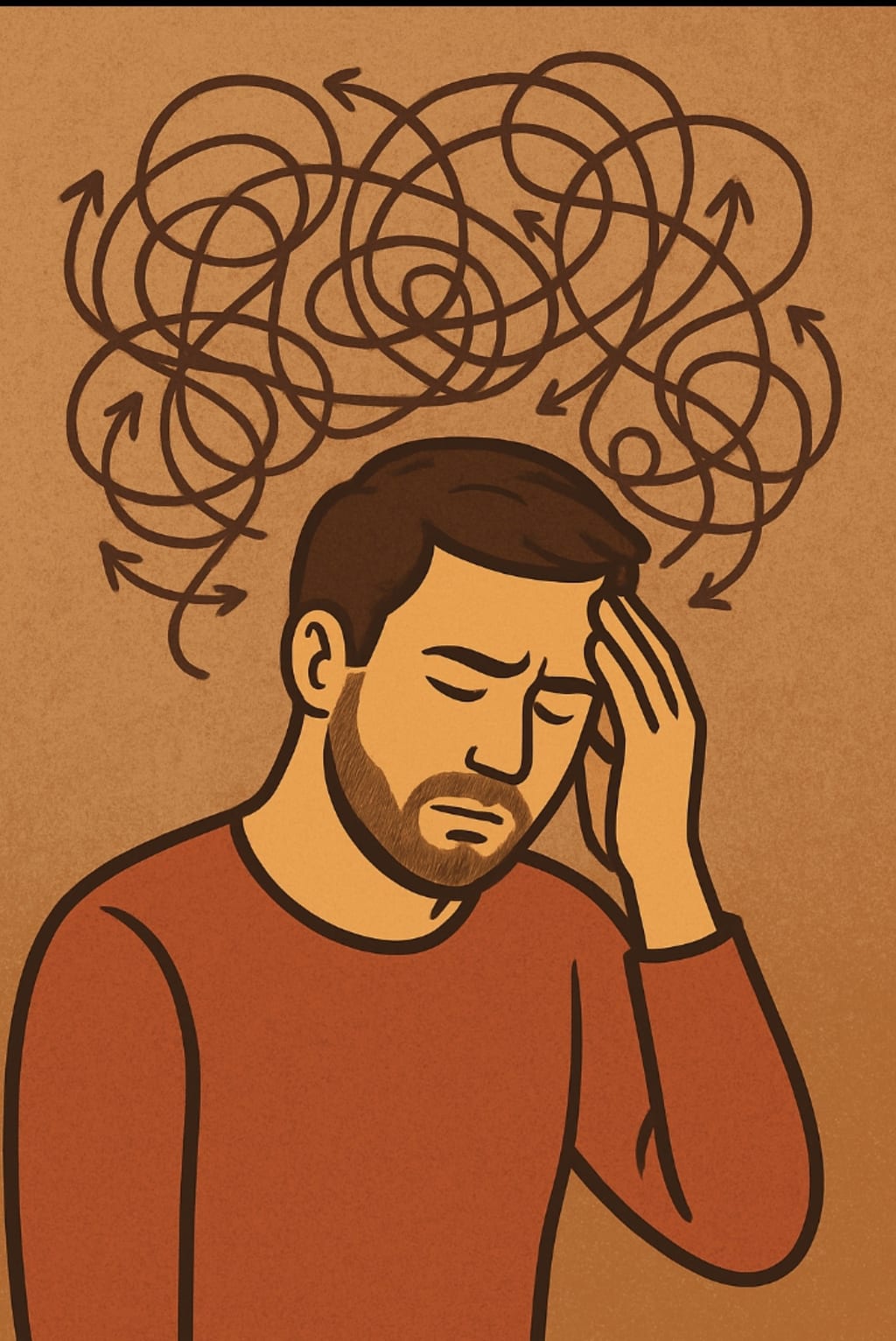
The Endless Loop We All Know Too Well
It starts with one small thought.
Maybe you’re about to send an email and suddenly pause—what if it sounds too pushy? Too formal? Too casual? So you rewrite it, then rewrite it again, second-guessing every word.
Or maybe it’s late at night, and you’re replaying something you said earlier in the day. A harmless comment, but now your brain insists on dissecting it from every angle: Did they take it the wrong way? Should I have said something else? Did I embarrass myself?
This is the reality of overthinking. It’s not simply “thinking too much.” It’s a mental spiral that feeds on itself, a constant inner dialogue that feels impossible to silence.
And here’s the truth: while everyone overthinks sometimes, for many people, it becomes a default way of living.
Why Our Brains Love to Overthink
Psychologists explain that overthinking is tied to something ancient: the brain’s survival instinct. Thousands of years ago, our ancestors needed to be hyper-alert. If they ignored a strange sound or failed to plan ahead, it could mean the difference between life and death.
That same wiring exists today—but the “dangers” we face are not wild animals anymore. Instead, they’re modern worries:
Did my boss misunderstand that email?
What if my relationship fails?
What if I’m making the wrong career move?
Our brains treat these uncertainties as threats. So they spin scenarios, searching for control. The problem is that this survival tool, once useful, now traps us in mental loops with no real resolution.
The Hidden Cost of Overthinking
At first glance, overthinking might seem harmless. After all, what’s wrong with being cautious or reflective? But the hidden costs are deeper than most people realize.
1. The Energy Drain
Overthinking burns mental energy the way running burns calories. Even if you’ve done nothing physically, you can end the day feeling exhausted—because your brain has been running marathons in circles.
2. Anxiety and Depression
Rumination, the psychological term for replaying negative thoughts, is closely linked with anxiety disorders and depression. The more time we spend inside our heads, the heavier those thoughts become.
3. Decision Paralysis
Ironically, the more you analyze, the harder it becomes to decide. Psychologists call this analysis paralysis. Opportunities slip away, not because you lacked ability—but because you couldn’t stop weighing every possibility.
4. Sleep Struggles
Nighttime is prime time for overthinking. Many overthinkers report lying awake, staring at the ceiling, unable to shut off their thoughts. Poor sleep then fuels more stress the next day—an endless cycle.
5. Relationship Strain
Overthinking doesn’t stay in your head. It spills into how you interact with others. You might overanalyze your partner’s text messages, worry endlessly about what friends think, or create problems where none exist.
A Day in the Life of an Overthinker
Imagine this:
You’re invited to a friend’s birthday dinner. You spend hours debating what to wear, worrying about whether you’ll say something awkward, or whether the other guests like you. At the dinner, instead of enjoying the moment, you’re trapped in your head, analyzing every glance and word.
When you get home, you replay the entire evening: Did I talk too much? Did I not talk enough? Was that joke inappropriate? Did they secretly judge me?
By the next morning, you’re drained—not from the party, but from the mental replay.
This is what makes overthinking so destructive: it steals the joy of the present and replaces it with endless mental reruns.
Why Overthinking Feels So Hard to Stop
Here’s the tricky part: overthinking sometimes feels productive. Your brain convinces you that by analyzing every detail, you’re preparing, planning, or protecting yourself.
If I keep thinking about it, I’ll figure it out.
If I imagine all the outcomes, I won’t be surprised.
If I replay it enough, I’ll avoid making mistakes again.
But in reality, overthinking rarely leads to solutions. Instead, it traps you in rumination mode—thinking about problems without moving toward action.
It’s like sitting in a rocking chair: you’re moving, but you’re not going anywhere.
How to Break Free from the Overthinking Spiral
The good news is that overthinking isn’t permanent. With awareness and practice, you can retrain your brain to think more clearly.
1. Notice the Spiral Early
Awareness is the first step. Pay attention to when your thoughts start looping. Do you replay conversations? Worry about “what ifs”? Catch yourself and label it: “I’m overthinking right now.”
2. Write It Out
Journaling is a powerful tool. Write down your thoughts, fears, or scenarios. Seeing them on paper makes them less overwhelming—and helps separate fact from imagination.
3. Ask Better Questions
Shift your focus from fear to action. Instead of asking “What if it all goes wrong?” try “What’s one small step I can take to make it go right?”
4. Limit Your “Worry Time”
Give yourself permission to think—but with boundaries. For example, set aside 15 minutes a day as “worry time.” Outside of that window, when worry pops up, remind yourself: “Not now. I’ll think about it later.”
5. Practice Mindfulness
Mindfulness doesn’t mean emptying your mind. It means noticing your thoughts without judgment. Simple techniques like focusing on your breathing or doing a short guided meditation can ground you in the present moment.
6. Break the Perfection Trap
Many overthinkers are perfectionists. Remind yourself: mistakes are part of growth. Instead of asking, “Is this perfect?” ask, “Is this good enough to move forward?”
7. Reduce Triggers
Social media often fuels comparison and worry. Try setting limits: no phone before bed, no endless scrolling in the morning. Protect your mental space.
Stories of Letting Go
One young professional shared how she would spend hours editing every work email, terrified of sounding unprofessional. Over time, she realized the constant editing wasn’t improving her work—it was just draining her energy. By setting a rule to “send after two edits,” she cut her overthinking in half.
Another student described how he couldn’t fall asleep because of racing thoughts about grades and the future. His solution? Keeping a notebook by his bed. Whenever a thought came up, he wrote it down and reminded himself, “It’s safe here. I don’t need to carry it anymore tonight.”
These small strategies don’t erase overthinking overnight—but they show that progress is possible with practice.
The Freedom of Letting Go
Imagine a life where:
You send an email without rewriting it ten times.
You enjoy a night out without replaying it for hours afterward.
You fall asleep peacefully, without your mind waging war against itself.
This is the gift of learning to manage overthinking. Decisions become easier. Relationships feel lighter. Your mental energy, once trapped in loops, becomes free for creativity, growth, and real connection.
Most importantly, you realize this: the future you fear and the mistakes you replay exist only in your head. Life is happening now—and it’s too precious to waste on endless mental reruns.
Final Thought
Overthinking is universal, but it doesn’t have to be permanent.
The next time your mind starts running in circles, pause and remind yourself: “Not every thought deserves my attention.”
Your brain may love to overanalyze, but you have the power to step off the hamster wheel.
And once you do, you’ll discover something liberating: peace of mind isn’t found by thinking harder—it’s found by letting go.
About the Creator
Amanullah
✨ “I share mysteries 🔍, stories 📖, and the wonders of the modern world 🌍 — all in a way that keeps you hooked!”




Comments (1)
Such a relatable read ✨ Overthinking really does drain so much energy 🌀 Loved the practical tips on breaking free 🙌