vintage
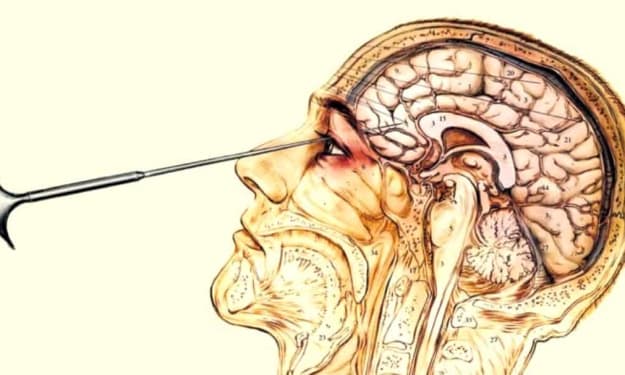
From Freud to phrenology to old-school outlooks, a look back at vintage psychiatry and mental health treatments as documented throughout history.
Situational Depression: Causes, Symptoms, Recovery, and How to Heal After Life’s Challenges
Life does not always go as planned. Unexpected events such as academic failure, job loss, relationship breakdowns, or family conflicts can deeply affect emotional stability.
By Daily Motivation8 days ago in Psyche
The Speed of Life
We live in an age where speed is celebrated. Faster internet, faster success, faster replies, faster results. From the moment we wake up, life seems to press a silent accelerator. Notifications buzz, deadlines chase us, and comparison quietly sits in our pockets. The speed of life keeps increasing—but the quality of life often does not. This raises a powerful psychological question: Is moving faster actually helping us live better, or is it slowly draining the meaning from our lives?
By Alexander Mind10 days ago in Psyche
The Night I Understood Football
I didn’t go to the game expecting hope. It was a cold November Thursday. My brother had just lost his job. My nephew hadn’t spoken in days after a school incident. The world felt heavy, and the last thing I wanted was to watch a mismatch—our hometown team facing a dynasty that hadn’t lost in months.
By KAMRAN AHMAD10 days ago in Psyche
The Kuntilanak Files
Indonesia is a country where the modern world never fully erased the old one. Glass towers rise beside centuries-old banyan trees. Smartphones glow in villages where spirits are still spoken of in whispers. In many parts of the archipelago, the supernatural is not dismissed—it is managed, respected, avoided. Among these beliefs, few names carry as much fear as Kuntilanak. Traditionally, the Kuntilanak is described as the spirit of a woman who died during childbirth—her grief twisting into something violent and restless. Pale-faced, long-haired, dressed in white, she is said to appear at night, often announced by the sound of soft laughter or a baby crying. In folklore, she haunts forests, abandoned houses, and roadside trees. She is not a metaphor. She is a warning. For generations, these stories remained where stories usually belong: around fires, in village advice, in cautionary tales meant to keep children close to home after dark. Until the deaths began. In the late 2000s and early 2010s, a pattern emerged across parts of Java, Kalimantan, and Sumatra that unsettled even seasoned investigators. The cases were not identical, but they echoed one another in troubling ways. Young men—often students, amateur paranormal investigators, or urban explorers—were found dead near abandoned locations tied to Kuntilanak lore. At first, authorities treated each death separately. Accidents. Exposure. Falls. Natural causes compounded by risky behavior. But local communities noticed something else. The locations were wrong. The timing was wrong. And the behavior of the victims before death was… off. One of the earliest widely discussed cases involved a university student in West Java who had joined a small group dedicated to documenting haunted sites for social media. Their goal was not worship or provocation—at least publicly—but proof. They filmed night visits to abandoned houses, cemeteries, and forest edges. Their content gained traction. Fear, after all, travels well online. According to friends, the student began experiencing disturbances weeks before his death. Sleep paralysis. Nightmares involving a woman laughing behind him. Sudden mood shifts. He became withdrawn, irritable, convinced that something was “following” him. They assumed stress. One night, he returned alone to an abandoned colonial-era building rumored to be a Kuntilanak site. His camera was later found intact. The footage ended abruptly, mid-sentence, as if he had turned suddenly toward a sound. His body was discovered the next morning beneath a staircase. There were no defensive wounds. No signs of assault. The autopsy cited internal injuries consistent with a fall. But the locals focused on something else. His face, witnesses said, was frozen in terror. More cases followed. In Central Java, two young men were found dead in a forest clearing after attempting a ritual they had read about online—one meant to “summon” or “record” paranormal entities. One died at the scene. The other survived long enough to be hospitalized, where he reportedly screamed about a woman sitting on his chest at night. He died three days later from organ failure. Doctors could not link the deaths to toxins or known disease. Stress-induced complications were mentioned. The files closed quietly. But the stories did not. By this point, Indonesian social media had already connected the dots. Videos surfaced showing shadowy figures, unexplained sounds, distorted faces caught in reflections. Most were easily debunked. Some were not. Then came the Kalimantan case that changed the tone entirely. A group of construction workers clearing land near a long-abandoned village reported nightly disturbances. Tools moved. Voices heard. One worker fled the site claiming a woman in white followed him through the trees. Days later, another worker was found dead near a large fig tree. No visible injuries. No signs of struggle. The project was halted after elders from a nearby village intervened, insisting the land was known Kuntilanak territory and had been avoided for decades. This was no longer just internet folklore. Authorities were placed in an impossible position. Acknowledge supernatural causation and risk panic—or reduce everything to coincidence and offend deeply held cultural beliefs. Official explanations remained clinical. Accidents. Psychological stress. Mass suggestion. Environmental hazards. Privately, some investigators admitted discomfort. What made the Kuntilanak Files different from typical ghost stories was the consistency of behavior before death. Victims reported similar experiences across regions that did not share immediate cultural circles. Nightmares. Pressure on the chest. The sensation of being watched. A fixation on returning to specific locations. Psychologists proposed sleep paralysis combined with cultural expectation—a known phenomenon where the mind fills terror with familiar symbols. But that explanation weakens when the final outcomes are fatal. No drugs. No poisons. No physical attackers. Just bodies and fear. The Indonesian government never officially linked the cases. But internally, some law enforcement documents reportedly advised officers to consult local religious leaders when dealing with deaths tied to supernatural belief systems. Not for investigation—but for prevention. The advice was simple: Don’t provoke what you don’t understand. In traditional belief, the Kuntilanak is not mindless. She appears when disturbed. When mocked. When summoned without respect. Modern behavior—cameras, flashlights, viral challenges—violates every boundary these stories were meant to enforce. This clash between digital bravado and ancient taboo may be the true heart of the mystery. Whether the Kuntilanak exists as a literal entity or as a psychological weapon shaped by belief, the outcome is the same. People died. And they died believing something was with them in their final moments. Today, many of the most notorious sites are quietly avoided. Content creators move on to safer myths. Elders still warn travelers not to laugh at night near certain trees. Not because they expect outsiders to believe—but because belief is not required for consequences. The Kuntilanak Files remain open, unofficially. Not because science failed. But because some questions refuse to stay within neat categories. In Indonesia, the past does not sleep easily. And some legends, when dragged into the light, do not fade— they follow.
By The Insight Ledger 14 days ago in Psyche
I Let AI Help Run My Love Life in 2025 — And It Got a Little Too Honest
If you’ve been single in 2025, you already know: the dating apps are starting to feel less like apps and more like ecosystems. Profiles are written by AI, photos are filtered by AI, and now, if you want, your whole “compatibility journey” can be guided by an algorithm that claims to understand you better than you understand yourself.��
By The Insight Ledger 16 days ago in Psyche
I Tried Living Like It Was 2010 Again — And It Quietly Broke Me
Nostalgia is sneaky. It doesn’t just show you the past; it edits it for you. It cuts out the awkward silences, the cheap shampoo, the bad phone cameras, and leaves you with sunsets, inside jokes, and a version of yourself who always seemed a little lighter.
By The Insight Ledger 16 days ago in Psyche