social media
Social media dramatically impacts our offline lives and mental well-being; examine its benefits, risks and controversies through scientific studies, real-life anecdotes and more.
The Dopamine Trap
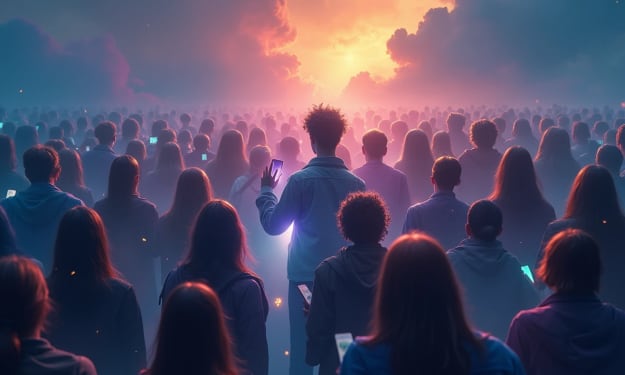
In today’s fast-paced digital world, it's easy to feel tired, unmotivated, and mentally drained — even if you’ve spent your entire day just sitting around. The culprit may not be laziness or lack of discipline. In many cases, it’s something much more subtle and powerful: digital dopamine overload caused by your smartphone.
By shoaib khan8 months ago in Psyche
Why Social Media Affects Your Mental Health (And How to Manage It)
Social media is a big part of our daily lives. We use it to connect with friends, share our thoughts, watch videos, and stay updated on the latest news. But while social media has many benefits, it can also have a negative impact on our mental health. In this article, we will explore why social media affects mental health and how you can manage it better.
By Syira Husairi 9 months ago in Psyche
The Hidden Psychology of Connection
In a world more digitally connected than ever, loneliness is paradoxically thriving. As we scroll through social media feeds and interact with AI companions, we find ourselves surrounded by virtual connections that, in reality, leave us feeling more isolated than before. Eric Solomon, Ph.D., explores this paradox and reveals how the very tools meant to keep us connected might be deepening our sense of isolation.
By SophiaSoso9 months ago in Psyche
Stoicism vs FOMO
Have you ever woken up or relaxed for a moment and opened TikTok, hoping to find content that refreshes your mind? But instead of meaningful or uplifting content, you end up seeing people parodying a song that actually has deep lyrics — but it’s been turned into background music for silly, meaningless dances. Sadly, these moves become templates, copied by hundreds or maybe thousands of people (mostly young), just to gain recognition or land on the FYP (For You Page). Even worse, these types of content get watched by thousands, commented on, and go viral, until the creator forgets why they even made the video in the first place.
By Dimas Seti Aditya9 months ago in Psyche
Behind the Veil
America offers an illusion of sex, wealth, fame, and emancipation. Behind the shiny magazines, the bright lights, and the faked climaxes is an industry founded on exploitation, shattered hope, drug dependency, and mere subsistence. Internet performers and strippers are usually empowered on the surface — boasting cash, poise, and power. Well, what goes on backstage? Let’s pull that curtain back.
By Debarghya Chatterjee9 months ago in Psyche
It's NOT a Sign of Weakness. Top Story - May 2025. Content Warning.
In my last story, I discussed the topic of mental health and Boston Red Sox player Jarren Duran. Duran exchanged words with a Cleveland Guardians fan during a recent game, which the fan responded with an insensitive remark, referring to the outfielder's suicide attempts in 2021 and 2022. I condemned that fan for his actions and should face some sort of punishment from MLB and/or the Guardians organization. Duran has previously been open about his struggles with depression. He has full support from his fellow Red Sox players and the organization. He's not the only player who has been open about their mental health. Dansby Swanson of the Chicago Cubs recently revealed on a podcast that he also had difficulties with alcohol on top of his mental health issues during the early stages of his career. Last year, I watched an ad from MLB about in times of difficulties, there's always people that will support you unconditionally. People tend to forget that athletes are regular individuals, too. I never put anyone famous on pedestals, because you never know what they're going through. May is Mental Health Awareness Month, which has been observed in the United States since 1949. Athletes, celebrities, and everyday people like me are sharing our stories in order to let others know that they're not alone. One of the misconceptions that I dislike the most about mental health is that seeking help for it or discussing your struggles with it means that you're a weak person. This will only make people reluctant or hesitant to seek help. That's the reason why there's so much stigma behind it. Just because someone is depressed, it doesn't mean that they're less of a person. Someone asking for help when they're feeling down should be commended, not chastised. If you know someone who is suffering from mental health problems, support them unconditionally, because they need all of it.
By Mark Wesley Pritchard 9 months ago in Psyche
An Occurrence at Owl Creek Bridge
The sun was setting behind the hills when Daniel Mercer stood before the firing squad. Bound at the wrists, he faced a crumbling brick wall streaked with the faded slogans of a revolution long dead. The air was still, and the only sound was the soft click of a rifle bolt being pulled back. Ten soldiers stood in a line, rifles raised to their shoulders. A red-eyed officer barked orders, though Daniel barely heard them.
By Murad Ullah9 months ago in Psyche