bipolar
Bipolar disorder; understanding the highs, the lows and the in between.
Living With Bipolar Disorder. Top Story - February 2022.
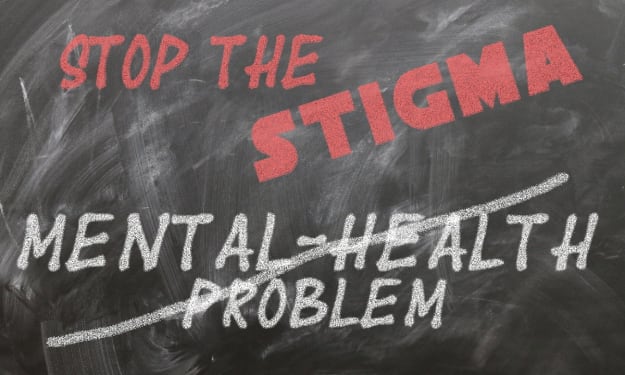
The hardest thing about describing what it's like to live with bipolar disorder is not knowing what it's like to live without a mental illness. Because of the stigma attached to mental illness, some people are ashamed to admit they have the disorder. Shame arises from the fact that people label you as crazy.
By Susan F Weimer4 years ago in Psyche
Living with Bipolar and Schizoaffective
Trigger Warning: discussion of mental illness, and suicide Living with mental illness is hard in itself. Living with mental illness is impacts every facet of your life. It isn't just bad days or moments where you lose clarity. It's every day, always sitting in the back of your mind.
By Makayla Nakamura4 years ago in Psyche
Confronting the Challenges of Bipolar Dissociation
Trigger Warning: Self-harm, suicidal ideation, childhood abuse, bipolar dissociation - When I was in my late twenties, a well-meaning psychotherapist diagnosed me with dissociative identity disorder (DID). Doctors used to call DID multiple personality disorder. The diagnosis was my first connection to bipolar dissociation.
By Scott Ninneman4 years ago in Psyche
Bipolar Disorder Can Affect Every Aspect of Our Lives
People with extreme mood swings, from severe depression to manic episodes, may suffer from bipolar disorder. People who suffer from bipolar disorder tend to have a euphoric mood, be hyperactive, agitated, and do not feel the need to sleep. During depressive episodes, people who suffer from this disorder are sad, hopeless, guilty, and/or worthless, and have low energy levels.
By Milan Stafford4 years ago in Psyche
Touched with Fire
I had read the book, all 260 pages, in a day. It was at the recommendation of a friend of mine, who was, like me, diagnosed bipolar. Touched with Fire by Kay Redfield Jamison explores the marriage between artistic temperament and mental illness. It is never specified in the book as to whether the fire is the creativity or the illness, or both. Mind you, the book makes no attempt to romanticize insanity, neither do I in writing this article. What it does do is document the clinical and quantifiable presence of psychotic illnesses in poets, artists, writers, playwrights and even mathematicians.
By Ezra Berkman4 years ago in Psyche
How I Lost and Regained the Sparkle in My Eye
Upon my diagnosis of bipolar 2 at 21, I no longer knew who I was. Everything I had thought about myself shifted through the lens of insanity. For example, I viewed my excessive energy to work 40-50 hours, sing in a choir, perform a play, and attend young adult activities during summer breaks as mania, and moments of anger, irritability, and tears as depression. Were my creativity, brilliance, and spontaneity only a product of mania? Did that mean depression was my "normal"?
By Eileen Davis4 years ago in Psyche
The Pain in My Heart Pushed Me to Start the Speaking Bipolar Site. Top Story - December 2021.
“And he's bipolar. You know what that means.” My boss was 10 minutes into his gossip fest. Today's victim was one of his oldest friends. I heard a litany of all the things his friend had done wrong, and all the poor choices he had made. My boss boasted of their 20-year friendship, but I couldn't help but wonder if it really was a friendship.
By Scott Ninneman4 years ago in Psyche
A Moment in my Mind
She rode that feeling like it was wind beneath her wings, carrying her high over the mountains until they became too modest and insignificant to notice. This was pure bliss, she thought. She finally grasped what everyone else seemed to have, but that which she could never acquire. Granted, it was a small taste, just a sample. She knew how precious and fleeting it could be but feared the harder she held on the faster it would slip away. She wanted to embrace it, nurture it, trust it…
By Falynne Johnson4 years ago in Psyche
Manic Marti (Part 1)
October 2018. Los Angeles. It was a difficult time. The #metoo movement was in full swing. I remember looking at Facebook and seeing the stories pop up, one after the other. It was powerful and devastating, important and triggering. Like so many other people, my own sexual abuse was very difficult to process because I couldn’t remember most of it. So when the stories started flooding in, it made me want to remember more, so I as well could participate in what looked like a cathartic way to release my own story while inspiring others to speak up.
By Marti Maley4 years ago in Psyche