
Stress Is Not the Enemy — Comfort Might Be
Why Embracing Discomfort Is the Key to Personal Growth and Long-Term Happiness

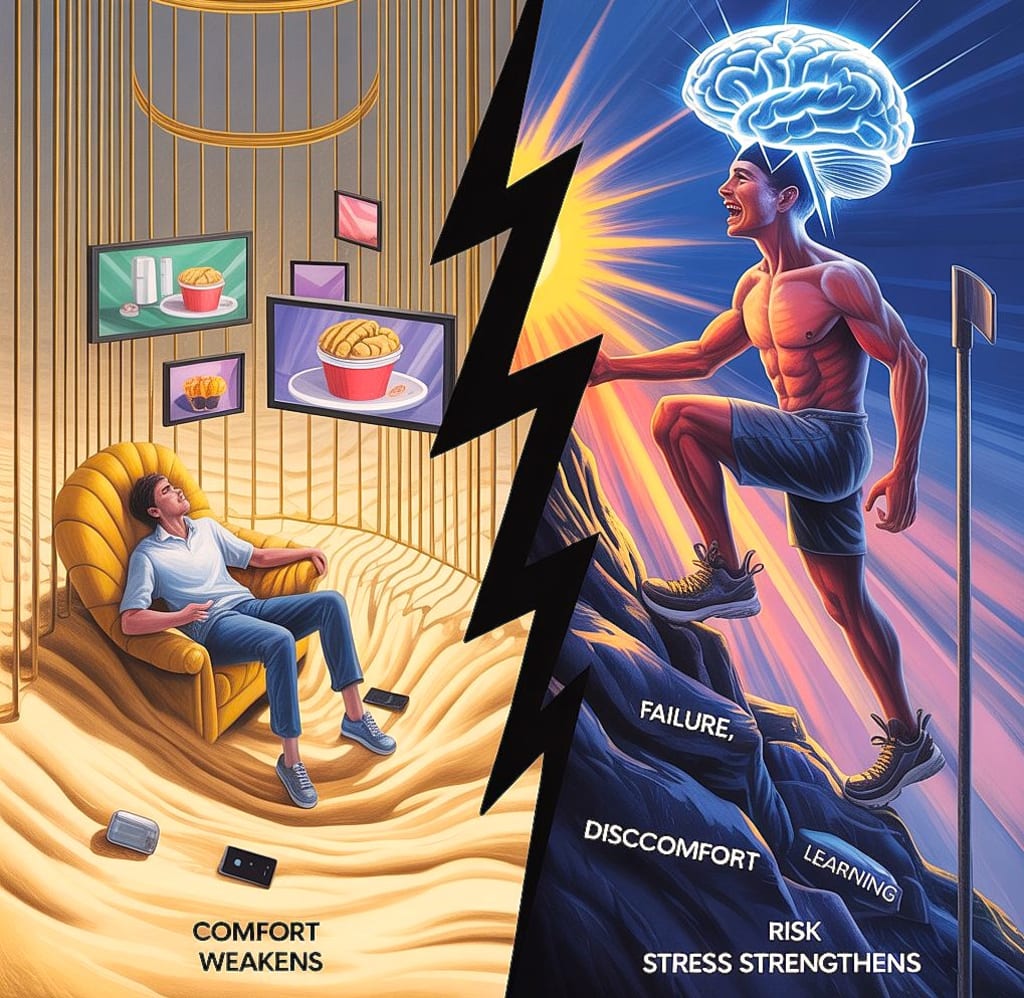
In today’s fast-paced digital world, stress is often painted as the villain behind mental health struggles, burnout, and chronic fatigue. We are bombarded with messages telling us to eliminate stress, prioritize self-care, and chase comfort at all costs. While reducing toxic stress is important, what if the true enemy isn’t stress itself—but our obsession with constant comfort?
This article explores the hidden dangers of a comfort-driven lifestyle and why healthy stress is essential for building resilience, improving mental toughness, and achieving real fulfillment.
________________________________________
What Is Stress—And Why It's Not Always Bad
When we hear the word “stress,” we usually think of anxiety, pressure, or emotional exhaustion. But not all stress is created equal.
Psychologists distinguish between two main types of stress:
• Distress: harmful, chronic stress that negatively impacts mental and physical health.
• Eustress: positive, motivating stress that helps you grow, learn, and adapt.
Eustress is the kind of stress you experience when you're starting a new job, working toward a fitness goal, or learning a new skill. It’s uncomfortable—but in a good way. Your body and brain are responding to a challenge, and that challenge is a catalyst for growth.
Without this kind of positive stress, there’s no change—no progress.
________________________________________
The Comfort Crisis: Why Modern Life Makes Us Weak
Modern conveniences have made our lives easier than ever. We no longer have to hunt for food, walk long distances, or endure extreme conditions. Everything—from food delivery apps to climate-controlled homes—caters to our desire for ease and instant gratification.
But here’s the catch: comfort feels good in the moment but often leads to stagnation over time.
When we always choose the easy route:
• We avoid necessary conflict.
• We lose the ability to tolerate discomfort.
• We become mentally and emotionally fragile.
In fact, researchers now link over-comfortable lifestyles with rising levels of anxiety, depression, and emotional dysregulation. When we constantly avoid challenges, even minor inconveniences begin to feel overwhelming.
________________________________________
Stress Builds Resilience—Comfort Erodes It
You build muscles by lifting weights that challenge your strength. Likewise, you build emotional and mental resilience by facing situations that test your patience, problem-solving skills, and emotional regulation.
This concept is known as stress inoculation—the psychological process of strengthening your ability to deal with adversity by gradually exposing yourself to manageable levels of stress.
Just like vaccines build immunity by exposing your body to small doses of a virus, exposing yourself to healthy stress helps you build immunity to life’s bigger challenges.
Meanwhile, too much comfort leads to:
• Reduced resilience
• Lower self-discipline
• Higher sensitivity to stress
• Decreased life satisfaction
________________________________________
The Hidden Dangers of a Comfort-First Mindset
While comfort has a place in life, an excessive pursuit of it can lead to what author Michael Easter calls the “Comfort Crisis.” This is a state where you stop evolving—mentally, emotionally, and spiritually—because you're never stretched beyond your limits.
The consequences include:
• Loss of purpose: Without struggle, there's no progress. Without progress, there's no fulfillment.
• Increased fear of failure: If you never face risk, failure becomes terrifying.
• Mental numbness: Over-comfort leads to boredom, disengagement, and a lack of drive.
A little discomfort, on the other hand, can bring clarity, direction, and deep satisfaction.
________________________________________
How to Embrace Healthy Stress for Personal Growth
So, how do you shift your mindset from avoiding stress to leveraging it for growth? Here are practical ways to embrace discomfort and build lasting resilience:
1. Do One Hard Thing Every Day
Take on a task that challenges you—whether it’s a workout, a difficult phone call, or learning a new skill. Stretching yourself regularly builds confidence and capacity.
2. Limit Instant Gratification
Delay the impulse to check your phone, snack unnecessarily, or binge content. Strengthening your ability to sit with discomfort is a key component of mental strength.
3. Practice Cold Exposure or Physical Stress
Safe physical discomfort like cold showers, intermittent fasting, or intense workouts can sharpen your mental edge and make daily stressors feel more manageable.
4. Face Conflict, Don’t Avoid It
Difficult conversations, professional risks, or facing fears head-on may cause temporary stress but lead to long-term growth and stronger relationships.
5. Reframe Stress as a Signal
Stress isn't always a problem—it’s often a signal that something matters. Learn to distinguish between destructive stress and growth-inducing pressure.
________________________________________
Final Thoughts: The Goal Is Strength, Not Safety
In a world where comfort is constantly marketed as the ultimate goal, it’s easy to forget that we are built to endure, adapt, and grow. Stress—when understood and managed properly—is not the enemy. It’s a tool.
Comfort may feel safe, but it can silently rob you of resilience, purpose, and fulfillment.
So next time you feel discomfort creeping in, don’t run. Lean in.
Because the real danger isn’t stress. It’s never being tested.
________________________________________
About the Creator
shoaib khan
I write stories that speak to the heart—raw, honest, and deeply human. From falling in love to falling apart, I capture the quiet moments that shape us. If you've ever felt too much or loved too hard, you're in the right place.
Keep reading
More stories from shoaib khan and writers in Psyche and other communities.
The Dopamine Trap
In today’s fast-paced digital world, it's easy to feel tired, unmotivated, and mentally drained — even if you’ve spent your entire day just sitting around. The culprit may not be laziness or lack of discipline. In many cases, it’s something much more subtle and powerful: digital dopamine overload caused by your smartphone.
By shoaib khan10 months ago in Psyche
Top tipple tricks
Been thinking a lot about drinking, lately. Not least because of a recent episode of over-indulgence and the inevitable after effects. Some readers may recall the earlier articles I wrote about beating the booze. Here I set out an experiment in techniques for cutting down on my alcohol intake. The experiment was successful, the techniques worked, and I have armed myself with an arsenal of weapons in the war against the demon drink. I have yet to fire the first round however. It's all a question of timing (perhaps procrastination).
By Raymond G. Taylor3 days ago in Psyche
Bomb Scare
It was 2027, and the world never thought it would happen. A missle hit the United States, but it wasn't where they had anticipated. A little town in the northeast was hit by a missile strike, they didn't know why, and they didn't know exactly where it hit, but they did know it was a coastal community, somewhere between Maine and Delaware.
By Gregory Payton6 days ago in Fiction




Comments
There are no comments for this story
Be the first to respond and start the conversation.