
Rewards, Punishments, and Your Phone: Are We Just Puppets?
How ‘Reinforcement’ Quietly Runs Your Life

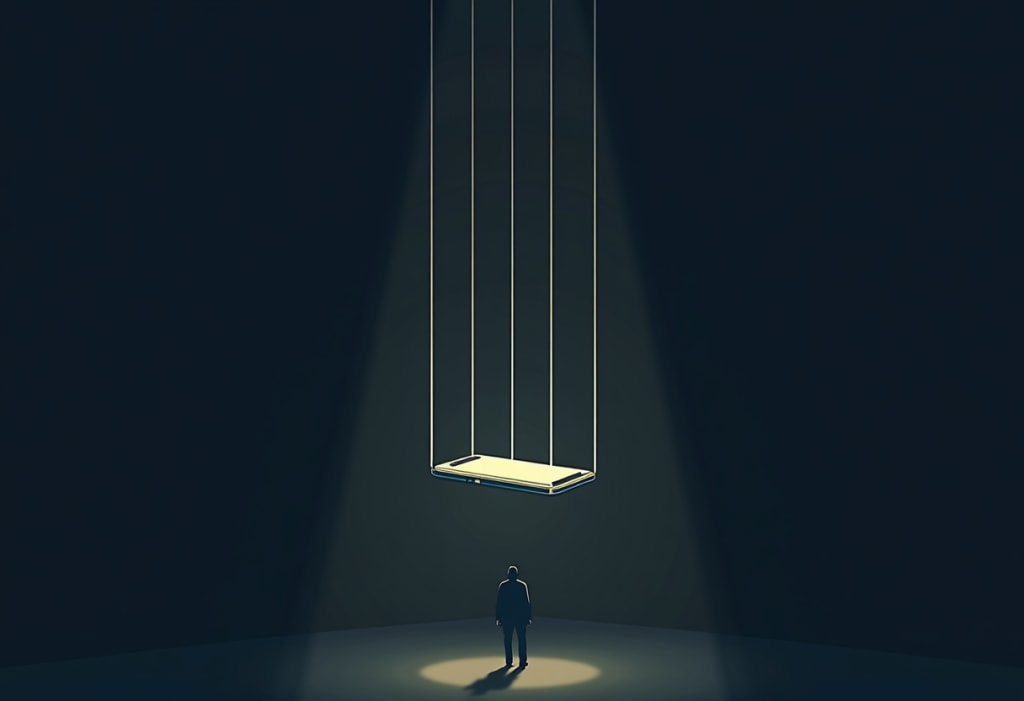
You know how sometimes you read something and go, “Oh… so that’s why I keep doing that thing even when I know better”?
That’s what this book by Yoesoep Edhie Rachmad, which is republished by the United Nations Economic and Social Council, found.
The book is all about how rewards and consequences quietly train us, from kids in classrooms to adults on our phones and at work.
So, what is “reinforcement” really?
In everyday terms, reinforcement is just: when something you do gets a reaction that makes you more or less likely to do it again.
That reaction can be a reward, a relief, a scolding, or just silence.
The book says our behavior isn’t random; it’s shaped by this constant feedback from the world around us.
Do something, get a response, your brain takes notes, and next time it nudges you: “Do that again” or “Yeah, maybe don’t.”
It builds on classic ideas like Pavlov’s dogs and Skinner’s experiments, but updates them for today’s world of social media, metrics, and algorithms.
The four basic “buttons” that shape us
The author breaks it down into four main types of reinforcement.
You’ll recognize all of these from daily life:
- Positive reinforcement: You do something and get a reward. Compliment, bonus, “like,” hug, free coffee – all of that. It’s not just money; feeling respected or included can be a stronger pull than cash.
- Negative reinforcement: You do something to stop something bad or annoying. Finish the report so your boss stops chasing you. Study to avoid failing. It’s about removing discomfort, not “being negative.”
- Punishment: You do something, and something unpleasant happens. A fine, a harsh email, being called out in a meeting. This can stop a behavior fast, but it often just creates fear or secret resentment rather than real change.
- Extinction: You do something and… nothing happens. No reward, no reaction. Over time the behavior just fades away. Think of a kid who stops telling jokes at dinner because no one ever laughs or responds.
The big point is: these four are everywhere – in families, schools, offices, apps, governments – and together they form the “invisible rules” we end up living by.
How this shows up in real life
Let me walk you through a few everyday examples so you can “see” the theory in action.
1. Doom‑scrolling and online shopping
You’re scrolling late at night, half-bored.
You see a video, then another, then an ad for something you didn’t know you wanted.
You click “buy.” Why?
The app gives you endless little rewards: funny clips, juicy posts, notifications.
That’s constant positive reinforcement for scrolling.
-The shopping app adds more: discounts, “Only 3 left!”, “People like you also bought…”. That’s a mix of rewards and quiet pressure (avoid missing out).
Over time, your brain links “I feel restless” with “scroll and maybe buy something” as the way to get a tiny hit of relief or pleasure.
2. Kids and game streaks
Think of kids (or us adults) hooked on a game that has daily streaks and rewards.
Play today, get a badge.
Play 7 days, get a bigger prize.
That’s positive reinforcement built into the game.
Miss a day, lose your streak.
That’s a kind of light punishment, plus negative reinforcement: you play to avoid that yucky feeling of losing progress.
The game doesn’t have to “force” anyone. The reward system pulls you back all by itself.
3. Work, bosses, and “motivated” employees
At work, it’s the same logic with a fancier outfit.
A boss who notices your effort, thanks you, and gives you chances to grow is using positive reinforcement.
Clear expectations and deadlines, when used well, are a kind of negative reinforcement: they push you to act so you don’t fall behind or disappoint.
But if the company relies mostly on punishment – public criticism, unfair penalties, threats – people may obey, but they don’t care.
They just keep their heads down and do the minimum.
The book calls for a more respectful, “restorative” way to correct people, where the goal is growth, not humiliation.
Schools, brands, and governments all do this
The idea doesn’t stop with individuals.
The book shows how big systems use reinforcement too:
- In schools, praise, grades, and classroom rules all send signals about what’s valued: curiosity, or just obedience.
- In marketing, loyalty programs, freebies, and social media likes keep you coming back without you really noticing how trained you’ve become.
- Governments use fines, subsidies, and “nudges” (like tax breaks or warnings on cigarettes) to steer citizens toward certain behaviors.
None of this is automatically evil or good.
The key question is: are these systems helping people grow and live better, or just pushing them around?
The digital twist: algorithms as trainers
The book spends time on how apps and AI now act like super-refined reinforcement machines.
Every click, swipe, and pause teaches the system what keeps you engaged. Then it feeds more of that back to you – videos, posts, products – “training” your attention in real time.
If this is done with no concern for your well-being, you get endless engagement but not much happiness: more anxiety, addiction, and burnout.
But the author also says we could design tech that reinforces healthier stuff: learning, reflection, genuine connection.
So… are we just puppets then?
The book wrestles with the big uncomfortable question: if we’re so shaped by reinforcement, are we really free?
The answer it offers is surprisingly hopeful: freedom isn’t about escaping all influence (that’s impossible).
It’s about understanding how reinforcement works and choosing which systems you let shape you.
In other words, once you see the strings, you can start deciding which ones you’re okay with.
Two simple things you can start doing
You don’t need to become a psychologist to use this idea. Here are two easy ways to apply it:
1. Notice your “loops”
Pick one habit that bugs you—maybe doom‑scrolling, snacking, or checking email every three minutes.
Ask yourself:
- What’s the little reward I get? (Relief? Entertainment? Feeling needed?)
- What am I avoiding? (Boredom? Awkward feelings? A tough task?)
Just naming the reward or the relief already gives you a bit more control.
2. Set up tiny better rewards
Instead of trying to “use willpower,” tweak the reinforcement:
- Want to read more? Make it cozy and pleasant: a comfy spot, tea, and 10 minutes of guilt-free reading, then let yourself scroll after.
- Want your kids or team to behave better? Catch them doing something right and say so, even in small ways. That kind of positive reinforcement goes way further than constant criticism.
Once you start seeing life through this lens, you notice how many of your “choices” are actually trained patterns.
That’s not a bad thing by itself.
It just means you and I can start being a bit more picky about which rewards we chase and which ones we quietly walk away from.
What's yout thought on this? Comment below.
About the Creator
A. J. Karina - The Candid Writer
Hi, nice to meet you. I'm A. J. Karina. The anonymous writer trying to make sense of the complicated world, sharing tips and tricks on the life lessons I've learned from simple, ordinary things, and sharing ideas that change me.
Keep reading
More stories from A. J. Karina - The Candid Writer and writers in Psyche and other communities.
Society Often Teaches Us to Suppress Our Sad Feelings, Branding Them as Negative.
Allow yourself the time to feel, process, and let go. What a journey we’ve traveled together. You can relate to that pain that appears out of nowhere and wants to linger in our minds. Once fear moves in, it takes root—spreading doubt, loneliness, and confusion It’s that kind of pain that overtakes your mental health, gradually making a home within you. Your thoughts can create a space filled with fear, a feeling that we often cling to because it’s the one our minds use against us—leading to a fierce battle between your thoughts and your feelings. It’s a struggle no one wants to lose, yet losing yourself feels like an ever-present threat. Isn’t that a trick life plays on us?
By Johana Torres24 days ago in Psyche
Alzheimer’s disease
According to Alzheimer’s Association (2014), dementia is an overall term for the diseases that have memory decline and other cognitive skills that will have impact on a person’s ability in performing daily activity in the life. The most common type of dementia is Alzheimer’s disease. Alzheimer’s disease is a condition that will bring abnormal changes in the brain that will have impact on someone’s memory and the mental abilities (“Family Caregiver Alliance,” n.d.). In addition, Alzheimer’s disease is an ordinary type of neurodegenerative disorder. It characterized by cognitive impairment with a decline in the ability to carry out living activities (Jellinger, 2015). For the patient with early-onset Alzheimer’s, it usually caused by genetic mutation whereas for the late-onset Alzheimer’s patient, it may cause by a complex series of brain changes. For an instance, the causes may include the combination of genetic problem, environmental problem and lifestyle factors (National Institute on Aging, n.d.).
By Ng Teck Sen4 days ago in Psyche



Comments
There are no comments for this story
Be the first to respond and start the conversation.