
Psychology of Why We Hide Our Feelings
A woman learns that strength isn’t in hiding emotions but in embracing them — and discovers the quiet courage of being honest

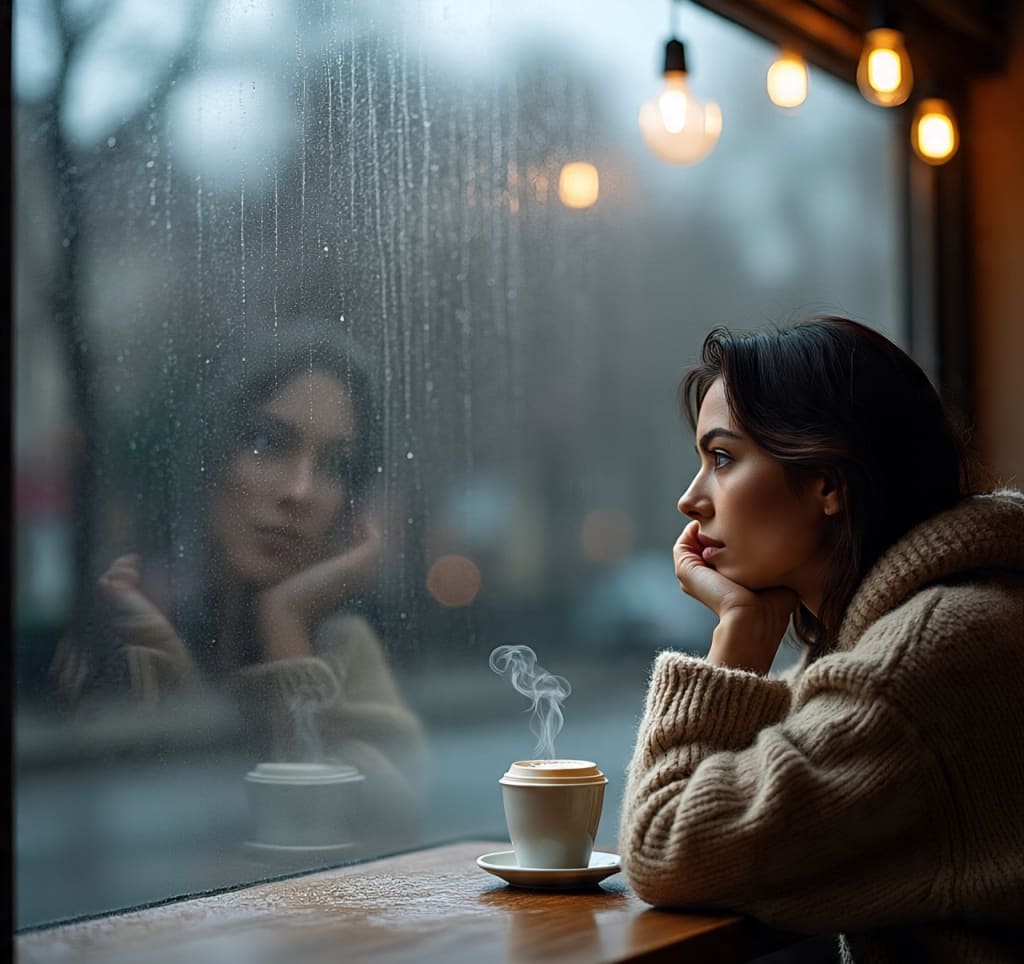
Eleanor Hughes had mastered the art of pretending.
To her friends, she was cheerful and composed. To her colleagues, she was confident and calm. Even to herself, she appeared fine. But every night, when she returned to her small flat in Edinburgh and the world fell quiet, she felt like a room filled with unsaid words.
She often wondered why it was so hard to be honest about what she felt. Not with strangers, not even with those who loved her most. Somewhere along the way, she had learned that feelings were better hidden than seen.
It started early. When she cried as a child, her mother would say gently, “Don’t let them see you weak.” When she grew older, friends would joke, “You’re too sensitive.” And when her first relationship ended, she smiled and said, “I’m fine,” even when her heart felt splintered.
By the time she reached her thirties, hiding her emotions had become second nature. She smiled through disappointment, laughed through loneliness, and nodded through anxiety. She didn’t lie — she just edited her truth.
One evening, after a long day, Eleanor found herself sitting in a café near the university. It was raining, and the soft rhythm of drops against the window made her feel safe. Across from her sat a psychology student named Daniel, a regular customer who had become a quiet friend.
“You always seem calm,” he said. “Do you ever get angry?”
She laughed, surprised by the question. “Of course not. I just… handle things differently.”
Daniel smiled knowingly. “That’s what people say when they’ve forgotten how to show what they feel.”
His words lingered long after he left. Forgotten how to show what they feel. It sounded strange, but maybe it was true.
That night, she searched online for something she never thought she’d look up: Why do people hide their emotions?
She learned that it wasn’t weakness — it was survival. The brain learns to protect us. When showing emotion once led to pain, embarrassment, or rejection, the mind remembers. It builds walls disguised as strength. It teaches us that silence is safer than honesty.
But safety, Eleanor realized, can be lonely.
Over the next few weeks, she began to notice how everyone around her did the same. Her colleague, Mark, joked about everything, never serious for a second. Her friend Clara smiled through a failing marriage. Even strangers on the train wore expressions that hid more than they revealed.
It struck her that the world wasn’t full of strong people — it was full of people pretending not to hurt.
One afternoon, Eleanor sat again with Daniel. She decided to test herself. “Can I tell you something?” she asked.
“Of course,” he said.
“I’m not always okay. Sometimes I wake up feeling… hollow. Like I’m living my life on mute.”
He didn’t try to fix it. He just nodded, and for the first time in years, she felt lighter.
There was something strangely powerful about saying what she truly felt out loud. It didn’t make her weak. It made her real.
That night, she began writing. Not a story, not an essay — just her thoughts. She wrote about loneliness, about masks, about the quiet ache of pretending. Words poured out like water that had been trapped behind a dam for too long.
She realized that hiding feelings doesn’t make them disappear. It just buries them until they reshape themselves as exhaustion, anger, or sadness. They demand to be seen, one way or another.
As days passed, Eleanor became more open — not with everyone, but with those who mattered. She told her mother that she had been struggling. She told her friends she needed rest. She even apologized to herself for all the times she had stayed silent.
And slowly, life began to feel different. Not easier, but truer.
She noticed that when she shared honestly, others did too. Conversations grew deeper. Friendships became softer. There was no longer a need to impress, only to understand.
She began to see emotion not as a weakness, but as connection. Every tear, every tremor in the voice, every unguarded laugh — it was proof of being alive.
In her journal, she wrote a line that would stay with her forever:
“Hiding what we feel doesn’t protect us from pain. It protects us from healing.”
Months later, Eleanor published a small essay online titled The Psychology of Why We Hide Our Feelings. It spread across social media. People wrote to her from across Europe, thanking her for saying what they could never put into words.
She smiled when she read their messages. Maybe, she thought, this is how change begins — one honest sentence at a time.
That evening, she went to the same café and watched the rain fall again. For the first time in her life, she didn’t feel the need to smile through it. She just let it be.
And in that quiet, she finally understood — we don’t hide our emotions because we are weak. We hide them because the world taught us to. But when we unlearn that lesson, when we dare to be seen as we are, that’s when we truly begin to live.
About the Creator
LUNA EDITH
Writer, storyteller, and lifelong learner. I share thoughts on life, creativity, and everything in between. Here to connect, inspire, and grow — one story at a time.
Reader insights
Outstanding
Excellent work. Looking forward to reading more!
Top insights
Compelling and original writing
Creative use of language & vocab
Easy to read and follow
Well-structured & engaging content
Excellent storytelling
Original narrative & well developed characters
Expert insights and opinions
Arguments were carefully researched and presented
Eye opening
Niche topic & fresh perspectives
Heartfelt and relatable
The story invoked strong personal emotions
On-point and relevant
Writing reflected the title & theme
Keep reading
More stories from LUNA EDITH and writers in Psyche and other communities.
Christmas is Not Always “Beer and Skittles”
If you find the holiday season challenging, you’re not alone. I have never been a big fan of Christmas. I have always found it a bit pretentious. It is a time for kids, really. I have not had kids in my life, so the "children's influence" around this time of year doesn’t occur.
By Calvin London24 days ago in Psyche
Grok and the Quiet Anxiety Around Machines That Understand Us
For years, people imagined artificial intelligence as something distant and mechanical. It lived in movies, research labs, and tech conferences far removed from everyday life. Then tools like Grok appeared, and that distance began to shrink. Suddenly, a system could read questions, respond with humor or seriousness, and follow complex conversations in a way that felt unsettlingly human. Grok is not just another name in the growing list of AI systems. It represents a moment where curiosity meets unease. People are fascinated by what it can do, yet unsure about what it means. To understand Grok, we need to look beyond features and focus on the feelings, questions, and quiet worries it brings with it.
By Muqadas khan7 days ago in Psyche



Comments (1)
Beautiful story! I learned awhile ago that Russians do not smile unless they are actually happy. I have been thinking about how wise that is, why do we put on a smiley mask for everyone, even strangers we pass on the streets? I have been practicing forgetting the fake smile, which is difficult, especially when "not smiling is rude" even though to me it is more rude to smile when it's not genuine. This reminds me of when I was younger and my sister would always get mad at me for not smiling for pictures because I "was ruining them." When in reality, I was the only one being real in that moment, nobody said anything to make me smile. Would me being fake appease the world better? So I learned to smile on command, now is the time to break that cycle, I notice every time I fake smile and cringe at myself. Thank you for this story!!