
Physical Symptoms of Anxiety That Are Often Misdiagnosed
Understanding How Anxiety Can Masquerade as Physical Illness

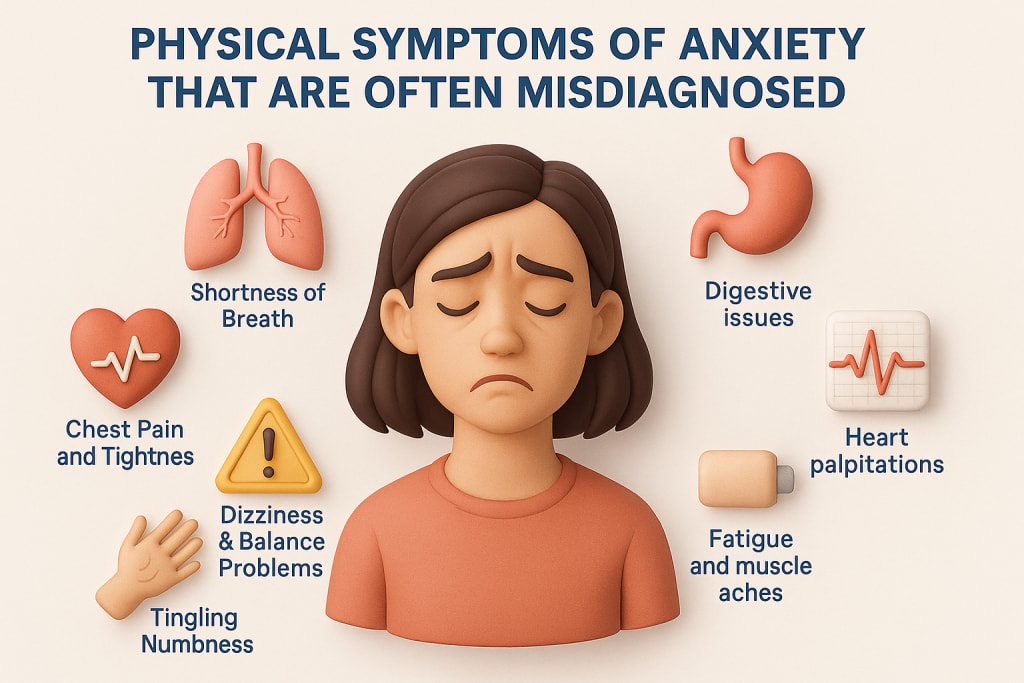
Anxiety doesn't always show up as worry, racing thoughts, or fear. In many cases, it’s the body, not the mind, that sounds the alarm. These physical symptoms can be misleading, even to medical professionals.
Chest pain, fatigue, shortness of breath, or tingling limbs may trigger a cascade of medical tests. Yet, when nothing physically wrong is found, patients are often left confused, frustrated, or even convinced that something was missed.
The reality is this: anxiety disorders often manifest in the body in ways that mimic other health problems. And these symptoms are frequently misdiagnosed.
Let’s explore the most commonly misinterpreted physical symptoms of anxiety, why they happen, and how to distinguish them from other conditions.
1. Chest Pain and Tightness: Mistaken for Heart Trouble
Chest pain is among the most terrifying symptoms a person can experience. It's no wonder that anxiety-induced chest pain sends thousands of people to the emergency room each year. It can feel sharp, pressing, or achy, very similar to cardiac pain.
But here's the difference: anxiety-related chest discomfort often arises during high-stress moments or panic attacks. The pain may shift locations, come and go rapidly, or occur alongside symptoms like hyperventilation, dizziness, or a racing heart.
Medical professionals often perform EKGs, blood tests, and stress tests. When all come back normal, the patient may be told, “It’s just anxiety.” But this doesn’t make the symptom feel any less real.
2. Shortness of Breath: Confused With Asthma or Lung Conditions
Hyperventilation is a hallmark of acute anxiety. A person might feel like they can't get enough air, gasp for breath, or sigh repeatedly in an effort to fill their lungs.
Unlike asthma, anxiety-induced breathing issues don't involve wheezing or airway inflammation. The person may breathe faster than normal, causing a drop in carbon dioxide levels. This imbalance can lead to lightheadedness, numbness in the fingers, and even chest discomfort.
Doctors may test lung function and prescribe inhalers or steroids. When these don’t work, and the breathlessness is paired with intense worry or panic, the real root—anxiety—starts to emerge.
3. Dizziness and Balance Problems: Misdiagnosed as Vertigo or Inner Ear Disorders
Feeling unsteady or dizzy is deeply unsettling. For those with anxiety, dizziness is often triggered by standing up quickly, crowded spaces, or stressful thoughts. The sensation may not be a spinning vertigo, but more of a floating or swaying feeling.
ENTs and neurologists might search for signs of Meniere’s disease, vestibular migraines, or other balance disorders. But when all scans and hearing tests come back clear, it may be time to look at stress as the culprit.
Persistent dizziness can also create a vicious cycle. The fear of dizziness increases anxiety, which in turn makes the dizziness worse. It's a loop that is hard to break without proper diagnosis and intervention.
4. Digestive Issues: Mistaken for IBS, Acid Reflux, or Food Intolerances
The gut is incredibly sensitive to emotional states. Anxiety can disturb digestion in dramatic ways—nausea, cramping, bloating, diarrhea, or constipation are all possible.
This connection between the brain and the gut is sometimes referred to as the “gut-brain axis.” When you're anxious, your body shifts into “fight-or-flight” mode, pulling blood away from the digestive system and altering gut motility.
Gastroenterologists may diagnose Irritable Bowel Syndrome (IBS), prescribe acid reducers, or suggest eliminating certain foods. While these approaches can help, the underlying anxiety often remains untreated, leading to a pattern of ongoing flare-ups.
5. Tingling, Numbness, and Weakness: Mistaken for Neurological Disorders
Anxiety can cause profound changes in the nervous system. During periods of high stress, people may experience tingling in the hands, feet, or face. Others report numbness, muscle twitches, or sudden feelings of weakness—sensations that can mimic multiple sclerosis (MS), neuropathy, or stroke.
These symptoms may result from hyperventilation, which alters blood gases, or from prolonged muscle tension that irritates nerves.
Many anxious individuals end up visiting neurologists, undergoing MRIs, nerve conduction studies, and spinal taps. When these tests fail to reveal a problem, and the symptoms fluctuate with emotional stress, anxiety becomes the most likely explanation.
6. Heart Palpitations and Irregular Beats: Misread as Arrhythmias
The pounding heart. The skipped beats. The fluttering in your chest. These are classic signs of panic attacks and generalized anxiety. Yet to the person experiencing them, they can feel indistinguishable from a serious cardiac event.
Palpitations are caused by a surge in adrenaline. This hormone speeds up your heart, preparing your body for perceived danger. It’s a normal response to fear—but in anxiety disorders, it happens too often and without a real threat.
Even wearable heart monitors may detect irregularities that are benign. But for the anxious mind, every skipped beat can feel like a ticking time bomb. Without reassurance and education, the fear continues, amplifying the physical symptoms even more.
7. Fatigue and Muscle Aches: Confused With Chronic Fatigue or Autoimmune Illness
Living in a state of constant worry wears the body down. Anxiety keeps muscles tense, hormones elevated, and sleep disrupted. The result? Deep fatigue, soreness, and sometimes flu-like malaise.
This exhaustion can be mistaken for chronic fatigue syndrome, fibromyalgia, or even lupus. Blood tests might be run. Doctors may suspect viral infections or inflammatory conditions.
But when all the labs come back normal—and the fatigue persists or worsens during emotional stress—the role of anxiety must be considered.
Why Do These Misdiagnoses Happen?
The simple answer: anxiety is a master of disguise.
It doesn’t just live in your thoughts. It inhabits your body, using physical symptoms to express what the mind may not fully understand or accept. Add to that our tendency to seek physical causes for discomfort, and it's easy to see how the medical system can sometimes overlook anxiety disorders.
Doctors are trained to rule out serious conditions first. That’s not a bad thing—it’s necessary. But when anxiety isn't considered early enough, patients can undergo months or years of unnecessary tests, treatments, and worry.
What Can You Do?
If you’re experiencing unexplained physical symptoms:
- Track when they occur. Do they coincide with stressful periods or emotional trigger
- Get medical evaluation. Rule out serious health issues first—but don’t stop there.
- Discuss mental health openly. Let your doctor know if you’re under stress or have a history of anxiety.
Consider therapy. Cognitive Behavioral Therapy (CBT), mindfulness practices, and medication can dramatically reduce both emotional and physical symptom
Avoid endless doctor hopping. Once major issues have been ruled out, focus on managing your anxiety rather than searching for a new diagnosis.
Anxiety is not just “in your head.” It’s in your chest, your stomach, your muscles, your breath. It hides behind physical sensations, often catching people off guard. Misdiagnosis is common—not because the symptoms aren’t real, but because anxiety wears so many disguises.
Recognizing the physical face of anxiety is the first step toward healing. The symptoms are valid. The fear is real. But so is the path forward.
You’re not broken. You’re responding to stress the way your body knows how. And with support, you can find calm—both in your mind and your body.
About the Creator
Richard Bailey
I am currently working on expanding my writing topics and exploring different areas and topics of writing. I have a personal history with a very severe form of treatment-resistant major depressive disorder.
Keep reading
More stories from Richard Bailey and writers in Psyche and other communities.
Why Does Anxiety Feel Worse at Night? Causes and How to Calm It
During the day, life is loud. Conversations hum in the background. Notifications ping. Tasks pile up. Your brain stays busy with to-do lists, responsibilities, and distractions. But then the sun sets. The world goes quiet. And for many people, that silence brings something else: anxiety.
By Richard Bailey8 months ago in Psyche
Top tipple tricks
Been thinking a lot about drinking, lately. Not least because of a recent episode of over-indulgence and the inevitable after effects. Some readers may recall the earlier articles I wrote about beating the booze. Here I set out an experiment in techniques for cutting down on my alcohol intake. The experiment was successful, the techniques worked, and I have armed myself with an arsenal of weapons in the war against the demon drink. I have yet to fire the first round however. It's all a question of timing (perhaps procrastination).
By Raymond G. Taylor7 days ago in Psyche
Effective Ways to Break the Cycle of Addiction and Start Healing
Addiction can feel like a repeating cycle that is difficult to escape. Many individuals struggling with substance use experience patterns of cravings, temporary relief, and relapse that can make recovery seem overwhelming. However, breaking the cycle of addiction is possible with the right support, treatment strategies, and long-term commitment to healing.
By Jordan Blake5 days ago in Psyche
A Transparent Look at Vocal Challenges and Top Stories
Almost three years ago, we shared a resource article that served as a place for people to suggest new challenge prompts. We thought it would be a good idea to refresh that thread, and take the opportunity to answer a few common questions about top stories, how challenges are judged and how submissions are reviewed.
By Vocal Curation Team4 days ago in Resources



Comments (1)
I experienced all of these symptoms before I realised it was anxiety related, it was very scary at first. I love your last paragraph about not being broken, just responding in the way your body knows how. Thanks for sharing.