
Overcoming Societal Blind Spots
One Voice, One Ripple, One Change


When Maya joined her new school in the heart of the city, she noticed something odd. No one looked at the janitor. No one said hello to the cafeteria staff. And not once did a single student question the posters lining the walls—ads promoting success with smiling, fair-skinned, affluent-looking kids, all wearing the same kind of clothes, all speaking the same polished English.
At first, Maya thought it was just how things were. She had moved around a lot, and every school had its quirks. But the longer she stayed, the more she saw a pattern—certain students were always at the center: those with money, those with connections, those who fit a narrow image of excellence.
Everyone else floated in the margins.
Maya, with her deep brown skin, curly black hair, and a mother who cleaned offices for a living, was one of the floaters. She was smart—top of her class in two subjects—but her ideas were often met with polite nods or awkward silences. When she suggested they include African folktales in the school’s multicultural week, a teacher replied gently, “Maybe next year.” When she wore a traditional dress for culture day, someone joked she was “too into it.”
The blind spots weren’t loud or cruel. They were quiet. Casual. The kind that slip through cracks and settle like dust, invisible but everywhere.
One morning during assembly, the principal announced a new student council project. “We’ll be creating a time capsule,” she said. “Each class will contribute something that reflects the values and spirit of our school.”
A buzz of excitement rippled through the auditorium.
That evening, Maya sat at her desk, trying to decide what their class should contribute. Someone had already suggested a school sweatshirt. Another wanted to include photos from the debate team. Maya stared at the page and asked herself, What about the people who make this school run but never get seen?
An idea sparked. She grabbed her phone and started typing.
The next day, Maya stood in front of her English class with a folded piece of paper. Her hands trembled slightly, but her voice was steady.
“I want to read something I wrote,” she said. “It’s for the time capsule. But more than that, it’s about all of us.”
She took a breath and began:
“There are voices we don’t hear in these halls. The ones who unlock the doors before we arrive. Who sweep our footsteps away. Who serve our meals and clean our classrooms. The ones who are invisible, not because they don’t exist—but because we’ve trained ourselves not to see them. We call ourselves inclusive, but when was the last time we included the stories of our janitors, our aides, our cafeteria workers, or even the students who don’t speak the way we do?”
“This school is more than its awards and uniforms. It’s the quiet kindness of Mr. Ray, who fixes broken lockers. It’s the strength of Maria, who juggles classes while working two jobs. It’s the soft resilience of those who are different, and tired of pretending not to be.”
“Let our time capsule reflect the truth—that greatness lives in every corner, not just the spotlight. And that if we want a better future, we have to start seeing it now.”
When she finished, the room was silent. Then someone clapped. Then another. And soon, the whole class was applauding—not out of politeness, but because something had shifted.
News of Maya’s speech spread quickly. Her teacher nominated her to present the piece to the student council. The council, after some debate, agreed to include her words—typed on thick paper, framed, and wrapped carefully for the capsule.
But the change didn’t stop there.
Inspired by Maya’s voice, other students began speaking up. Someone suggested the school start a “Humans of Our Hallways” photo series, featuring interviews with staff members and students from all backgrounds. Another proposed monthly story circles, where anyone—regardless of grades or background—could share a personal story.
Teachers started taking a closer look at their reading lists and project themes. The multicultural week was revamped, now co-led by students from different backgrounds, and yes—African folktales were finally featured.
And slowly, the invisible began to be seen.
One afternoon, Maya stayed after school to help hang posters for the story circle event. As she taped one to the cafeteria wall, she heard someone behind her.
“Hey, Maya.”
It was Mr. Ray, the janitor. A quiet man with tired eyes and strong hands.
“I heard what you wrote,” he said, smiling. “No one’s ever said anything like that in all my years here.”
Maya smiled back. “It was long overdue.”
He nodded. “You’ve got a good eye. Most people walk right past what they don’t want to see. But once someone points it out… they can’t unsee it.”
Years later, when Maya returned for the school's centennial celebration, the time capsule was opened. The room was packed with alumni, students, staff, and parents. Everyone leaned in as the framed letter was read aloud.
When the final line rang out—"If we want a better future, we have to start seeing it now."—there was a long, quiet pause.
And then, applause.
Real, lasting change doesn’t come with a roar. It begins in quiet places—inside questions no one dares to ask, inside truths society politely ignores. But when one person sees clearly and dares to speak, the ripple can widen. The blind spots, once illuminated, shrink.
And suddenly, the world becomes visible again.
About the Creator
Keep reading
More stories from Muhammmad Zain Ul Hassan and writers in Psyche and other communities.
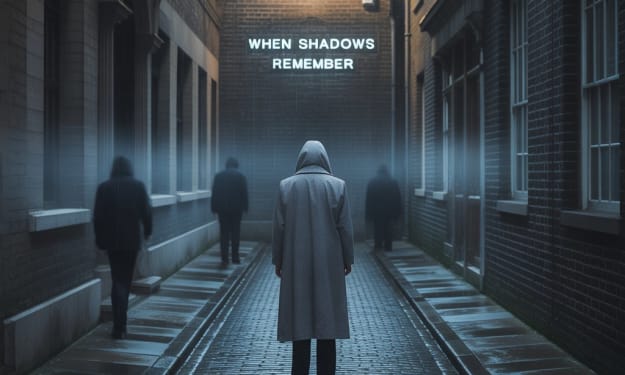
When Shadows Remember
They started remembering things that never happened. Small things, at first—a song that made them cry though they’d never heard it. A street they’d never walked down but knew every crack in. A dream of drowning in a river they'd never seen… but woke up gasping, lungs full of terror.
By Muhammmad Zain Ul Hassan6 months ago in Lifehack
Christmas is Not Always “Beer and Skittles”
If you find the holiday season challenging, you’re not alone. I have never been a big fan of Christmas. I have always found it a bit pretentious. It is a time for kids, really. I have not had kids in my life, so the "children's influence" around this time of year doesn’t occur.
By Calvin London20 days ago in Psyche
From Surviving to Living: When Rest Becomes an Act of Courage
When Survival Becomes a Lifestyle — And You Forget How to Live There is a quiet shift that happens when survival lasts too long. At first, it’s temporary. You tell yourself, “I just need to get through this phase.” Then weeks become months. Months become years. And without realizing it, survival stops being a response — it becomes a lifestyle. You don’t notice the moment it happens. There’s no clear breaking point. Just a gradual narrowing of life. Your goals become smaller. Your dreams become practical. Your emotions become controlled, managed, muted. You stop asking what brings you joy and start asking what is necessary. What is efficient. What is acceptable. And slowly, living turns into managing. The Hidden Cost of Constant Coping When someone lives in survival mode for too long, their nervous system adapts. It learns to stay alert. It learns to expect pressure. It learns that rest is risky and stillness is unsafe. So even when external threats disappear, the body doesn’t get the message. This is why many people feel exhausted without knowing why. Why calm moments feel uncomfortable. Why success doesn’t bring satisfaction. Why peace feels strangely empty. It’s not because something is missing. It’s because your system was never taught how to receive ease. You learned how to endure. Not how to enjoy. Why Letting Go Feels Harder Than Holding On Letting go sounds simple in theory. But for someone who survived by holding everything together, letting go feels like failure. You weren’t rewarded for resting. You were rewarded for coping. For staying strong. For not needing too much. So your identity formed around function, not feeling. This is why slowing down can trigger anxiety. Why saying “I can’t” feels shameful. Why doing less feels like becoming less. Your worth became linked to effort. And effort became constant. Healing Is Not Becoming Softer — It’s Becoming Safer Healing from long-term survival is not about becoming fragile. It’s about becoming safe. Safe enough to pause without panic. Safe enough to feel without rushing to fix. Safe enough to rest without preparing for collapse. This kind of healing doesn’t happen through motivation or discipline. It happens through permission. Permission to stop performing strength. Permission to disappoint expectations — including your own. Permission to exist without proving anything. At first, this feels unnatural. Because survival trained you to believe that safety must be earned. But safety is not earned. It is allowed. Relearning What Living Actually Feels Like Living is not dramatic. It doesn’t always feel exciting or intense. Sometimes, living feels quiet. Neutral. Ordinary. And for someone used to survival, that can feel unsettling. But calm is not emptiness. It is space. Space to notice yourself again. Space to feel preferences instead of obligations. Space to choose, not react. You don’t suddenly become a new person. You simply return to parts of yourself that were postponed. A Different Measure of Progress Progress is often measured by how much you do. How fast you move. How productive you appear. But healing progress looks different. It looks like stopping before burnout instead of after. Like resting before you collapse. Like saying “enough” without explaining yourself. It looks like choosing sustainability over intensity. Truth over performance. Presence over pressure. This kind of progress is quiet. And because it’s quiet, it’s often overlooked. But it is real. A Closing Truth If survival shaped you, it’s not your fault. You adapted the way you had to. But you are not meant to live your entire life in adaptation mode. You are allowed to soften without losing strength. To rest without guilt. To live without constantly preparing for impact. You don’t need to become more. You need to feel safe enough to be. And that shift — from surviving to living — is not weakness. It is the most honest form of courage there is.
By Med Abdeljabbarabout 3 hours ago in Psyche
📢 Raise Your Voice Thread: 01/08/2026
Our “Raise Your Voice Threads” are hosted most alternating Thursdays at 12PM ET to offer creators more avenues to uncover exceptional stories on Vocal. As we are continuously searching for fresh creators and inspiring stories, this thread provides an opportunity to exchange and discuss the stories that have moved and motivated us on Vocal.
By Raise Your Voice by Vocal3 days ago in Resources



Comments
There are no comments for this story
Be the first to respond and start the conversation.