
Negative Habits That Can Harm Your Brain
Poor Practices That Can Have An Adverse Effect On Your Brain

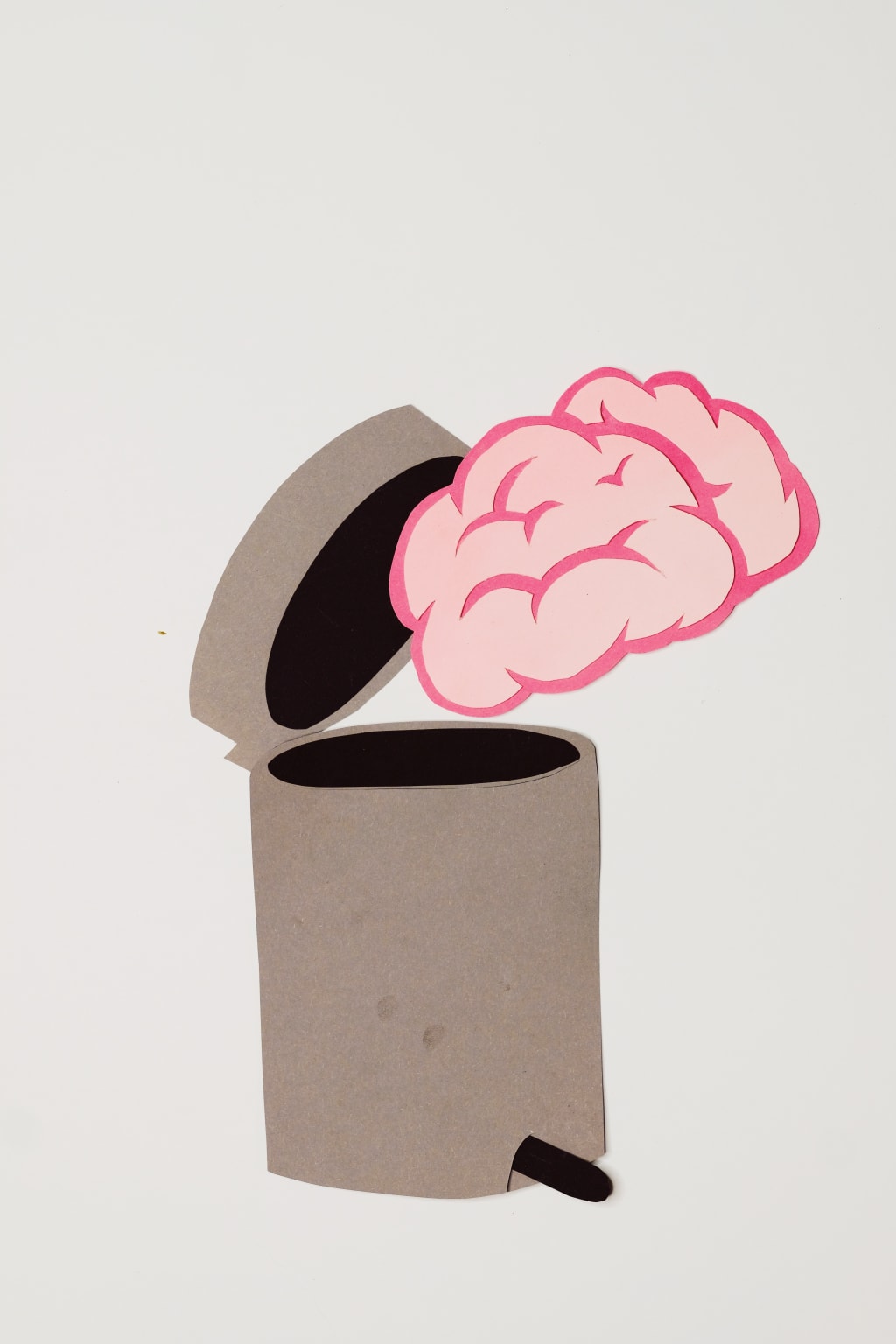
Today, we'll discuss a few unhealthy behaviors that might negatively impact your brain.
Quite surprisingly, in fact, the last one we’re going to discuss is extremely fascinating.
The first bad habit is chronic exposure to negative news. Rarely do you hear positive news; instead, the news is almost exclusively loaded with anxiety. Dark and gloomy news: What does that do for your health? It lowers your emotional state; if you were once happy and upbeat, you're now kind of grumpy, you're kind of in anxiety mode, and you might even be depressed, and there's some interesting data that talks about how your state of being can affect the structure of your body. Your brain actually deteriorates with exposure, so you may want to limit it. The bad news could also be people giving you bad news, too. We all know a certain personality that tends to not just give us bad news but turn good news into bad news.
The next one is toxic personalities. We have all been in these relationships that basically lower our emotional state, which would actually affect the physiology of our brains. So sometimes it's good to get a long list of all the people that you're associated with, isolate those who are a bit toxic, and just put them to the side. You want people who bring you up. You want people who support you.
Next, you are spending way too much time inside your house or a building. It's not very healthy to be inside all the time; it's extremely therapeutic to be outside in the fresh air, and the sun doesn't just necessarily give you vitamin D, which is essential for brain health; it gives you infrared. Now, what is infrared? It's a type of spectral energy that can actually penetrate your body by two inches; it can actually even go through your skull, and this infrared can stimulate melatonin, the type of melatonin that's a little bit different than the melatonin that's running through your pituitary. It's a type of melatonin that's in all of your cells and acts as an antioxidant that is even more powerful than glutathione. It's the most powerful antioxidant that protects you against so many things, including stress. So inside, we have fluorescent lights and poor ventilation. We have a lack of sun, and we also have an alteration of the light in the dark. The majority of people would greatly benefit from taking vitamin D before bed, especially if they have trouble sleeping or spend a lot of time indoors and are unable to get outside.
Next, being on a low-fat, low-cholesterol diet—how does that affect the brain? Well, did you know that 60% of your brain is made up of fat? Here we have this organ that only makes up 2% of your weight. Things that lower our fats or cholesterol, such as low-fat diets or statin medications, can greatly increase our risk for dementia and a lowered emotional state, including anxiety or even depression. Additionally, one really crucial point is that cholesterol is required to make bile salts, which are essential for vitamin absorption. Vitamins A, D, and K cannot be absorbed without those fat-soluble vitamins.
The unhealthy practice of following a high-grain diet, which calls for consuming at least 60% of your diet in the form of whole grains. However, there are some drawbacks to whole grains, including the fact that they are not as nutritious as you might think and are high in omega-6. In the book Grain Brain, there is a wealth of new information discussing how grains affect our brains. Currently, when you eat refined grains, you deplete your brain of certain nutrients.
Out of all the things that will damage your brain, eating a lot of sugar is at the top of the list because it will eventually lead to insulin resistance, which will starve the neurons. Insulin resistance results in this high glucose level and high insulin. But the resistance doesn't allow insulin or glucose to feed the neurons unless you have ketones floating around. The neurons starve, and you start having all sorts of neurodegenerative problems. In fact, there's a condition called type 3 diabetes, which is Alzheimer's, which occurs from severe insulin resistance, not to mention that high sugar depletes B1, which creates atrophy of your hippocampus.
This might surprise you. Too much low-lovel stress, even if you don't have any stress at all, can be very unhealthy for your brain. Why? Because you're not exercising enough, you don't have enough physical activity that is needed to activate genes in your brain. So there's something called “:traumatic stress," which is basically a moderate amount of stress that can cause the body to become stronger and more resilient and adapt to a positive state. This would include exercise, heat therapy, cold therapy, hypoxia, which is a lack of oxygen, and training at a higher altitude. So there's a lot of therapy in a moderate amount of stress or kind of intermittent doses of stress, and also intermittent fasting is a form of stress because you're not feeding your body any food for certain periods of time, which can greatly add a positive stress to allow the brain to actually grow neurons.
Next on the list is high stress. If you experience chronic high stress, primarily mental stress, or suffer from many losses or injuries, your brain will suffer greatly because this will activate certain genes in your brain that can cause dementia, degeneration, and inflammation.
Next is snacking, where high cortisol levels can cause the hippocampus, a crucial brain region linked to cognition, to shrink. High cortisol levels can also cause B1 depletion, which has a similar effect. In relation to intermittent fasting and snacking, intermittent fasting is the antidote to snacking. So many people are snacking on even healthy foods, and they're unknowingly creating a lot of problems with their brains.
In order to strengthen the brain, especially as we age, we need to do things that can help regenerate neurons. We would even venture to say that snacking is even worse than eating carbohydrates, and why is that? Because not only do carbs increase insulin, but eating, in general, increases insulin, and when you're eating so frequently, you have these little snacks in the mid-afternoon snack and then snack before you go to bed. What you're doing is jacking up insulin, creating more insulin resistance, which is going to affect your brain cells, and you're going to find that that's a really bad habit.
The reason for this is that when a person gives up snacking, they have a huge positive change in so many things, including things like getting up in the middle of the night and having the urge to urinate. These people that have frequent urination really have insulin resistance, and the most simple thing they can do is give up snacking, especially snacking or grazing late at night, and boom, they can sleep through the night. They just happen to miraculously get rid of the symptom of frequent urination.
Next, antibiotics like glyphosate in GMO food, which, by the way, Monsanto got a patent for being an antibiotic, directly affect your brain. Unfortunately, the earlier you are exposed to antibiotics in your life, like as an infant, the worse things are, but that's a completely different topic. There is a strong link between your gut and brain, and there is a nerve that connects the two. This nerve is known as the vagus nerve. In addition to the fact that these microbes produce the vast majority of your neurotransmitters, dementia is one of the negative side effects of antibiotics.
On the other hand, these microbes produce a large number of the B vitamins required for brain health. Well, there's some very intriguing data we want to share with you. We recently took part in a very intriguing beef nutrient density study where we sent our beef from our farm off to be analyzed and compared to many farms across the nation. This study compared grass-fed beef to grain-fed beef in terms of factors that can improve health and factors that can worsen disease, so we are going to show you the results now.
It just so happened that the beef we sent in dominated most other even grass-fed samples, which is quite remarkable, and we’re going to share why we think that is in a moment. So stay tuned; this is going to be interesting. You can see the grain fed is very low in phytonutrients, okay? So in general, phytonutrients are our antioxidants; they have all kinds of amazing properties, like the ability to fight off free radicals, for example. Here is another slide that displays the omega-6 to omega-3 fatty acid ratios. Okay, and on average, grain-fed beef produces an eight-to-one ratio, meaning that there are eight times as many omega-6 fatty acids as there are omega-3 fatty acids. However, the beef I sent in there had a ratio of 1.5 omega-6 to 1 omega-3, and it just so happens that grain-fed meats are high in omega-6, which would raise the risk of inflammation. Oh, and by the way, satiety is also a factor. Wow, that's interesting.
Now let us show you two more graphs that are quite intriguing. In the following graph, you can see that the value for Dr. Berg's beef is extremely low, which is because this graph indicates advanced glycation end products. What does this mean? It means that if you are consuming animal products that are higher in advanced glycation, this could contribute to a worsening of your health. The last slide is homocysteine, which is another biomarker for heart disease risk. Check out how low home assistance programs can reduce homocysteine levels.
Entirely produced grass-fed beef, this is all about the ratios. You see, we're trying to get more omega-3 fatty acids into our brain, especially because out of all the fats, 20 percent is in the form of Omega-3 DHA, especially in the gray matter. So when you have a high ratio of omega-6, it's competing for the Omega-3. So even though you might be consuming things like cod liver oil or Omega-3 fatty acids in your diet. If your omega-6 is too high, it's not going to go in well, and so this is why it's so important to really beef up, no pun intended, the omega-3 fatty acids, which could potentially lower inflammation in your brain and greatly support your brain health now.
Here's a question that you might be wondering right now. Why are there so many phytonutrients in the beef that we have compared to the typical grass-fed beef? Because these are the pastures that we raise our cows on, they have a much lower ratio of grass and a much higher ratio of weeds. We have many different types of weeds, and we have a smaller amount of grass as compared to a typical pasture with cattle. You're going to have more grass, and so if you think about it, the more biodiversity that these cows get to feed on, the more different types of weeds and plants that have their own microbiome, the more diverse microbiome they're going to have in their guts.
A lot of these phytochemicals and vitamins are made by the microbiome, and so our theory is that we’re going to do some studies on this to find out for sure. It's the diversity of different plants that really created this profile right here, which could relate to humans. If you were to have a salad and you had the same iceberg lettuce every single day, that probably wouldn't be good. You might want to try to increase the range of types of plants in your diet, whether in your salad or on your plate. There is some great research on the relationship between the diversity of plants and the diversity of your own microbiome that can greatly help your health.
Information and claims in this article have been obtained from Dr. Eric Berg.
About the Creator
Althea March
I am a writer who searches for facts to create compelling nonfictional accounts about our everyday lives as human beings, and I am an avid writer involved in creating short fictional stories that help to stir the imagination for anyone.
Keep reading
More stories from Althea March and writers in Psyche and other communities.
How Dinosaurs Might Have Changed If They Had Survived
Dinosaurs would have remained the dominant species if the infamous asteroid that killed off the dinosaurs had slightly altered its route. For them, evolution would have taken a different course. Humans may not have evolved to be at the top of the food chain during those millions of years. We would have to compete with dinosaurs if they had evolved at the same rate as humans. But how hazardous would they be to humans, and what would they look like?
By Althea March3 years ago in Earth
Steam Machine Price Leak Sparks Hope and Skepticism Among Gamers
Rumors travel fast in the gaming world, but some hit harder than others. When talk of a steam machine price leak began circulating, it stirred a familiar mix of excitement and doubt. For years, gamers have waited for hardware that could bridge the gap between console simplicity and PC freedom. Steam Machines once promised that dream, then quietly faded away. Now, whispers of a return, tied closely to a leaked price point, have reopened old conversations. Is this finally a realistic option for everyday players, or just another idea that looks good on paper? To understand why this leak matters, we need to look at the past, the present mood of gamers, and what price truly means in this space.
By Muqadas khanabout 16 hours ago in Psyche




Comments