
Mental illness is not an aesthetic for social media.
When you use social media and explore outside your usual interests, you come across all kinds of content. I like to do it from time to time, and it's one of the things that made me realize that I loved watching calligraphy videos. But it's not always that nice. And I'd like to warn you before you decide to read my article that it talks about a heavy subject; mental illness. So if that subject can trigger you, and it's understandable due to the heaviness of the matter, I'd recommend you not to read it.

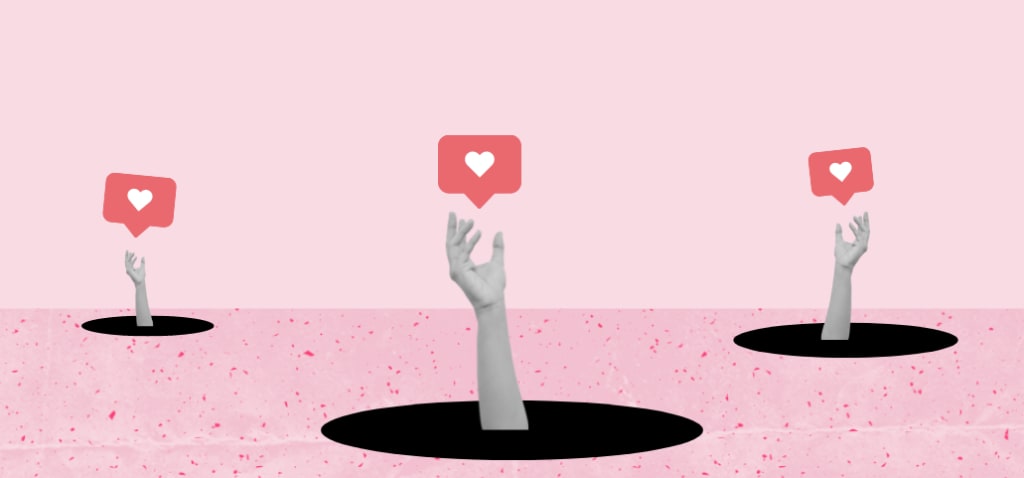
So discovering new things on social media can be a pleasant experience. However, finding things that are upsetting is the norm, and sometimes it can be on an insane level. I've discovered a whole niche of people who romanticize mental illness. Don't get me wrong; there are real stories of people struggling with it, and we need to read them. Social media has been a powerful tool for people with mental illness to connect and expand the conversation around mental health. People have posted raw, honest stories about their mental health on platforms like Twitter, Instagram, and Facebook to give others a glimpse into what it feels like to live with a mental illness. But there's also a lot of people who use mental illness as an aesthetic for their Instagram or Tiktok accounts.
A few months ago, while I was scrolling on Instagram, I came across a post with just a black background and white text. Before reading what was actually written, it seemed harmless, it looked like a casual nostalgic post, nothing out of the ordinary. But when I read it, it was something else. It read, "If I disappear, no one will miss me in this world." My first reaction was to re-read it a few times, and I started worrying about this person who didn't have a face or a name but was posting this on Insta. This person was obviously in a terrible place psychologically and needed to talk to someone. Could we read that without doing anything? So I posted a comment, hoping someone would read it, saying "I hope you're ok. Hang in there; you're loved" or something of that nature. On my level that's all I came up right away but I thought of also thought of sending a DM. But something stopped me when I saw the engagement to that post and the profile in general. This person had hundreds of comments and thousands of likes. And the people commenting didn't seem alarmed at all, they were mostly commenting things like "I like your content, keep it up" or "love you so much." I mean keep it up, who could post that under that kind of content? And the comment that messed up my head was "I love your page. You and X and X are the best" I clicked on the usernames this person shared, and they were other IG users with similar content, quoting depressing thoughts, and using mental struggles as an aesthetic. I had chills! And all three accounts amassed thousands of likes and have thousands of followers.
People post whatever they want, but seeing those accounts romanticizing mental illness and depression for likes is sickening to me. I'm all for Lo-fi, moody, romantic, and nostalgia-influenced posts, I think they're very appealing, but mental issues should be off-limits. And you never know who's seeing your content. Imagine someone who struggled, or who's still struggling with those issues sees that, or what if a kid comes across that type of content?
And this was on Instagram, but every platform has people like that. On Tiktok, it was bizarre on a whole over level. People create a whole persona and pretend to be suffering from a mental illness or another type of condition to get views. For example, a girl sang (or rapped) and pretended to suffer from Tourette syndrome. Fortunately, she was called out. But she's part of a bigger problem. Some people online will give up any human decency they might have to find popularity.
In conclusion, people should be able to post whatever they want online. But everyone needs a safe place. So if imitating people who suffer from a particular condition seems fun, I guess people should consult. Millions of people have a mental illness or a condition. And the stigma is still so strong that some cannot freely talk about it. So it's crucial to think about them before posting anything that celebrates depression or anything of that matter. And they're certainly not an aesthetic for people to gain followers on social media.
About the Creator
Chris (Itookthecure)
As a communication strategist, my job is to help brands tell their story. I am a culinary enthusiast, a gamer and a bit fascinated by Edgar Poe's macabre art. That aside, I like to write about how our lifestyle is constantly evolving.
Keep reading
More stories from writers in Psyche and other communities.


Comments
There are no comments for this story
Be the first to respond and start the conversation.