
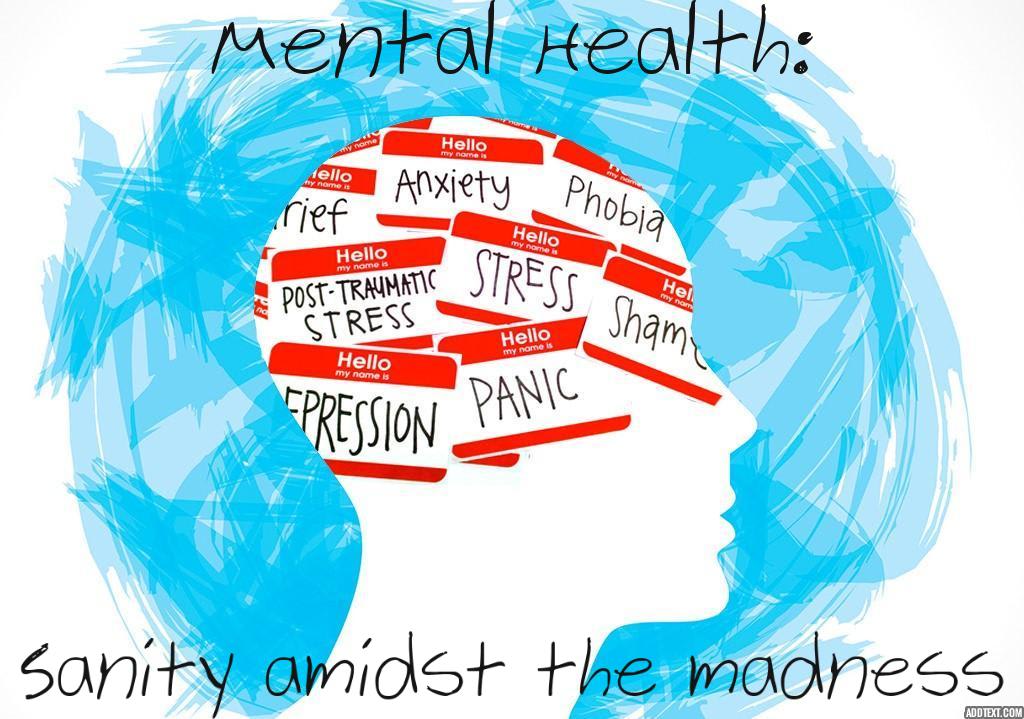
It is a fact universally acknowledged that mental health problems, especially for kids and young people, are ever increasing. An article in the Oxford Mail entitled Primary school pupils to get help from trained mental health staff says:
…in October 2014, Oxford Health NHS Foundation Trust started a scheme which led to mental health professionals being placed in secondary schools. They are now based in 26 of the county's secondary schools and the primary scheme will follow a similar pattern.
The article says experts point out that:
…a combination of modern pressures on children and a decreasing taboo around mental illness meant more pupils were being identified as suffering and from a younger age.
While I agree a taboo on the subject does nobody any favours, my question is why are so many kids mentally ill and dealing with anxiety issues in the first place? What is probably the biggest of these ‘modern pressures’? Social media, with kids feeling under pressure to conform, look and live their life a certain way. Kids concerned about ‘likes’ and receptivity to their posts, photos and videos online. Message to kids: Don’t let social media define you. Define yourself. Focus on who you are, not what some insecure person who’s seemingly more popular than you, looks ‘better’ than you or is living a ‘better’ life than you (while being so insecure, they have to show and tell everyone about it before they’re content) is doing. The irony is that by being yourself and not comparing yourself to others, you will actually be happier than those who appear to be happier, because they live every day with constant insecurity, not that they’re aware of it most of the time, but to feel the need to constantly display your life to others means you feel the need for validation from those others and are not content until you receive it, whereas people who are happy just being themselves don’t feel any such need. I am not saying that there are not advantages to social media. It can be great for keeping in touch with friends and family, and we need that now more than ever; planning events or meetings and it’s also a very effective way to get information out. It’s the addiction to it through technology and belief that what people display on social media is some kind of bastion of how to live your life that I challenge.
Social media causes mental health problems through peer pressure, and the pressure to self-censor what you say and what you express through social media, because your friends are on it - constantly. You can block certain people from seeing certain posts, but what this and social media in general does, especially with kids nowadays who grow up in this environment, is it teaches them to identify with their online persona, believing that the online persona matters more than their real persona.
When you grow up in an environment, you don’t tend to question it; it’s just ‘how it is’ and so self-censorship in this world becomes even more prevalent that it already was even before social media. Of course, people have always had their true self and the self they present to the world, but with social media, in the way I’ve described, it’s taken on to another level.
The sales pitch for social media is that it brings people together, when, in truth, it is actually anti-social media, because it drives people apart in many ways. There is also the potential for conflict and arguments, not least through Twitter.
Another aspect to the overuse of social media and technology is the reduction of attention span due to technology addiction and filling the time kids and young people are glued to technology (every waking second of their free time for most of them) with vacuous, soundbite length content. The brain is a muscle; if you don’t exercise it in a certain way, it just goes to sleep; not only that, but because of what scientists call 'brain plasticity', the brain will find it ever more difficult to process substance and significant length of content. When you take an overview, social media is churning out a generation of shallow, self-obsessed, unfulfilled, anxious, and increasingly, depressed and suicial kids and young people, because that’s what the brain is constantly absorbing throughout their formative years. Social media algorithms are designed to limit exposure beyond content and subjects a user has previously shown an interest in. As a meme I saw once said, how do you grow if all you see is what you already know? Kids should not be dealing with anxiety, addiction, depression nor even considering suicide. They should be enjoying being young and having the time of their life before the pressure starts of adulthood. If kids and young people are facing these pressures now, how are they going to deal with adulthood?...
Technology is re-wiring kids’ brains. Transgender promotion is creating a sense of unease in kids when they shouldn’t even be thinking about gender or sexuality as a kid. Kids are being oversexualised, not least through entertainment. Exam pressure (needless exam pressure, I would say) is a massive part of stress, depression and again, in some cases, suicide for kids; the idea that passing or failing an exam is a measure of your chance of success and happiness in life is incredibly flawed. We all have the ability to make a life for ourselves. Is it any wonder, from this perspective, that so many kids end up needing mental health support?
Addiction to social media is now being treated as an addiction in the same vein as drink or drugs. Scientists used to believe the brain at birth was the brain for life. Now, they know different, and have realised that experience can change the brain’s neural pathways and rewire the brain. This can be positive or negative, depending on the experience. Susan Greenfield, a neuroscientist, entrepreneur, British politician and professor of synaptic pharmacology at Lincoln college, Oxford, and director of the Royal Institution, talks in her book Mind Change about how technology is changing the brain. Greenfield says that social networking sites risk "infantilising the mid-21st century mind, leaving it characterised by short attention spans, sensationalism, inability to empathise and a shaky sense of identity". Greenfield says:
If the young brain is exposed from the outset to a world of fast action and reaction, of instant new screen images flashing up with the press of a key, such rapid interchange might accustom the brain to operate over such timescales. Perhaps when in the real world such responses are not immediately forthcoming, we will see such behaviours and call them attention-deficit disorder.
It might be helpful to investigate whether the near total submersion of our culture in screen technologies over the last decade might in some way be linked to the threefold increase over this period in prescriptions for methylphenidate, the drug prescribed for attention-deficit hyperactivity disorder.
Now, this is an important point, because how many kids nowadays are referred to child psychologists because of behaviour? When kids are bored in school and start expressing symptoms ascribed to ‘attention-deficit disorder’, they are in many cases referred to a child psychologist or psychiatrist, who is supposed to be able to help the child without resorting to drugs by talking it through or cognitive therapy, for example. The child will go to the child psychologist, and they’ll get prescribed drugs like Ritalin, among others, which can actually make the child far worse, not just attention-wise but psychologically. Greenfield provides an answer as to why young people are so addicted to their technological screens when she says:
The sheer compulsion of reliable and almost immediate reward is being linked to similar chemical systems in the brain that may also play a part in drug addiction. So we should not underestimate the 'pleasure' of interacting with a screen when we puzzle over why it seems so appealing to young people.
The brain is a muscle, and the parts of the brain which are used most often become the most prominent in affecting our behaviour, perceptions and responses. Greenfield says in Mind Change:
Electronic devices have “an impact on the micro-cellular structure and complex bio-chemistry of our brains, and that in turn affects our behaviour, our personality and our characteristics. In short, the modern world could well be altering our human identity.
Greenfield continues:
Already, it's pretty clear that the screen-based, two-dimensional world that so many teenagers - and a growing number of adults - choose to inhabit is producing changes in behaviour. Attention spans are shorter, personal communication skills are reduced and there's a marked reduction in the ability to think abstractly.
We’ve seen since the inception of Facebook in 2004, the focus on self and the expression of ego; the presentation of self to the world through social media. The ability to present a manufactured self to the world with statuses, photos and filters, which make someone’s life seem much better than it is, and by viewing that, people feel they need to live up to this idealised image of someone else’s life that really isn’t that other person’s life at all. Everybody’s living somebody’s life while nobody’s living their own. Peer pressure has massively increased through social media, because of its 24/7 nature, and even when you’re not online, someone else is, and they might be a friend; they might be someone viewing your video; they might be someone on Twitter, and as well as fuelling addiction, this fuels the need to impress others, so you don’t get left behind, and that leads to ridiculous ‘challenges’ like setting yourself on fire and TidePods, these laundry detergent pouches which kids were swallowing as part of another craze.
Social media has also cultivated since its inception a hive-mind, group-think mentality. Social media has also generated a sensationalist, substance-lacking mentality, where anything even mildly interesting gets blown out of proportion to be labelled ‘amazing’ or ‘incredible’, often on YouTube to get clicks on the video. Since YouTube introduced monetisation, people have been trying to earn money from the number of views on their videos, and in order to achieve this, you need to entice people in, and that’s where the sensationalism and lack of substance comes from. People don’t want substance nowadays because of this sensationalism, fuelled by the rush to get more clicks and popularity, and the more people see that, the more that becomes the norm, so anyone producing content with substance finds that, in many cases, because the substance is not hyped up like the sensationalised content, and actually requires an attention span, that their videos get a fraction of the views of the hyped-up content. We’re seeing the deletion of substance and detail, which are the same thing. How many of those young people will never read a book of any significant length because they just can’t handle the detail, or they don’t have the attention span? This is changing the brains of kids and young people because of brain plasticity. This is one reason why kids are stuck on phones nowadays rather than reading books. You see people, especially kids and young people, when they’re on their phone; they put it down, and then a few seconds later, they pick it back up again, because it’s an addiction. People think they’re making their own decisions but it’s the addiction driving the action.
When you look at what Greenfield said and you look at brain plasticity, then the question must be asked surely – what role does technology play in developing these alleged ‘symptoms’ of ‘attention-deficit disorder’? Greenfield's view on the effect of technology on the brain:
It is hard to see how living this way on a daily basis will not result in brains, or rather minds, different from those of previous generations.
This is because previous generations didn’t have the digital stimulus now changing the brains of kids and young people. When you pull all this together, you’re looking at almost manufacturing a new breed of young people ‘different from previous generations’, in terms of their perception and reactions.
I would suggest that we are only seeing the beginning of the effect on kids and young people of technology addiction and social media use and we’ve seen nothing yet unless we address it fast.
Children and young people are being prescribed drugs on an ever-increasing scale to deal with 'mental' problems, which, in many cases, are emotional problems. Some of what is termed a 'mental health problem' or a 'disorder' was called in the past - growing up. Conditions like ADHD are in many cases just examples of boredom. Certain drugs prescribed for kids and young people, like Ritalin, can have serious consequences for perception, personality and therefore behaviour. I am aware certain psychologists/psychiatrists question and challenge the extent of mental health diagnoses and the criteria for diagnosis, but what is without doubt is the mental and emotional toll modern society, especially through technology, is having on especially children and young people.
We need a comprehensive review not of mental health support in schools, because mental health support, especially on the scale the Daily Mail article talks about, should not be in schools, but of kids’ and young people’s lives. Encouraging them to open up and realise it’s okay to talk about their problems is useless unless we address the causes of the problems. The answer to the situation is not drugs and it’s not counselling in many cases, but addressing and removing these causes and when the cause of a problem is addressed, the problem is resolved because nothing’s causing it anymore.
This article contains extracts from my book Paper View: In Print, in which I address various problems facing kids and young people today, including mental health. More information here:
https://paperview.uk/store/paper-view-in-print-physical-book
About the Creator
Keep reading
More stories from writers in Psyche and other communities.
Christmas is Not Always “Beer and Skittles”
If you find the holiday season challenging, you’re not alone. I have never been a big fan of Christmas. I have always found it a bit pretentious. It is a time for kids, really. I have not had kids in my life, so the "children's influence" around this time of year doesn’t occur.
By Calvin London24 days ago in Psyche


Comments
There are no comments for this story
Be the first to respond and start the conversation.