
Mental Exhaustion vs Depression: How to Tell Them Apart
Learn the key differences between mental exhaustion and clinical depression, their symptoms, causes, and how to identify which one you're experiencing

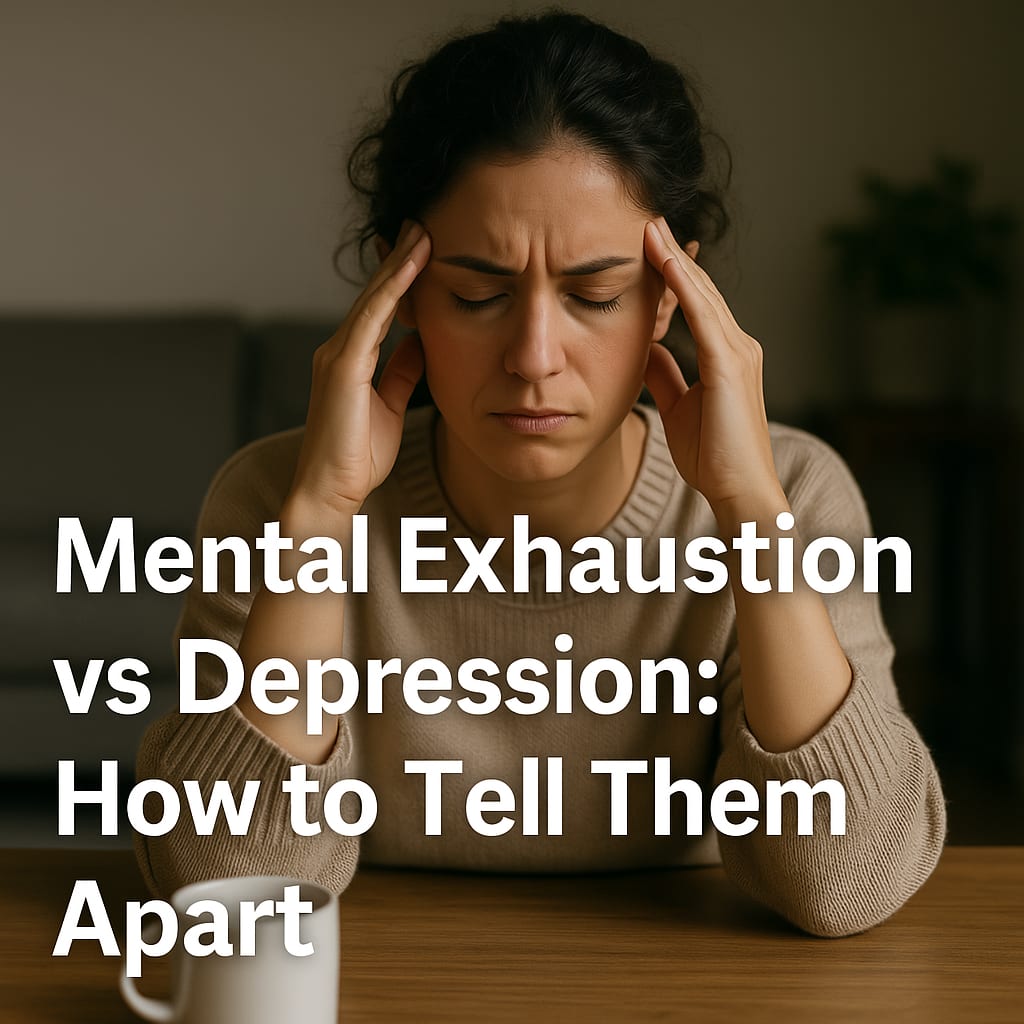
In today’s fast-paced world, it’s not uncommon to feel tired, stressed, or overwhelmed. But when that tiredness persists, affects your mood, and starts to interfere with your daily life, it might be more than just a need for rest.
It could be mental exhaustion—or it might be depression. Although they can look similar on the surface, these two conditions are fundamentally different and require different approaches for treatment and management.
Understanding the difference between mental exhaustion and depression is crucial for getting the right support and care. In this guide, we’ll explore the key differences, symptoms, causes, and when to seek professional help.
What Is Mental Exhaustion?
Mental exhaustion, also known as emotional exhaustion or burnout, is a state of mental fatigue caused by prolonged periods of stress or overwork. It’s commonly associated with high-pressure jobs, caregiving, chronic stress, or balancing multiple responsibilities without adequate rest.
Common Symptoms of Mental Exhaustion:
- Constant fatigue despite rest
- Difficulty concentrating or remembering things
- Feeling emotionally drained or numb
- Irritability or short temper
- Lack of motivation or interest in tasks
- Trouble sleeping or disrupted sleep patterns
- Feeling overwhelmed or helpless
Causes of Mental Exhaustion:
- Chronic work stress or job dissatisfaction
- Caregiver fatigue
- Long-term financial stress
- Academic pressure
- Personal conflicts or relationship strain
- Lack of work-life balance
Mental exhaustion typically builds up over time and is often situational. If the source of the stress is removed and rest is prioritized, symptoms usually improve.
What Is Depression?
Depression is a clinical mental health disorder characterized by persistent feelings of sadness, hopelessness, and a loss of interest in previously enjoyed activities. Unlike mental exhaustion, depression is not necessarily tied to a specific situation and doesn’t always improve with rest.
Common Symptoms of Depression:
- Persistent low mood or sadness
- Loss of interest in activities
- Feelings of worthlessness or guilt
- Changes in appetite or weight
- Insomnia or hypersomnia
- Fatigue without clear cause
- Difficulty thinking or making decisions
- Thoughts of death or suicide
Causes of Depression:
- Genetic predisposition or family history
- Chemical imbalances in the brain (such as serotonin or dopamine)
- Trauma or abuse
- Major life changes (e.g., divorce, loss of a loved one)
- Chronic medical conditions
- Substance abuse
Depression is a medical condition that typically requires professional treatment, including therapy, medication, or a combination of both.
Key Differences Between Mental Exhaustion and Depression
While the symptoms may overlap, understanding the distinctions can help determine the best path forward. Here’s a breakdown of the key differences:
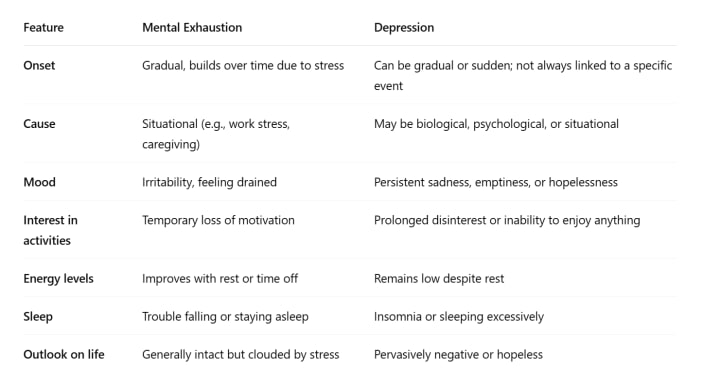
Can Mental Exhaustion Lead to Depression?
Yes, if left untreated, mental exhaustion can increase the risk of developing depression. Prolonged exposure to stress without relief can affect brain chemistry, sleep patterns, and self-esteem—creating a perfect storm for depression to develop.
That’s why early recognition and intervention are so important. Taking action to address burnout can help prevent more serious mental health conditions from taking hold.
When to Seek Help
It’s normal to feel tired or stressed occasionally, but if you notice the following signs, it may be time to consult a mental health professional:
- Persistent sadness or hopelessness
- Inability to function at work or in daily life
- Thoughts of self-harm or suicide
- Fatigue that doesn’t improve with rest
- Loss of interest in everything, not just specific tasks
- Emotional numbness that lasts for weeks
Early intervention can significantly improve outcomes, whether you’re experiencing burnout, depression, or both. Therapists, counselors, and medical professionals can help determine the root cause and recommend personalized treatment options.
How to Recover From Mental Exhaustion
If you’ve identified that you’re suffering from mental exhaustion, here are some strategies that may help:
1. Prioritize Rest and Recovery
Take time off work, schedule downtime, and get adequate sleep. Rest is not a luxury—it’s a necessity.
2. Set Boundaries
Learn to say no and set limits around work, relationships, and responsibilities.
3. Practice Stress Management
Incorporate mindfulness, meditation, or breathing exercises into your daily routine.
4. Seek Social Support
Talk to a trusted friend, family member, or support group. Connection helps reduce emotional burden.
5. Engage in Enjoyable Activities
Even if motivation is low, try doing things you normally enjoy. Small pleasures can recharge your emotional batteries.
Treatment for Depression
Treatment for depression is more structured and often requires medical or psychological support. Common treatments include:
- Cognitive Behavioral Therapy (CBT)
- Medication (such as antidepressants)
- Lifestyle changes, including exercise and healthy eating
- Support groups or talk therapy
- Mindfulness and relaxation techniques
Treatment plans should be tailored by a mental health professional based on individual needs and severity.
Distinguishing between mental exhaustion and depression can be challenging, especially when symptoms overlap. But understanding the root causes and symptom patterns can empower you to take the right steps toward recovery.
If you’re unsure, don’t wait for things to get worse—talk to a professional. Whether you’re burned out, depressed, or somewhere in between, there is help and healing available.
Taking your mental health seriously is the first step toward living a balanced, fulfilling life.
Frequently Asked Questions (FAQ)
Can you be mentally exhausted and depressed at the same time?
Yes. Mental exhaustion can coexist with depression, especially if stress has been ongoing. It’s important to get evaluated to address both conditions appropriately.
How long does mental exhaustion last?
With proper rest and stress management, mental exhaustion can improve within a few days to a few weeks. If it persists, it may be a sign of depression or another issue.
Is burnout the same as depression?
No. Burnout is typically job- or stress-related and improves with rest or change in circumstances. Depression is a medical condition that affects your thoughts, feelings, and physical health, often requiring clinical treatment.
About the Creator
Richard Bailey
I am currently working on expanding my writing topics and exploring different areas and topics of writing. I have a personal history with a very severe form of treatment-resistant major depressive disorder.
Keep reading
More stories from Richard Bailey and writers in Psyche and other communities.
ADHD and Emotional Dysregulation: What No One Tells You
When most people think about Attention Deficit Hyperactivity Disorder (ADHD), they often associate it with distractibility, hyperactivity, and impulsiveness. However, one of the most challenging and least talked about aspects of ADHD is emotional dysregulation.
By Richard Bailey11 months ago in Psyche
Top tipple tricks
Been thinking a lot about drinking, lately. Not least because of a recent episode of over-indulgence and the inevitable after effects. Some readers may recall the earlier articles I wrote about beating the booze. Here I set out an experiment in techniques for cutting down on my alcohol intake. The experiment was successful, the techniques worked, and I have armed myself with an arsenal of weapons in the war against the demon drink. I have yet to fire the first round however. It's all a question of timing (perhaps procrastination).
By Raymond G. Taylor4 days ago in Psyche




Comments
There are no comments for this story
Be the first to respond and start the conversation.