
The white cane was pointing toward a small Moleskine journal in the middle of the sidewalk, as if they’d been placed there, combined. Felix looked around for their owner. Cars moved up and down the street. He saw a woman scan the traffic and hail her Uber, but then nothing.
The journal was filled with chaotically printed lists in different, but universally bad, hands. Some he couldn’t read, the letters on top of one another, some in different languages. Some were clear--Locker room Darby Pool or Door Outside Hall of Mirrors--but others cryptic: Mitten radiator?
He opened the first page, no name, an address, and a laughable reward: $20,000. He saw in a flash his dead father reading the newspaper, Felix asking for a ride somewhere. That’ll cost you $5,000 dollars. He’d linger on the thousand, not looking up until he got up, patting his trousers for the keys that were invariably not there.
Felix doubted the journal’s value, but a white cane felt like car keys. His father again—Never turn in anyone’s keys. They’ll be back for them in five minutes. But five minutes became fifteen. Just because something is vital, doesn’t mean it can be found.
He typed the address into his phone, a residential street just across the main intersection. He pocketed the journal. Just pick up the cane and go, he thought, but he felt awkward. He’d never noticed how long they were, extended. He bent to pick up the handle and the world—
It—he—changed. He’d blacked out, must have as he bent down. Kreislauf Problem, he heard Sophie, his college girlfriend, say. Germans attributed every bodily ailment to circulation, like Americans did to hunger. But as he stood back up, he realized he could see, sunshine, red like through closed eyes, but only peripherally. Interrupted flashes of it came from people passing through a door repeatedly opening and closing. He reached just behind, a wall.
He rubbed his eyes but their input did not change. He held the cane close, felt the plastic loop in his hand, breathed, listened to his heart in his ears, to a request in a language he didn’t understand. Outside the sound of a bus, exhaust mixed with dust. Then Buongiorno. Duo café, per favore. The clink of a spoon on a cup. Italy. Coffee bar near their Roman hostel? The hostile Sophie had called it. They’d slept with their money belts wrapped around their waists, not trusting the safes. They stopped here for better espresso after the hostile’s watery cappuccino. He was almost sure of it.
He was himself, yes, older and younger, and mostly blind. Time travel? More likely, head injury. Where? Roman café or lying on the sidewalk? And how to wake up? He wanted to shout for Sophie, but stopped short. It seemed unwise to call attention to himself before why and how were answered.
Then he heard her thanking the proprietor, felt her pulling his arm. And they were on the street. He could hear her fumbling with a bus schedule or a map maybe. There were maps then. She didn’t seem to notice anything different about him. He asked for a pen, which after a moment, she pressed impatiently into his hand. He opened to a page and wrote in cursive Romancafe.
And it was gone. Light flooded in. The white cane pointing again at the small, black journal.
Okay, he breathed, a memory. Had to be as she hadn’t noticed he was blind. He could walk normally out to the bus stop. That’s what she was buying at the café, bus tickets. They were on the way, was that the day they went to Hadrian’s Villa? An emperor’s hot compound of ravaged buildings outside the city. He’d learned there that the marble had been plundered for the likes of the Pantheon, worse, the statuary hacked by marauders.
Even as a young man, he’d thought statues’ lost limbs or slashed noses were the losses of time. The sacking of Rome must have been covered in western civ, but he’d somehow forgotten it until he stood in courtyards full of disabled statuary. The deliberate destruction of the beautiful had shocked him.
But why think of that now when this surreal reality presented itself. Reality? He felt in his pocket for the pen Sophie had given him—ballpoint, almost dry, Herbage Lucia, a hotel they’d splurged on in the Dolomites. Proof. Not only memory, transport.
Ground in the ordinary—call his boss, tell her that the lunch appointment was taking longer than expected. But it wasn’t. His phone showed only a few minutes past when he first saw the cane. Better, call his wife. But what could he tell her? Liz, I’m going mad, but I want to see it through! He realized then that he did. His daughters would think it was cool at least.
Besides, returning the items seemed impossible, as taking them up together caused the transport. Maybe one at a time? He flipped to the front page, but it was their family address now, written in his own, untroubled print. The reward the same, $20,000. He imagined the exchange: Oh, my notebook, thank you! Here are the keys to both our cars. The van is still encrusted with Cheerios and remnants of baby vomit, but it’s got a lot of life yet. So, spinning the wheel again. Go. His watched his hand reach for the cane as though it belonged to someone else.
And there, where? He tested his toes, in flip flops on gravel? Hands holding two thin metal wires, one light, one very heavy. He braced the heavy on against his leg and heard what sounded like water sloshing, a bucket? He set it down carefully close to his foot, and stood still, listened. Footfalls long behind him, wood doors on hinges slammed closer. The air was humid. He tested the wire in the other hand, felt it swing slightly. He set it down and ran his fingers on it, hot glass, peripheral brightness. Then he dipped his fingers into the bucket. Yes, water, no smell. Bucket and lantern? Wherever there is flame, water. Boy Scouts! Night duties. Latrine. Leaving a landmark of light.
Rustling, breeze with clapping, chanting carried on it, long. Footfalls closer, light moving up and over him.
“Felix?” His father’s voice. “What are you standing here for? Don’t you want to get to circle?”
“There was a whippoorwill,” he said, realizing it was true.
His father stopped to listen too until it called again. Then he felt the bucket graze his calf as his father picked it up. Felix followed. He could walk in this young body as it walked then. His father took the lantern from him too. The light glowed upwards.
“Do you need the latrine? Here, take my flashlight. I’ve got to call for more canoes tomorrow. They didn’t send enough doubles.”
And he was gone, gravel crunching up the road toward main camp.
The grief was swift—Felix fell to the ground with it. Could he stay, hear him again if he wanted? Because that’s all he did want now, the ordinary, the forgotten. Better than the saved voicemails he never listened to. But to have found him even for this moment was a mirUH-cle but a mirAH-ge. He lay on the path comforting himself with a silly game, nonsensical English phonology! Begun with Sophie, developed with Liz, perpetuated by daughter Lilia. He groped for more incongruent sounds, mirAHge, but teenAge, living a teenage mirage.
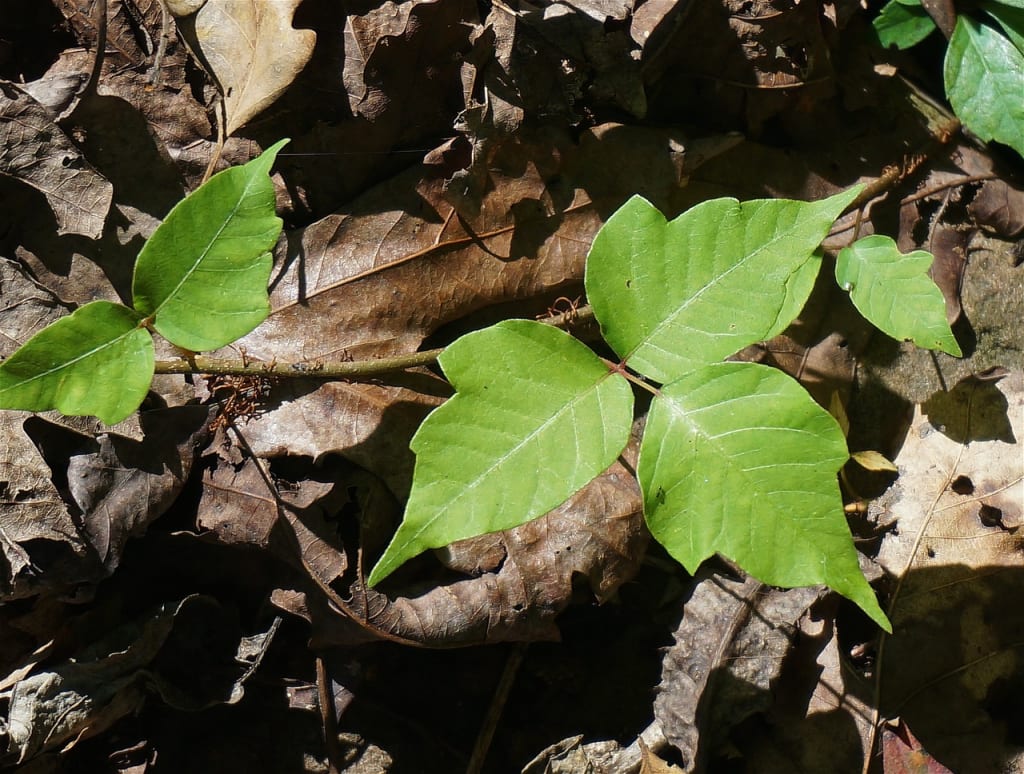
But not if--The cane! He crawled back in the direction he came, feeling around the path and found it, just under the brush where leaves of three, let them be grew. All the thoughts and moments he’d had since learning that, they were here behind his sightless eyes. To be young again, but to know all you do is not to be young. He felt in his pocket for the journal, for Sophie’s pen, and he pressed into a page, hoping that ink flowed too: Boy Scout Jamboree.
Swiftly back, the light burned his eyes though it was a grey day. A stray leaf clung to his pant leg. His father’s flashlight in his hand. Bereft. Bereaved. Relieved?
So this was the ride all the kids were not talking about? Again, again! The first decision off the rollercoaster, shaky legs make their way to the back of the line. But three times in a row, the jinx of the third wish? Same, same, different--the unexpected, the punch line. He decided to deliberate this time at least as long as the line for The Demon Drop.
He examined the pages. How many rides people took was difficult to gauge because few had written on the same page. How had those who did—ah, the bookmark, even a book filled with Braille could use one. How calm they must have been. Or practiced. Had someone gone repeatedly, only to end up like mental hospital convicts after one too many hits of acid? To not go again is not to lose maybe. A gift to walk away from the slots with enough money for dinner. The road less traveled is indifferently different. Perhaps it’s worse.
Going forward, he could count his blessings: Liz, her wry humor, her kindness. The girls, his girls. But they were in his past too. There were many moments he would like to relive, reclaim to improve. To embrace your fate by living it again, a ghost of something read in the time of Sophie.
But surely the gift was just to remember, to experience it again as now from different senses. He could take up meditation again! He was forever taking up meditation again. Making himself breathe while hearing the repetitive but momentary sounds of the house awakening in the mornings.
Shh. Listen now to the ordinary sounds of the street.
Forty seconds? Generous count. But that is the point, right? To listen to the whippoorwill. To feel the love and its loss. Yet he still bent to pick up the cane and journal before he could think a moment more, as if a magnet drew his hands.
He arrived at their own door, no journal, no cane, no pen. Worst, no flashlight, but his messenger bag full of disordered bills. After tumbling them out on the dining room table, he smoothed, ordered, and counted $20,000. An hour later Liz brought the girls home from school to find him seated there, staring. Alarming, of course, had dad robbed a bank? No no, bonus from work, to which Liz had snorted and rolled her eyes.
“From your father?” she mumbled, assuming something probably probate related. But she didn’t ask anything more until the girls were in bed as he was clearly destroyed.
Over the weeks he could speak of it, each time more. But even when he’d convinced her no one would come for the money, he couldn’t seem to spend it, which was fine because she didn’t want to. Sacrilegious to turn magic money into a new kitchen island.
But after a few months, he ordered a stone bust from an online antiquarian, A Youth, it said, Roman, second century. In private collection until 1990, $3,000. A year later, a frieze fragment of a war horse’s head. Then a bust of a man with a beard. Finally, a woman with her curly hair tucked away. He kept them on the high bookshelves. Nights when he couldn’t sleep, he’d search online for auctions, hoping to bid exactly the sum he had left. But sometimes he’d take the pieces down, close his eyes and run his fingers over the brows, the depressed pupils. He’d feel their worn but not lost features, their jagged undersides, trying to forget what they looked like in the light.
Keep reading
More stories from and writers in Psyche and other communities.
Old, New, Borrowed, Blue
My husband uses plastic sock clips to keep his pairs matched in the wash. From my years of studying him, I have learned that using the sock clips is more important than owning them. The organized are not dependent upon a new container or magnet board system, it’s their own rule-based behavior that keeps them orderly.
By 5 years ago in Motivation
Top tipple tricks
Been thinking a lot about drinking, lately. Not least because of a recent episode of over-indulgence and the inevitable after effects. Some readers may recall the earlier articles I wrote about beating the booze. Here I set out an experiment in techniques for cutting down on my alcohol intake. The experiment was successful, the techniques worked, and I have armed myself with an arsenal of weapons in the war against the demon drink. I have yet to fire the first round however. It's all a question of timing (perhaps procrastination).
By Raymond G. Taylor5 days ago in Psyche
How to Get Cocaine Out of Your System Safely and Effectively
Cocaine is a powerful stimulant drug that can have serious effects on both the body and mind. While some individuals may initially use cocaine for its short-term feelings of energy or euphoria, repeated use can quickly lead to dependence and addiction. Over time, cocaine can impact physical health, emotional stability, and overall well-being.
By Jordan Blakea day ago in Psyche



Comments
There are no comments for this story
Be the first to respond and start the conversation.