Latest Stories
Most recently published stories in Psyche.
There's a Mark on the Kitchen Cupboard
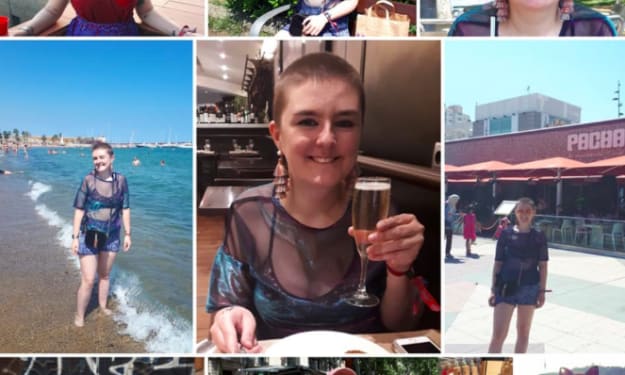
There's a mark on the kitchen cupboard. It's small and brown and probably could be scrubbed off or painted over, but no one has gotten round to it yet. It's not the first thing that people notice when they come to the house– in fact, most people never notice it at all. They're more likely to notice the amount of empty wine bottles and pizza boxes, or the fact we really need to give the place a Hoover once in a while.
By Lauren Stones8 years ago in Psyche
Prologue
The ache in my chest continued to grow as I tried to hold back my tears. Words spoken lead to the release of them; warm as they slid down my cool cheek. I zipped up my hoodie, grabbed my keys and slid my phone into the pocket of my black jeans as I walked out the door. My steps on the cement stairs barely audible to my roaring ears. All I wanted was out and I had achieved it. With one last glance behind me at the closed apartment door, I did the one thing I had been dying to do since I found out things would never be the same. I ran.
By 8 years ago in Psyche
The Voices in My Head
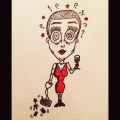
Sometimes I have some pretty interesting conversations with the voices in my head. No, not audible voices. I’m not that crazy yet. Just thought voices, the kind that everybody has. You know, the little bully in your head going, That was dumb. You shouldn’t have done that. You’re not worth anything. Or the mother always trying to comfort you, saying, “It’s not that big of a deal. At least you tried. It’ll be better next time." Or the ridiculously horny 12 year old girl who won’t shut up about the guy sitting next to you in church when you’re trying to think about Jesus, dammit. Whatever it is for you, we all have those parts of ourselves that don’t quite feel like US. A visitor from the subconscious peeping up to say hello, or maybe a volcano that’s been buried for too long and is ready to burst out and wreak havoc on the life you’ve so painstakingly been building. My therapist taught me about a technique called externalization—you give those voices a name, visualize an appearance for them, and suddenly you see that you can talk back to them, that they don’t have to control your life. I’ve been working on it but it’s been a rough ride. Some of the voices have gotten louder. I’ll be reliving a painful memory, and the bully will come out, shooting his poison darts: No one will ever love you. You’ll never be good enough. You’re broken. It’s as if the emotions roiling around in my heart have decided to package themselves up neatly into words to send to my brain, in simple language so that it can understand. In some ways it’s a relief, hearing those thoughts in actual words, instead of struggling with a vague feeling that something’s not quite right. I know what I’m feeling now, and I know what I’ve been believing. Putting the thoughts into words relieves some of the pain.
By Maria Annie Mo8 years ago in Psyche
"That's Not You"
As I grew up, my mother liked to say that I was a fun-loving child. She would say that I loved people and I wanted to make everyone smile. As I grew up, that flame dulled and the child that used to bare a smile everywhere she went soon turned into a girl that did not want to go outside out of fear of what everyone else was thinking about her.
By Ashleigh Smith8 years ago in Psyche
An Open Letter to My Depression
Dear Depression, I remember the day I met you—I remember how you felt like my friend. You told me, “This is fine, this is okay, lay down your sleepy head—the world does not matter. You are safe. Just stay with me.” I did stay with you, I stayed with you for a long time, you were my friend. At first, I didn’t mind you. I didn’t mind you because I didn’t find there was anything wrong with sleeping fourteen hours a day. I didn’t think it was a problem that I wasn’t eating—after all, I was kind of fat anyways. That’s what you would tell me. It was okay that I didn’t talk to my family because we weren’t close anyways. That’s what you said. I was okay with your presence because I didn’t know you were there.
By Jordan Benton8 years ago in Psyche
Under the Skin
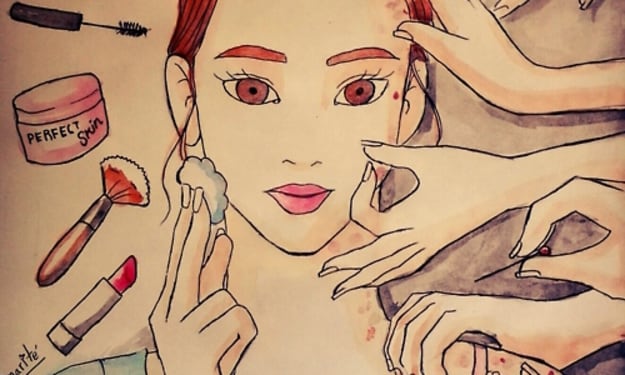
The people in the world we live in today are so quick to gloss over other people's problems when they themselves are not directly affected. We live day to day trying to better ourselves and focus on a single task at a time. Whether you are on your feet, sitting at a desk, or at home taking care of your children, all of us have everyday responsibilities that become more like a routine than a chore. But what if that wasn't always the case?
By Artemis Herondale8 years ago in Psyche
Suicide Is Not Selfish
Life with mental health, like any other illness, comes with its own unique set of struggles one must learn to overcome. Yet, for many, the biggest struggle it seems is the way in which people treat, speak to, and see those who live every day with the diseases. The dialogue that surrounds mental health can be quite discouraging for those who have the diseases, which makes it incredibly difficult for them to reach out, get help, and get support. One of the worst infractions I notice is when the topic of mental health comes up, we use a vastly different dialogue for it versus when someone has a physical illness. When someone has a physical illness, they are met with support, with empathy, with understanding, with so many wonderful things. Yet, when someone has a mental illness they are met with ire, with things like “Just be positive.” “So and so has it worse than you.” “You should try X, Y, or Z.” “Oh so and so has it, and they treated it like this.” “Why can’t you just be happy?” Honestly, I could go on for hours with the asinine things that have been said to myself as well as others like me, and while most mean well, they do not understand how their words, their actions, and their suggestions make those with the diseases feel. Many treat us like we are pariahs, like we are something to be feared, like we are broken, like we are something that must be fixed. Especially with all the mass shootings going on in the US right now, the first thing that most people talk about is how the shooter must have or did have some form of mental illness. Yet, the conversation we should be having is how we can better assist those with poor mental health rather than blaming the diseases further, rather than creating more of a divide between those who live with poor mental health and those who don’t, rather than villainizing the diseases and those of us who live with it, and rather than further perpetuating the fears and stigmas surrounding it.
By Courtney Luke8 years ago in Psyche
Pills (Part 1)
Adam crossed the street to walk in the sun so he could avoid the bitter afternoon chill. He bundled into his jacket and reluctantly picked up the pace, eager to escape the cold but dreading the destination. He was still wrestling with himself about whether or not it was worth turning around and walking all the way home, but Lana wanted him to attend the meetings and given that she was the only thing standing between him and sleeping on the sidewalk, there was a certain obligation to make the effort. Still, he wasn't a fan of the meetings. They made him sad. It seemed ironic considering why he was there. He had gone once a week for the last five weeks. Spent eight weeks sober, and ten weeks on Lana's couch. And while he thought about the pills daily, he wouldn't give his mother the satisfaction. Or give Lana the heartache.
By Cameron Dominguez8 years ago in Psyche