
It's Time We Stop Trivialising PTSD
Road to Recovery: Let's Help Each Other Heal

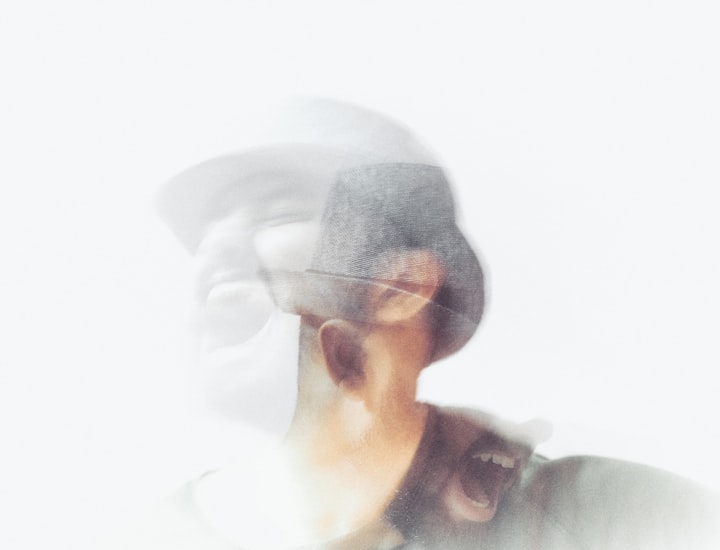
I have PTSD, or, Post Traumatic Stress Disorder. It feels strange to admit that when I’ve only just been diagnosed myself. Even stranger to tell people I’ve never had the pleasure of meeting. It’s a condition that not a lot of people fully understand (myself included) and one that many others have knee-jerk reactions to.
Before I go any further with this article, I want to assure readers (particularly those who have been diagnosed themselves) that I won’t be going into any detail about the events which have caused and/or contributed to my PTSD. This is not only as I am aware of how difficult these can be for others to read but also for the sake of my own wellbeing.
I feel as if I have lived multiple lives. I have had a variety of different experiences, resided in multiple countries due to my mixed heritage, and have consequently found myself being pushed to adhere to more than one kind of ideological stance within the societies I have been integrated within.
One of these societies started to unravel when I was fifteen years of age; protests broke out, riots ensued, and it would turn out to be the beginning of a revolution – later becoming the first country to start off what is now known as the Arab Spring. You’ll be surprised to know that these events are not one of the causes of my PTSD. Or if they are, they’re very low down on the ladder. One of the reasons for this is, in my first year of University I devised a performance about what had happened called The Hand of Fatima. The process was very cathartic for me, with me only realising how messed up the whole experience was as I progressed further with the creation of the work. I think that doing this really helped me to come to terms with what had happened instead of continuously pushing the thoughts away in order to survive.

There have been, however, quite a few repeated traumatic incidences that have happened to me at other points in my life. For years I had just believed I had Social Anxiety. Although it is common for different kinds of Anxiety and/or Depression to go hand in hand with PTSD, it was still a diagnosis I never expected. I had originally signed up for Cognitive Behavioural Therapy (CBT). Fortunately for me, my therapist is also trained in Eye Movement Desensitisation and Reprocessing (EDMR) and realised quite quickly what might actually be going on with me. When I got the diagnosis, I wanted to cry from relief! Whilst this type of reaction might seem strange, it is not uncommon. All of the symptoms I had, the vivid flashbacks, the intrusive thoughts, the hypervigilance, the seemingly irrational triggers, and feeling emotionally as if past traumatic events were happening right then in the present, started to make sense to me.
To be more specific, I have been diagnosed with Complex-PTSD. The first traumatic incident happened at a relatively young age, and further incidences of the same nature continued to happen sporadically over the course of my life. Each time these incidences would occur, they would reinforce what could be described as a very self-destructive or derogatory belief system. I am still battling with myself over this belief system now and it took me twenty-four years on this planet before I even realised it was a problem! For context, I’m twenty-six this year. In order to carry on living without becoming overwhelmed with some of the events which were happening, I’d unknowingly turned to a form of Dissociation in order to cope. Although the research on Dissociation in all its forms is severely lacking, you may have come across a term called Derealization.

‘Derealization is a sense of feeling detached from your environment and the objects and people in it. The world may seem distorted and unreal, as if you're observing it through a veil. You may feel as if a glass wall is separating you from people you care about. This aspect of disassociation can also create distortions in vision and other senses.’ (Very Well Mind: Online)
Although this helped me to survive in the past, as you can probably imagine, it hasn’t been all that helpful to me in the present. It certainly hasn’t helped me to properly process those past events… Which is where the EDMR therapy comes in!
‘EMDR helps you process the negative images, emotions, beliefs and body sensations associated with traumatic memories that seem to be stuck. … EMDR is a way of kickstarting your natural healing and recovery process after your trauma. Your therapist is walking alongside you as you heal from the inside out.’ (Dr Justin Havens: Online)
The methods involved in this kind of therapy, as I understand it, largely involve the client having one foot in the past and the other in the present whilst stimulating either side of the brain in a similar manner to that which occurs during REM sleep. This exercise helps us to process memories and change the way we look at traumatic events. The trouble with people that have PTSD is that for one reason or another our brains have failed to properly process the event/s in question, often keeping us feeling stuck in that awful place, unable to move forwards.

I am still very much in the early part of my healing process and consequently do not yet feel as if I fully understand it all myself. This journey can, at times, be very confusing or difficult to navigate. One of the things that I didn’t expect to impact me as much as it has, would be the terminology surrounding PTSD and other mental disorders… Terminology originally meant to be helpful during a person’s healing process, such as Triggered, for example, seem to have been absorbed into Pop Culture, taking on a whole different meaning. I struggle to describe what I am learning about my PTSD in concise and helpful ways to others as a lot of the terminology now seems trivialised.
We hear it all the time:
“That’s just my OCD.”
“You’re giving me Anxiety with that hair-do!”
“Honestly, all this homework is giving me PTSD.”
“Are you triggered? LOL”
All languages evolve over time, which changes our understanding or perception of the terms in question. This is one of the most consistent things to happen over the course of our history and is something which cannot be stopped. In many ways, I think this process of evolution is beautiful. Knowing that our languages are ever-changing has made me able to roll with these particular punches.

In recent years, however, when the above terms really went viral, they were mostly being used to viciously mock others. From then on, they even began to be trivialised by those with no nefarious intentions, who simply didn’t understand the gravity behind the terms and used them as a way to elicit a laugh. This kind of reaction to the above terms can partially be traced back to a more casual use of trigger warnings, stemming from an inability to distinguish between things that are traumatic, and things that just make us feel discomfort.
‘The more casual use of trigger warnings usually comes from a good place, but it can sometimes have an unintentionally negative impact for people dealing with trauma.
For example, it’s led some folks to believe that people who need trigger warnings are overly sensitive, fragile, or incapable of coping with distress. People may also say they’re triggered without a true understanding of what being triggered involves.’ (Healthline: Online)
I don’t believe that people who are now utilising this newly evolved language are terrible, far from it! But seeing and hearing these terms used in the wrong way has made me more hesitant to discuss my symptoms or my progress with others. It has made this whole healing process seem that much more confusing.

I don’t know what the answer to this problem is. I don’t know whether we should try to reclaim such terms, educate others around us, or even make new ones; I’m still learning. I don’t even know if my writing this article will have any impact on the discourse surrounding it. What I do hope is that this article has some sort of an impact on those of us who feel alone. Healing from trauma can seem like a lonely path to follow. I feel very fortunate that when I have reached out to people in recent months, they have come back to me with love and support – even if I sometimes find myself stuck back in the past convincing myself that this support doesn’t really exist.
I want you to know, YOU, that you are not alone.
There isn’t something inherently wrong with you. You will get through this, or find better ways to live with it. The world is better with you in it. If you ever find yourself at a loss, convinced that you have nobody to turn to, you can always strike up a conversation with me. You can find me over on Twitter: @OptimismWrites.
I’m rooting for you!
---------------------------------------------------------------------------------------
Hi! My name is Gabrielle Benna and I'm a twenty-five-year-old writer, performer, and theatre-maker!

I started writing on Vocal when I noticed how overwhelmed we are with doom and gloom in the world. I don't think we should ignore what is wrong with our societies, but I do think that we should use that knowledge to learn and grow together. I believe that we can create a better world one step at a time and we can do that through education, compassion, and proactivity.
If you liked this article, feel free to give it a 'like'.
Tips are never obligatory but are always greatly appreciated.
Have an amazing day!
About the Creator
Outrageous Optimism
Writing on a variety of subjects that are positive, progressive and pass the time.
We're here for a good time AND a long time!
Official Twitter: @OptimismWrites
Author Twitter: @gabriellebenna
Keep reading
More stories from Outrageous Optimism and writers in Psyche and other communities.




Comments
There are no comments for this story
Be the first to respond and start the conversation.