
Interview with a Psychedelic Mushroom Entrepreneur
Part II
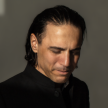

Author/Interviewer Preface: Charles Bogenberger is a 39-year-old entrepreneur with a BS degree in mechanical engineering, an MBA, and a former colleague. I met him a few years back when we worked for the same large company where he led one of their testing laboratories in Battle Creek, Michigan. At that lab Charles oversaw a staff of 20 plus employees, doing primarily microbiological analysis for pathogens and other microorganisms of concern in foods and the environment. Recently I reconnected with Charles and learned he had moved home to Denver and was now growing psychedelic mushrooms to support the nascent legalized psychedelic medicine movement there. I was intrigued, curious to learn how and why this successful engineer/businessman had chosen to grow what is/was an illegal substance and how he hoped to make money (legally) by doing so. I found his story compelling and fascinating and together we hit upon the idea of an interview to share this unusual story with a wider audience. That interview took place in February of 2024 and was first published in March and then again in November. Since that time, I have continued to occasionally check in on Charles’ progress with semi regular phone discussions. As we approached the 1-year mark of that first interview a follow up seemed in order.
DD: You mentioned something about the struggles you were having competing with the non-licensed (psychedelic medicine/mushroom) producers in Colorado. What is the difficulty you are facing?
CB: The challenge is that there's already demand for these services and there's already providers providing them an underground market. As Colorado tries to launch their legalized regulatory framework, I have no doubt there will be demand for people to consume psychedelic medicine, I'm just not sure how much there will be in the first couple of years. Using Oregon as an example, I think they had something like 3500 patients in the last year. It may seem like a lot, but for an entire industry, that's actually a very small number. They have 355 facilitators, about 10 patients per facilitator. That's a difficult way for folks to make a living. Oregon launched a year ahead of Colorado, so they've been doing it for over a year. We are getting very close to the end of the year, which is when they will start taking applications for people to join the legalized regulated space for psychedelic medicine. In that model you're going to have licensed facilitators that will provide therapy and counseling inside of a licensed treatment center. They will get their medicine from a licensed source. Those are different license categories. You have the facilitators, the treatment centers, the cultivators, and then also the manufacturers that will provide value added processing on top of cultivation. For example, making it into chocolates or gummies or teas or whatever. That's the framework that Colorado has already outlined. Those regulations have been published and approved and now they are getting ready to start accepting applications.
One of the challenges is going to be that there is an existing grey market for psychedelic medicine in Colorado, as there is all over the country. For people who are interested in continuing to provide psychedelic medicine therapy in the new year, there is a pretty high burden, about 150 hours of training programs in order to get a license as a facilitator. If they already have an existing successful business where they're taking care of patients outside of that framework, I'm not exactly clear what the incentive is for them to move into the regulated space.
DD: What's the cost for the training?
CB: Between $8,000 and $15,000 depending on the program.
DD: For the 150 hours, can you do that at your own pace or it's a set pace?
CB: It will probably take about four to six months to complete. The reason that it takes so long is that about 30 hours of it are supervised facilitations. Actually sitting down with somebody during a (psychedelic medicine) administration session and with a training director who's going to supervise your session. The amount of time that it takes to get enough patients for those supervised facilitations is probably going be significant for somebody who's looking to get into the business with no established client base. It’s not a small barrier. That being said, when you compare it to other licenses the barriers seem quite reasonable. If you were to get a traditional psychotherapy license you are expected to do something similar. However, it's a different animal because this is a new industry that doesn't have anybody providing facilitation in the license framework today versus an industry where there are existing providers.
DD: What are the prerequisites to get into the program to start the training?
CB: Anyone can get into the program and do the training although there is an advantage for people who are applying who have an indigenous background. They will get prioritization in terms of applying for the license.
DD: If you get the license in one state, can you practice in any other?
CB: I think you need to have a license in both states. I don't think you'll be able to go back and forth. There are reasons for that, for example, you need to have a relationship with one of the licensed healing centers to have a place to practice. It would be very difficult to maintain that relationship in different states.
DD: The New York Marijuana legalization situation I thought was an interesting analogy. Can you describe that?
CB: This is something that was happening in New York State, but specifically New York City. As they were attempting to push for legalization, there's obviously a huge social justice motivation. Moving away from law enforcement, and from putting people in jail for possession and distribution of cannabis was a huge priority. But as you do that, you remove some of the motivations that people have for a legalized framework. Before the legalization effort, the motivation to not sell cannabis in your corner bodega was that you would get arrested for it. Once they stop arresting people, what is the incentive for somebody who runs a corner bodega to not sell cannabis? If you don't have a license, you can sell it for cheaper and the police aren't busting people for it anymore. It created a real issue in New York and I could see something similar happening in Colorado where it is legal to provide psychedelic assisted therapy as long as you're not marketing your services as a licensed facilitator. It is legal to do that in the grey space right now as opposed to somewhere like Oregon where it is illegal to do that.
DD: I have to ask about the US presidential election results. Under Trump, any fear in Colorado that things are going to change? That the feds may come in and really crack down on this state movement?
CB: It'll be interesting to see. It's entirely possible. My guess is they would go after cannabis first because there's a lot more money in cannabis.
DD: Yeah, that's true. In the conservative movement states rights is a big deal. For the feds to come in and crack down seems counterintuitive. On the other hand, the moral police can always override the states right thing.
CB: We'll see. It is really interesting because as opposed to cannabis, where Republican leadership and conservative talking heads are pretty much across the board opposed to it, with psychedelic medicine, many see it differently. One example is Elon Musk. He is a loud advocate for ketamine usage. I also know that Governor Rick Perry from Texas is a strong advocate of psychedelic medicine for treatment of PTSD with veterans. There is a difference between psychedelic mushroom legalization and cannabis legalization. That’s why I suspect that if they were going to do federal law enforcement of states that are stepping outside of the boundaries, they would crack down on cannabis as an industry, before they would come after psychedelic mushrooms. But that's all just speculation.
DD: And they may want to actually tax it before they would shut it down.
CB: Sure. I don't know if you're familiar with the taxation laws around federally illegal businesses, but actually at the moment the feds are getting a pretty substantial cut of the cannabis business. That's an important thing with how they tried to design the regulations in Colorado. The question was would it be possible for cultivators like myself to sell directly to the end user? The reason they wanted to do that is because it would get around some of rules about taxation. For those who are unfamiliar with tax law, 280E is a provision of the federal tax code that says if you're operating in a business that is federally illegal, you are not able to take certain deductions from your revenue when you calculate your taxes owed. You pay taxes on your top line rather than your bottom line. Things like real estate are no longer deductible, which for a facilitator is going to be a pretty substantial portion of their cost structure. But if they're not providing the medicine to the patients, they're just providing the facilitation services that might exempt them from 280E. That was one of the reasons they were trying to get it to be where cultivators would provide the medicine directly to the end user.
DD: That's not how it ended up?
CB: Correct. The cultivators will provide the medicine to the healing centers, which would make the healing centers also subject to 280E taxation.
DD: Last week you were at an event in Colorado called the Psychedelic Cup. Tell me about what that was and why you were there and how it went?
CB: Colorado has this event, this was actually the second one, and cultivators from all over the state and even out of state submit samples. It’s a competition and the goal is to gather a large data set around the potency of psychedelic mushrooms. Last year, it was about 500 cultivators who submitted samples. In this year’s event I submitted several samples. Unfortunately, I did not win any awards. Mostly it's just a chance for people to get together and talk about processes, methodologies, and exchange genetics. There was a lot of culture swapping happening at the event. For some of the people that have been doing this for a long time, it's an opportunity for them to showcase their skill. This is one of the things that is headline news from the psychedelic Cup this year. They doubled the potency of the winning mushrooms. Last year the most potent mushrooms submitted for laboratory testing had a total alkaloids content of around 2.8%. And this year, the winning sample was like 5.9%. So that's psilocybin and other compounds as well, but primarily psilocybin. So near doubling of potency.
DD: Is there any genetic engineering happening or is it all natural breeding techniques, or are they just finding stronger strains in the environment?
CB: No genetic engineering is happening (for increasing potency) at the moment that I know of, but there is a lot of strain crossing that is happening.
DD: And that's how this particular strain was developed? Or was this a naturally occurring strain that was found.
CB: I believe this was a strain found naturally occurring.
DD: Where did your specimens come in as far as potency?
CB: Mine were on the lower end, but I didn't even win that category. I was intentionally trying to submit low potency samples because they do hand out awards for lowest potency samples as well. My focus is on the Colorado legislation and you are not allowed to grow any of the exotic strains so I don't have particular interest in these ultra potent exotic strains. What I was interested in was the overall stability of my samples. I was trying to submit for the lowest potency category to understand what types of abuses cause loss of potency so I ran an experiment. I had submitted a sample several months ago that was about 0.7% and I wanted to see what happened if I cooked the sample too hot. My normal dehydration process happens at 95°C for 48 hours. The samples that I prepared for the competition cooked at 150°C for 48 hours. I've done some research that shows that lower temperature dehydration is actually beneficial for potency preservation. So my thought was that it would significantly reduce the potency. And what I found was that actually it does cause about a 33% reduction in overall potency from what I had submitted before. In addition to dehydrating at a much higher temperature, I left the same sample under a UV lamp for 8 hours a day for 8 weeks and as a result of that saw an additional 33% reduction in potency.
DD: Did you have a chance to present those results? Is there, for example, a poster session or technical symposia section where you can present results or studies like that?
CB: No, although I might submit next year to do one of the technical presentations.
DD: So there are technical presentations?
CB: Yes, for example one of the sessions that I attended that I actually thought was one of the most useful was called optimizing mycelium agar. It was presented by one of the agar manufacturers that was promoting their brand at the competition, but they gave a lot of really helpful information about how to optimize your process. How to optimize your recipe for things like nutrient density and nutrient ratios to get the best possible growth when you're doing your plates. One of the ideas that stuck with me is that you need to treat your mycelium when growing on agar like an infant. If you feed it the best and most nutritious food when it's a baby, it's going to grow up to be a much stronger adult. That made a lot of sense to me. It gave me some good ideas for what I can do to improve my process moving forward.
DD: Your production process is laboratory based, but most people are not doing mushroom production in a lab environment, correct?
CB: Yes and no. Nearly everybody is doing their transfers in a flow hood or inside of a still air box to maintain the most sterile conditions possible. After that you do get people that are growing in open environments that are less sterile. A lot of people will grow in tubs and cultivation boxes that generate larger yields, but are more vulnerable to outside contamination. Some people will grow outdoors. I know a lot of people who grow very successfully in sheds where they're not controlling temperature and other things at all. My focus is maintaining environmental controls within a very tight window
DD: And tell me why you think that's important?
CB: It's important because as we move into this model of regulated psychedelic medicine, I want my customers, the licensed facilitators, to know that they're getting the same product every time. There's a lot of biochemistry that's happening during the session that could result in somebody having an unusual session. I want them to have full confidence that what had changed was something about the patient or the environment where the patient was receiving the care, not that the medicine had changed. They need to know the medicine that they're providing to each patient during each session is exactly the same to the extent possible.
DD: And there's some risk from environmental contamination?
CB: Every mushroom cultivator is well aware of the risk of mold contamination that can cause a whole batch to go bad, but, because of my food safety background, I'm also very concerned about the possibility of introducing other food pathogens from mishandling during the post processing packaging processes. One of the things I do to control contamination risks is to not use any manure, but I do know a lot of mushroom cultivators who strongly believe in using manure as their substrate. To me that seems like you're introducing a risk of E coli or other enteric pathogen contamination that just isn’t necessary when you can use sterilized sawdust as your as your growth substrate and get effective results.
DD: Will the state license producers who are using manure in their production process?
CB: Yes, to my knowledge. I've read through the 127 pages of regulation several times, and I don't believe there are any limitations on what substrates you can cultivate with.
DD: Are there inspectors for the program to come out and inspect your facility or process?
CB: At the moment that is all TBD. The regulations are written in a way that they could be audited, so it seems like that is likely down the road, but the process by which that happens has not been outlined yet.
DD: In most production and manufacturing businesses you have a heavy emphasis on quality systems. My assumption is that nobody in the psychedelic medicine business really has thought much about those at this time. Is that accurate?
CB: Yeah, not at this moment, although a quality system is a requirement of the regulation. For example, you will have to be able to log and track customer complaints just like you would under traditional laboratory quality standards. But there will not, for example, be any ISO accreditation for Colorado's natural medicines although I would welcome international standards and think that would make a lot of sense.
DD: Was there an international contingent at the Psychedelic Cup in Colorado?
CB: Not that I'm aware of, but we do have many people internationally who are part of indigenous cultures that have been practicing this for hundreds of years. They are guest speakers and mostly are coming to ask that we be respectful to their traditions as we are appropriating this part of nature that they've been stewarding for so long.
DD: Do they actually feel like we're doing that?
CB: I think they believe it's possible, but given the history, I think they are very right to be skeptical. I do think there's hope and they seem to be very open to engaging with the process.
DD: How do you feel today in terms of the chances of success for your business? I assume there's no profits yet for you?
CB: No profit, no revenue. That's correct. It's only expenses. I'm very optimistic about the long term success of this Industry, but in the short term, I think it's going to be very difficult for business to survive. The people that are going to be players in this industry are the ones who are capitalized and able to survive the first two years where we're trying to ramp up. We did get one break in the short term which is that Massachusetts voted down their psychedelics legalization measure yesterday. This is great news for the Colorado industry because there's a lot of demand from people on the east coast who travel out to Colorado and Oregon to consume psychedelic medicine. Those people will not have a local option, at least in the next year, which is probably a good thing for the Colorado market. Bad for psychedelics nationwide, but in terms of an industry in its infancy, to have demand from the East Coast is important
DD: Is there venture capital flowing and is there big money coming in into the industry?
CB: Not at the moment, but there are a lot of people who have had successful businesses in the cannabis space that are starting to look into the possibilities here in Colorado. The reason that venture capital isn't really involved is this isn't an industry that's promising 100X growth. For example, a successful program in Colorado might see 2500 patients in year 1 and then closer to 5000 in year 2 with a maximum of about 10,000 patients a year kind of thing.
DD: But guys like Elon Musk, who have spoken up in support of this. They're not coming in with money?
CB: No, not at the moment though I'd be open to the conversation. (CB note: This was a joke. DD reply: So was my response. Neither were very funny but decided to leave them both just in case Elon does happen to stumble across the interview. At least he will know you are open to discussion. Lol!)
DD: I'll pass along the message next time I talk to him. Sounds like there are opportunities for budding young venture capitalists, but it has to be the very patient type who is in it for the long haul, which are not your typical VC people.
CB: For sure, they would be looking for growth rates that are faster. They want to spend a bunch of money today and then print money for free down the road, but in this industry where it's maintaining a network of growing facilities, healing centers, it's capital intensive, and has a lot of ongoing maintenance expenses.
DD: And political risk that you're exposing yourself to. It's a controversial topic, so yeah, there's a lot of downside.
CB: I'd be much more excited about investing in the next version of Candy Crush than the psychedelic medicine business if I wasn't connected to the mission of the industry. That's obviously a big part of what drives me into this space. I actually value helping people in a way that I'm not exactly sure venture capitalists share.
About the Creator
Everyday Junglist
About me. You know how everyone says to be a successful writer you should focus in one or two areas. I continue to prove them correct.
Keep reading
More stories from Everyday Junglist and writers in Psyche and other communities.
Why Do Infections of the Brain Only Make People Meaner?
The fact that on average the entire population of the globe has become more angry, unfriendly, and generally just bigger assholes is one aspect of the Covid-19 epidemic that is less remarked upon and studied then it should be. It is now well known that Covid-19 does enter into and replicate in the brains of infected animals, including humans, and that this causes inflammation and damage to nerve cells and can impact behavior in subtle and not so subtle ways. To take just on example from the animal kingdom when laboratory mice are infected with some strains of Covid-19 at a high enough inoculum level they develop a strange stunted gait or hiccup in the way they walk. Almost like they are trying to hop/jump instead of walk but somehow the signals for both are becoming mixed up in their brains resulting in a very bizarre, but indicative behavior. Those that display this behavior (almost) always die soon after. It is a very disturbing thing to see and our own human brain is instinctively repulsed by witnessing it. It falls so far outside the normal standard way of how we are "used" to seeing mice walk that it triggers a sort of revulsion, a primal revulsion is the best word I can use to describe it. If I were H.P. Lovecraft (not the racist dickhead one, but the master of eldritch horror one) I might call it a thing that should not be, and that would be a very good way to put it. There can also be changes in animal behavior in terms of what I would call their mental state. They can become more aggressive, they may attack each other for much smaller transgressions, those attacks may become more vicious, and they become much more self destructive and generally less concerned for their own or other animals well being overall. Of course, often times they are too sick to do any of these things, at least not very well.
By Everyday Junglistabout a year ago in Psyche
Top tipple tricks
Been thinking a lot about drinking, lately. Not least because of a recent episode of over-indulgence and the inevitable after effects. Some readers may recall the earlier articles I wrote about beating the booze. Here I set out an experiment in techniques for cutting down on my alcohol intake. The experiment was successful, the techniques worked, and I have armed myself with an arsenal of weapons in the war against the demon drink. I have yet to fire the first round however. It's all a question of timing (perhaps procrastination).
By Raymond G. Taylor5 days ago in Psyche



Comments
There are no comments for this story
Be the first to respond and start the conversation.