

Introduction
The humanistic perspective is a way of evaluating an individual as a whole, rather than looking at them
only through a smaller aspect of their person. It is a branch of psychology that relates to the idea of
being entirely unique and your own individual.
What is the Humanistic Perspective?
This perspective relates to the way that an individual acts or behaves as well as the way that they think
or feel related to those acts and behaviors. Psychologists under this perspective feel that a complete
understanding of the needs of an individual is extremely important to understanding the reasons that an
individual will continue acting in any particular way.
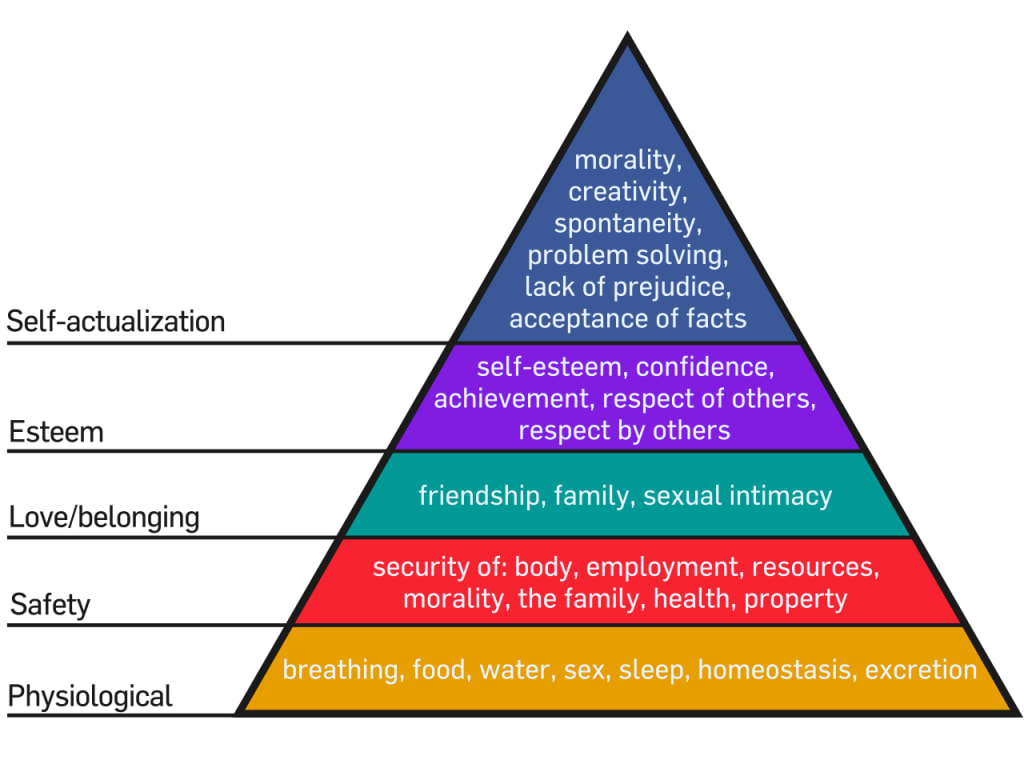
The humanistic perspective considers the hierarchy of needs that an individual has and then considers
which are the most important. There are a number of different needs that an individual will have. Each
of the needs listed below are important to the overall needs and wants of any member of the human
race. They are listed below in order from the least important to the most important according to this
hierarchy. These needs include:
1. Physiological
2. Safety
3. Belonging/love
4. Esteem
5. Self-actualization
Who Founded the Humanistic Perspective?
The humanistic perspective was founded by Abraham Maslow as well as Carl Rogers. Maslow is best
known for creating the hierarchy of needs which is used as a basis for the humanistic perspective. This
theory was founded in 1943 and was actually published in a paper titled, A Theory of Human Motivation.
This paper introduced the basic foundation of this theory.
Next, Carl Rogers considered the ideal of self-concept which pushes an individual to work towards self actualization, the last step in the hierarchy of needs as founded by Abraham Maslow. The therapy
aspect of this theory relates to focusing on unconditional positive regard and support of the client no
matter what is said during the session. In this way, an individual is better able to feel self-actualized and
better about themselves.
Abraham Maslow
Abraham Maslow, Carl Rogers and James F. T. Bugental have been recognised as the developers of
humanistic learning theory. Maslow influenced the field earlier in the movement, while Rogers and
Bugental added to the psychology later down the line.As such, humanistic learning theory can be seen as an umbrella term for humanistic psychology in the
learning and development space. It covers various humanistic learning models. One of the most famous
models is Maslow’s Hierarchy of Needs.
It categorises and prioritises human needs within a five-tier model, often presented as a pyramid. The
top-level consists of true self-actualisation. If you would like to learn more, we have an awesome article
covering the theory in-depth!
Today, Maslow’s research into hierarchical needs forms a major part of this learning theory. In fact,
humanistic learning theory views learning as a personal act to fulfil one’s potential.
As an approach to learning, humanism focuses on freedom, choice, learner potential and authority.
Indeed, unlike other philosophies, humanistic education assigns your learners as the source of authority.
This means that your learners themselves determine their learning needs, methods and materials.
Therefore, humanistic learning theory focuses on individuals’ potential instead of specific learning
materials or courses
Similarly, humanistic learning theory stresses the importance of human factors rather than looking at
religious, divine or spiritual matters.
As such, it is rooted in people having an ethical responsibility to live lives that are personally fulfilling while contributing to the greater good.
Key Assumptions
According to humanistic psychology, people act with intentionality and values. This is in contrast to
behaviourism and cognitivism. These philosophies focus on conditioning and believe in uncovering
information by interacting with the world around us.
Understanding this helps to shape the key assumptions related to humanistic learning theory. The
theory can be summarised as follows:
1. Learners can be trusted to find their own goals and should have choices in what they learn at
school.
2. Learners should set their standards and evaluate their work and progress themselves.
3. Learning experiences should help learners to develop positive relations with their peers.
4.
1. Idiographic Research
According to humanistic psychology, learners need to be considered as a ‘whole’. After all, all individuals
are unique, and we grow and develop over the years.
Similarly, humanistic psychology emphasises that research should focus on the idiographic case rather
than a nomothetic case. In other words, people should be studied as individuals instead of inferences
being formed from the performance of groups.
2. Free Will
According to humanistic approaches all humans have free will. This means we are free to do and think
about whatever we want. Our behaviour isn’t all determined.
Learners are encouraged to take control of their education. As such, they use their free will to make
decisions on what activities they complete, with what methods and when. This learner choice is central
to humanistic learning theory and humanistic psychology.
3. Positive Emotions
Humanistic psychology proposes that knowledge and feelings go hand-in-hand in the learning process.
Our emotions impact what, when and how we learn and should not be separated.
Therefore, learning activities need to focus on both the learner’s intellect and feelings, not one or the
other.
In addition, humanistic psychology proposes that learners need to feel positive, relaxed and comfortable
to achieve the best results. A positive emotional state will make them ready to learn.
4. Intrinsic Motivation
Individuals have an internal desire to become their best selves. As a result, our desire to learn is guided
by intrinsic motivation rather than extrinsic motivation.
Intrinsic motivation means that learners have a genuine passion for whatever they are doing. As such,
learners are motivated from within and are driven by their desire to achieve a genuine sense of
fulfilment.
Humanistic educators focus on fostering engagement in order for learners to become self-motivated to
further their development. After all, the effectiveness of humanistic learning is based on learners feeling
engaged and intrinsically motivated to complete training.
5. Innate Goodness
Humanistic psychology argues that no individual is born with evil intentions. We all want the best for
ourselves and for those close to us. In fact, according to the theory, we only do bad things if our
fundamental needs are not fulfilled.
As a result, humanistic educators tend to see the good in their learners. Instead of providing negative
feedback, they focus on determining what needs aren’t being met for learners not to be able to reach
their full potential.
6. Self-Evaluation
According to humanistic learning theory, self-evaluation is the most meaningful way to evaluate how
learners are progressing.
Self-evaluation ensures learners complete training material for their own satisfaction and excitement,
compared to working towards achieving high grades or test results.
The theory suggests that routine testing and information memorisation won’t lead to meaningful
learning.
Strengths and Weaknesses of Humanistic Learning
All learning theories come with strengths and weaknesses, and humanistic learning theory is no
exception.
Strengths
Using humanistic psychology in education can be very beneficial for your learners. The strengths of this
approach include:
• Humanistic psychology sees the best in everyone and works hard to promote positivism. This is
unique to the philosophy, as most other theories focus on identifying weaknesses.
• Young people are seen as powerful and capable. Humanistic learning theory empowers them to
find motivation within themselves.
• Unlike many other theories, humanistic learning theory considers learners’ emotional states and
how they impact learning.
• Similarly, humanistic psychology is a holistic approach that looks at all cognitive, social and
emotional aspects.
• Humanistic learning theory satisfies most individuals’ idea of what it means to be a human, as it
values self-fulfilment and personal ideals.
Weaknesses
Weaknesses, on the other hand, include:
• Humanistic psychology promotes learner authority and freedom. As a result, humanistic
learning theory doesn’t follow a set curriculum, which is against most traditional training
approaches.
• Due to the choice-based learning approach, humanistic learning theory is not beneficial for
learners who desire structure and routine to learn effectively.
• Similarly, we aren’t always the best judge of what’s good for us. Intrinsic motivation can
sometimes lead us to distraction.
• Every learner will end up with different knowledge because every individual has different
intrinsic desires and ways to gather knowledge.
About the Creator
Keep reading
More stories from noor akbar and writers in Psyche and other communities.
Shrink (2009)
"Shrink" is a drama film released in 2009, directed by Jonas Pate. The movie explores the world of a Hollywood psychiatrist named Dr. Henry Carter, portrayed by Kevin Spacey. Driven by personal tragedy, Dr. Carter finds himself struggling with his own emotional issues while trying to help his celebrity clients navigate their own problems.
By noor akbar3 years ago in Psyche
From Surviving to Living: When Rest Becomes an Act of Courage
When Survival Becomes a Lifestyle — And You Forget How to Live There is a quiet shift that happens when survival lasts too long. At first, it’s temporary. You tell yourself, “I just need to get through this phase.” Then weeks become months. Months become years. And without realizing it, survival stops being a response — it becomes a lifestyle. You don’t notice the moment it happens. There’s no clear breaking point. Just a gradual narrowing of life. Your goals become smaller. Your dreams become practical. Your emotions become controlled, managed, muted. You stop asking what brings you joy and start asking what is necessary. What is efficient. What is acceptable. And slowly, living turns into managing. The Hidden Cost of Constant Coping When someone lives in survival mode for too long, their nervous system adapts. It learns to stay alert. It learns to expect pressure. It learns that rest is risky and stillness is unsafe. So even when external threats disappear, the body doesn’t get the message. This is why many people feel exhausted without knowing why. Why calm moments feel uncomfortable. Why success doesn’t bring satisfaction. Why peace feels strangely empty. It’s not because something is missing. It’s because your system was never taught how to receive ease. You learned how to endure. Not how to enjoy. Why Letting Go Feels Harder Than Holding On Letting go sounds simple in theory. But for someone who survived by holding everything together, letting go feels like failure. You weren’t rewarded for resting. You were rewarded for coping. For staying strong. For not needing too much. So your identity formed around function, not feeling. This is why slowing down can trigger anxiety. Why saying “I can’t” feels shameful. Why doing less feels like becoming less. Your worth became linked to effort. And effort became constant. Healing Is Not Becoming Softer — It’s Becoming Safer Healing from long-term survival is not about becoming fragile. It’s about becoming safe. Safe enough to pause without panic. Safe enough to feel without rushing to fix. Safe enough to rest without preparing for collapse. This kind of healing doesn’t happen through motivation or discipline. It happens through permission. Permission to stop performing strength. Permission to disappoint expectations — including your own. Permission to exist without proving anything. At first, this feels unnatural. Because survival trained you to believe that safety must be earned. But safety is not earned. It is allowed. Relearning What Living Actually Feels Like Living is not dramatic. It doesn’t always feel exciting or intense. Sometimes, living feels quiet. Neutral. Ordinary. And for someone used to survival, that can feel unsettling. But calm is not emptiness. It is space. Space to notice yourself again. Space to feel preferences instead of obligations. Space to choose, not react. You don’t suddenly become a new person. You simply return to parts of yourself that were postponed. A Different Measure of Progress Progress is often measured by how much you do. How fast you move. How productive you appear. But healing progress looks different. It looks like stopping before burnout instead of after. Like resting before you collapse. Like saying “enough” without explaining yourself. It looks like choosing sustainability over intensity. Truth over performance. Presence over pressure. This kind of progress is quiet. And because it’s quiet, it’s often overlooked. But it is real. A Closing Truth If survival shaped you, it’s not your fault. You adapted the way you had to. But you are not meant to live your entire life in adaptation mode. You are allowed to soften without losing strength. To rest without guilt. To live without constantly preparing for impact. You don’t need to become more. You need to feel safe enough to be. And that shift — from surviving to living — is not weakness. It is the most honest form of courage there is.
By Med Abdeljabbar7 days ago in Psyche
A Dart at Dusk
Seconds ago, the sullen sun set on the two of us… my exuberant furry companion and me. A fresh breeze embraces us, delivering welcome relief from the day’s oppressive heat. His typical stumbling and staggering along — apace with a sloth — has turned into trip-trapping, high-stepping, almost skipping along.
By Angie the Archivist 📚🪶4 days ago in Petlife




Comments
There are no comments for this story
Be the first to respond and start the conversation.