
How to Rewire Your Brain? What Scientific Research Tells Us
Brain Rewire
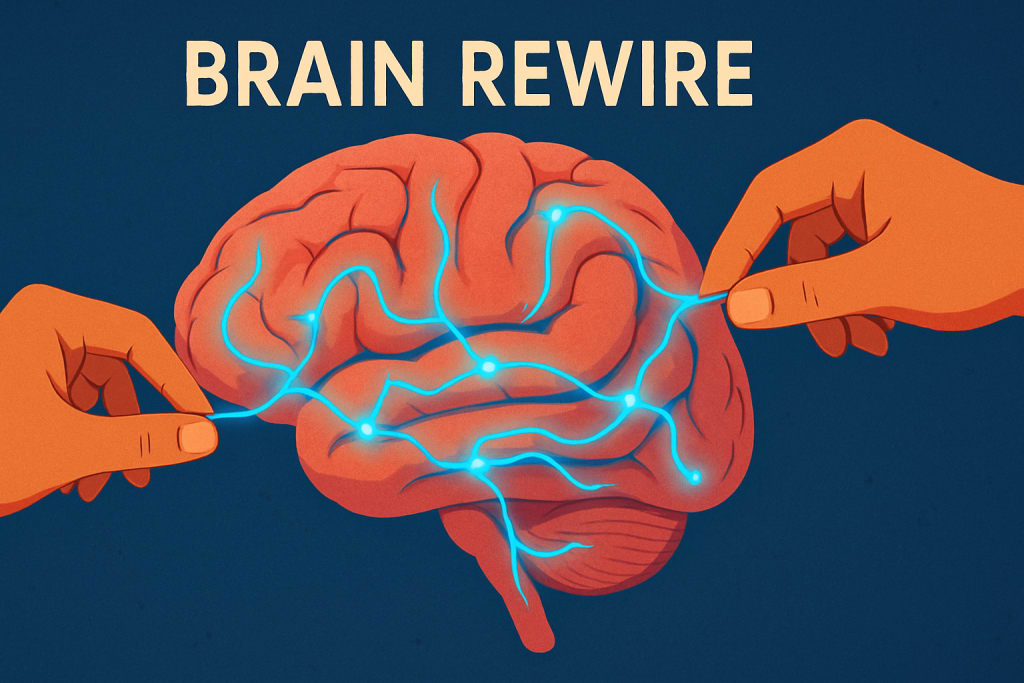
The human brain is an incredibly adaptable organ, capable of changing its structure and function throughout life. This remarkable ability is known as neuroplasticity-the brain’s capacity to reorganize itself by forming new neural connections in response to learning, experience, or injury. Scientific research over the past few decades has revolutionized our understanding of how we can actively rewire our brains to improve mental health, cognitive function, and overall well-being.
Understanding Neuroplasticity
Neuroplasticity occurs at multiple levels, from microscopic changes in synapses (the connections between neurons) to large-scale cortical remapping. When you learn a new skill, practice a habit, or recover from brain injury, your brain physically changes. These changes involve:
- Synaptogenesis: The formation of new synapses.
- Neurogenesis: The creation of new neurons, especially in the hippocampus, a brain region critical for memory.
- Strengthening or weakening of synaptic connections: Known as long-term potentiation (LTP) and long-term depression (LTD), these processes adjust the efficiency of neural communication.
- Angiogenesis and gliogenesis: Growth of new blood vessels and support cells to nourish active brain regions.
This plasticity allows the brain to adapt to new circumstances, recover lost functions, and even change emotional and behavioral patterns.
How Can You Rewire Your Brain?
Scientific research highlights several evidence-based strategies to harness neuroplasticity and rewire your brain:
1. Engage in New and Challenging Activities
Learning new skills-whether it’s a language, musical instrument, or complex hobby-forces your brain to build new neural pathways. Studies show that adults who learn a second language or play music have increased gray matter volume and enhanced connectivity in brain regions related to memory, attention, and motor control.
Challenging your brain with novel experiences stimulates synaptogenesis and strengthens existing circuits, making your brain more flexible and resilient.
2. Practice Mindfulness and Meditation
Mindfulness meditation has been extensively studied for its effects on brain structure and function. Regular mindfulness practice increases gray matter density in areas associated with attention, emotional regulation, and self-awareness, such as the prefrontal cortex and hippocampus.
Meditation also reduces activity in the amygdala, the brain’s fear center, which helps decrease anxiety and stress. This rewiring supports healthier emotional responses and better cognitive control.
3. Exercise Regularly
Physical exercise is one of the most potent natural enhancers of neuroplasticity. Aerobic exercise increases levels of brain-derived neurotrophic factor (BDNF), a protein that promotes neuron growth and synaptic plasticity.
Exercise improves memory, executive function, and mood by stimulating neurogenesis in the hippocampus and enhancing connectivity between brain regions. Even moderate exercise, like walking 30 minutes a day, can have significant benefits.
4. Get Quality Sleep
Sleep is critical for consolidating new memories and rewiring neural circuits. During deep sleep stages, the brain replays and strengthens newly formed synaptic connections, making learning permanent.
Chronic sleep deprivation impairs neuroplasticity and cognitive function, so prioritizing 7-9 hours of restful sleep each night is essential for brain health.
5. Use Repetition and Consistency
Rewiring the brain requires consistent practice. Repetition strengthens synaptic connections through LTP, making new behaviors or thought patterns more automatic.
For example, cognitive-behavioral therapy (CBT) leverages this by helping individuals repeatedly practice new ways of thinking to rewire maladaptive neural circuits involved in anxiety or depression.
6. Break Negative Habit Loops
Habits are formed by neural loops involving the basal ganglia. To rewire your brain and change habits, you must disrupt these loops by increasing awareness and replacing old behaviors with new ones.
Mindfulness helps by creating a pause between stimulus and response, allowing you to consciously choose different actions. Over time, this rewiring can lead to lasting behavioral change.
7. Leverage Technology and Rehabilitation Techniques
In cases of brain injury or stroke, therapies like constraint-induced movement therapy, mirror therapy, and virtual reality have been shown to promote rewiring and functional recovery by encouraging use-dependent plasticity.
These approaches demonstrate how targeted, repetitive training can reorganize brain circuits to regain lost abilities.
The Timeframe and Patience Required
Rewiring your brain is not instantaneous. While some changes can occur within weeks, especially with mindfulness or new learning, deeper structural changes often take months or years of consistent effort. Patience and persistence are key.
Conclusion
Scientific research firmly establishes that the brain is plastic and capable of rewiring itself throughout life. By engaging in new learning experiences, practicing mindfulness, exercising regularly, getting quality sleep, and consistently applying new behaviors, you can harness neuroplasticity to improve your cognitive abilities, emotional health, and overall brain function.
This understanding empowers us to take active control of our mental well-being and cognitive potential, proving that it’s never too late to change your brain-and your life.
If you want, I can also provide specific exercises or a daily plan to start rewiring your brain effectively!
About the Creator
Do You have a Support Network?
Life is harder when you’re on your own. Human beings are social creatures, and we usually feel better when we have support from a strong social network around us. For most people, it’s our families that hold us together like glue.
By Elizabeth Woodsabout 21 hours ago in Psyche
Psychic Reading Online – Top 4 Best Live Chat Psychic Reading Sites
Uncertainty is something we all experience at different stages of life. Questions about love, career decisions, finances, family matters, or personal growth can sometimes leave us feeling overwhelmed or unsure about what direction to take next. Wanting answers and clarity during these moments is completely natural.
By Louie Bell2 days ago in Psyche


Comments
There are no comments for this story
Be the first to respond and start the conversation.