
How To Learn Faster?
Maximizing Learning Efficiency: Tips for Rapid and Retained Knowledge

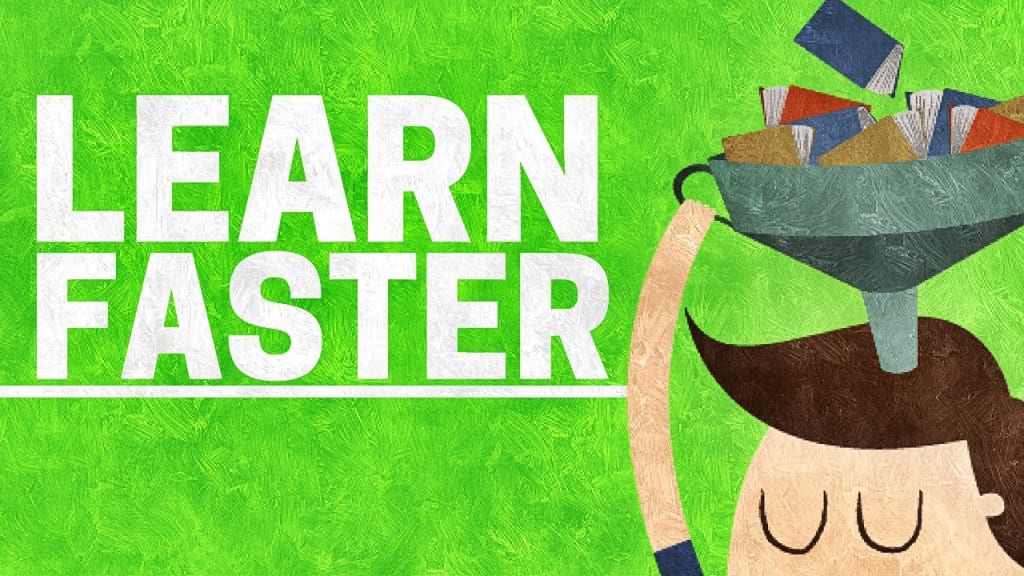
Whether you're gearing up for a new school year or diving into a fresh skill like learning a language or an instrument, discovering effective learning strategies can be a game-changer. But is there a more efficient way to learn quickly and retain that knowledge? Let's explore some research-backed techniques to optimize your learning prosses.
1. Skip the Laptop: Pen and Paper for Better Retention
While typing on a laptop might seem faster and more convenient, research suggests that writing by hand can lead to better understanding and retention of information. One major drawback of typing is that it often leads to shallow processing of the material. This happens because when you type, you're more likely to transcribe information verbatim rather than engaging deeply with the content.
On the other hand, writing notes by hand forces you to process information more thoughtfully. When you take notes with pen and paper, you're more likely to reframe the information in your own words and make connections between concepts. This deeper processing has been shown to enhance performance on tests and improve overall recall. So next time you're studying, reach for a pen and notebook instead of your laptop.
2. The Power of Sleep: Study, Sleep, Study
A study conducted in France provides insight into the role of sleep in learning. In this experiment, two groups were taught the Swahili translations for 16 French words across two study sessions. Group 1 studied in the morning, took a break, and then studied again in the evening. Group 2, on the other hand, studied in the evening, slept overnight, and resumed studying in the morning.
Despite the same total time spent studying, the results were striking. The group that slept between study sessions was able to recall 10 out of 16 words, while the group that did not sleep could only recall 7.5 words. This study highlights the importance of sleep in consolidating new information and reinforcing memory. To maximize learning, incorporate periods of rest into your study routine.
3. Mix Up Your Practice: The Benefits of Variation
When learning a new motor skill, varying your practice can lead to significant improvements. A study involving 86 participants asked them to learn a computer-based motor skill over two training sessions. One group practiced the skill in a slightly altered manner during the second session, while the other group repeated the exact same practice.
The results were impressive. Those who varied their practice nearly doubled their speed and accuracy compared to the control group. This suggests that introducing slight changes in practice conditions can enhance skill acquisition and performance. In practical terms, if you're working on improving your tennis game, try switching between rackets with different weights or altering your practice drills. This variability forces your brain to adapt and improves your overall proficiency.
4. Engage in Active Learning: Beyond Passive Consumption
Active learning involves engaging with the material in a way that requires more than just passive reading or listening. This can include activities like teaching the material to someone else, creating mind maps, or applying the knowledge to real-world scenarios. Active learning promotes deeper understanding and helps you retain information more effectively.
For instance, if you're learning a new language, practice speaking with native speakers or use language learning apps that encourage interaction. If you're mastering a musical instrument, apply the techniques you're learning by playing actual pieces of music rather than just practicing scales. The more actively you engage with the material, the better your retention and application will be.
### 5. Leverage Spaced Repetition: Time Your Review Sessions
Spaced repetition is a technique that involves reviewing material at increasing intervals over time. This approach takes advantage of the brain's ability to remember information better when it's reviewed periodically rather than all at once. Using tools like flashcards or spaced repetition apps can help you schedule your review sessions and reinforce your learning over time.
For example, if you're studying for a test, review the material in intervals—first after one day, then after three days, then after a week, and so on. This method helps to solidify the information in your long-term memory and improves recall.
Conclusion
Learning efficiently and retaining knowledge requires more than just traditional study methods. By incorporating these research-backed techniques—such as writing by hand, prioritizing sleep, varying your practice, engaging in active learning, and using spaced repetition—you can enhance your learning experience and achieve better results. Whether you're mastering a new skill or diving into academic studies, these strategies will help you optimize your learning and retain information more effectively.
For more insights into effective learning techniques and problem-solving strategies, check out Brilliant.org, which offers interactive courses and challenges to help you build and apply your skills.
About the Creator
Mariam Fathalrahman
Whether you’re a nature lover, a history buff, or simply someone who enjoys a good read, there’s something here for you, diving into topics as diverse as the mysteries of Earth and nature. Join me, and let’s explore the world together.
Keep reading
More stories from Mariam Fathalrahman and writers in Psyche and other communities.
What If You Stopped Eating?
Cars require gasoline to run, campfires require wood to generate heat, and you need food to power every part of your existence. What would happen to your body at this precise moment if you abruptly stopped consuming food? We must first comprehend the consequences of eating in order to comprehend what occurs when you abstain from meals.
By Mariam Fathalrahman2 years ago in Psyche


Comments
There are no comments for this story
Be the first to respond and start the conversation.